Get Full Government Meeting Transcripts, Videos, & Alerts Forever!
Get email alerts on the Child Protection topic
No spam. Unsubscribe anytime.
Committee OKs bill to let courts order alleged offender removed while child stays with safe parent
Summary
House Bill 159 would clarify Idaho’s Child Protection Act to allow law enforcement and courts to remove an alleged offender from a home while leaving the child with a safe, protective parent and require a shelter‑care hearing within 48 hours.
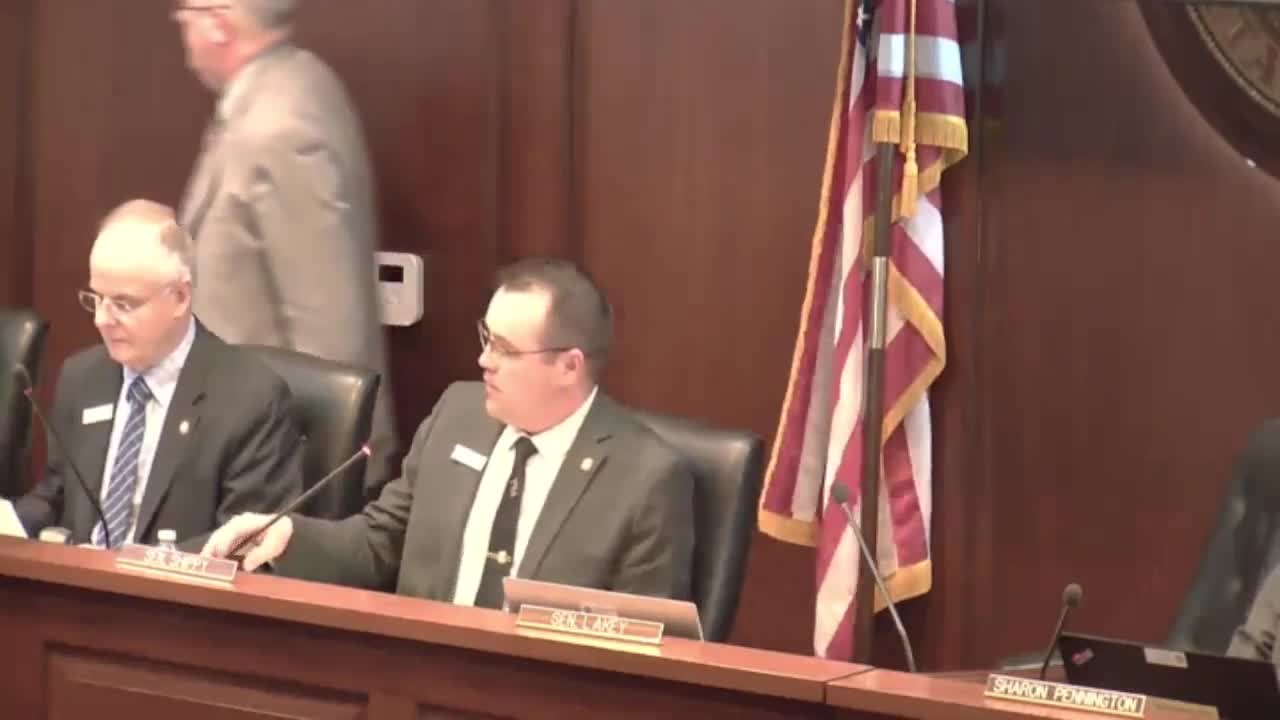
The Senate Judiciary and Rules Committee voted to advance House Bill 159 to the Senate floor with a due‑pass recommendation after a presentation from a magistrate judge who handles child protection cases.
The bill, presented in committee by Senator Todd Lakey with Judge Andrew Ellis testifying, addresses what supporters described as contradictory statutory language that has hindered the use of a protective‑order type tool under the Child Protection Act. Judge Ellis said the statute appears to authorize removing an alleged offender and leaving the child at home with a safe parent, but internal contradictions in the law have prevented that practice.
"We’ve got this tool that appears to allow us to remove the offender and leave the child in the home, with the safe and protective parent. But in actuality, the way our statutes currently exist, we cannot do that," Judge Ellis told the committee. The bill removes conflicting references to a "protective order" and adds an express mechanism authorizing law enforcement, with Department of Health and Welfare involvement and prosecutor oversight, to obtain a court order requiring the alleged offender to leave the home. The person removed would receive notice of a shelter‑care hearing within 48 hours to contest continued removal.
Judge Ellis and Senator Lakey described operational mechanics: many cases originate from Department of Health and Welfare referrals investigated over days or weeks, and social workers and law enforcement coordinate before seeking a court order. The hearing process can occur before an on‑call magistrate if needed.
Senator Wintrow asked about immediate safety steps when an officer encounters imminent danger; Judge Ellis said officers can act to secure the child and then pursue the statutory order and the 48‑hour hearing process.
Senator Wintrow moved to send HB 159 to the floor with a due‑pass recommendation; Senator Kaiser seconded. The motion passed on a voice vote and the committee forwarded the bill to the full Senate.
Supporters said the measure clarifies existing tools for removing a suspected perpetrator while minimizing disruption to the child by keeping the child with a protective parent when safe.