Get Full Government Meeting Transcripts, Videos, & Alerts Forever!
Get email alerts on the Dhw Budget topic
No spam. Unsubscribe anytime.
LSO reviews Department of Health and Welfare budget; Medicaid, hospital assessment and IT projects drive changes
Summary
Legislative Services presented a fiscal review of the Department of Health and Welfare budget, highlighting Medicaid-driven expenditure changes, the hospital assessment (upper payment limit) impact, the MMIS procurement and a governor initiative for childcare funding.
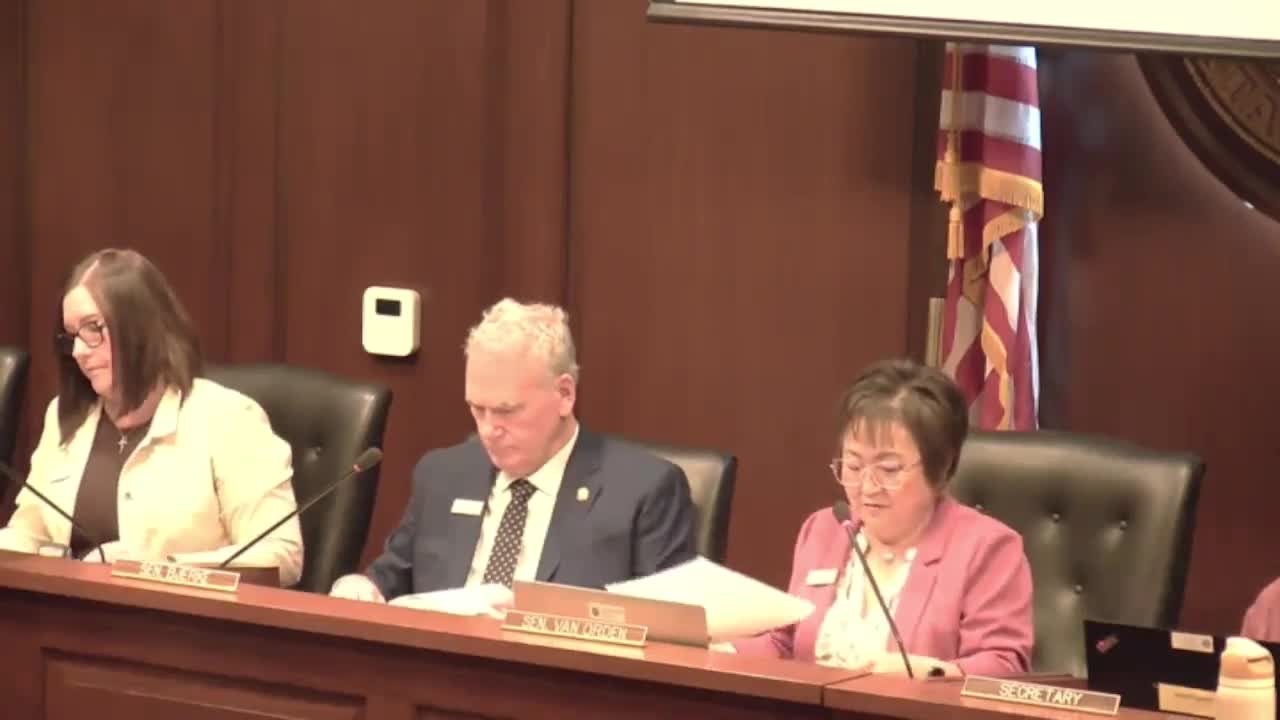
Boise — Alex Williamson, budget and policy analyst with the Legislative Services Office, briefed the Senate Health and Welfare Committee on the Department of Health and Welfare’s fiscal picture and the governor’s budget recommendations for fiscal 2026.
Williamson told the committee the department’s recent appropriations and expenditures are heavily driven by trustee and benefit payments — primarily Medicaid provider reimbursements and assistance payments — and showed a five-year look-back indicating fiscal year 2023 included a notable increase driven largely by Medicaid adjustments. "About two thirds of that came from changes to Medicaid," Williamson said while explaining adjustments included population-forecast updates and the effects of the public-health emergency.
The presentation highlighted several items that affect the department’s recommended fiscal 2026 appropriation: restoring the hospital assessment (upper payment limit) adjustments into ongoing appropriations so the dedicated fund can support increased federal reimbursement to hospitals; the multi-year Medicaid Management Information System (MMIS) procurement (a federal 90/10 match for this IT project with a large dedicated-fund state match); and a governor initiative allocating $15 million to the Idaho Childcare Program.
Williamson said the hospital-assessment adjustments reflect prior legislative action that allowed hospitals access to a higher Medicaid upper-payment limit; the timing and size of the hospitals’ net patient revenue increases required updated dedicated-fund appropriations so the federal reimbursement could be remitted to providers. On the MMIS project, she said the state set aside a dedicated fund to cover the state"s 10 percent match and that multi-year appropriations would allow the state to draw federal funds as the procurement proceeds.
Senator Wintrow asked for clarification about how the upper-payment limit and hospital assessment appear in the state accounting records and whether federal and dedicated funds change the state contribution. Williamson explained that hospitals must provide a state-match deposit into a dedicated fund to meet federal matching requirements, and that federal dollars remitted back to hospitals require corresponding appropriations on the state side. She also walked the committee through how to use the LSO online budget dashboard for deeper budget data.
Williamson presented a draft fiscal-year-2026 "program maintenance" starting point and listed recommended enhancements the governor proposed, including 36 new positions for a prevention specialist team in child-welfare services (to be retitled Youth Safety and Permanency) and other staffing and program requests across Medicaid and child welfare.
If all recommended items were approved as proposed in the presentation, Williamson said the department’s fiscal 2026 appropriation would be approximately $6.0 billion total funds and about $1.2 billion from the general fund.
The committee received the presentation and asked follow-up questions. Williamson said additional materials, including the LSO online dashboards and the detailed Gen/Ded/Federal report, are available for members and staff to review.