Get Full Government Meeting Transcripts, Videos, & Alerts Forever!
Get email alerts on the Adoption Records topic
No spam. Unsubscribe anytime.
Senate committee advances bill allowing adult adoptees access to pre‑2022 birth records
Summary
The Senate Judiciary and Rules Committee voted to send House Bill 47 to the Senate floor with a due‑pass recommendation. The bill would give adoptees who were adopted before July 1, 2022 access to birth records at age 18, with a 30‑day contact notice to registered birth parents and an option for temporary redaction.
The Senate Judiciary and Rules Committee voted to send House Bill 47 to the Senate floor with a due‑pass recommendation after testimony from the bill’s sponsors and supporters.
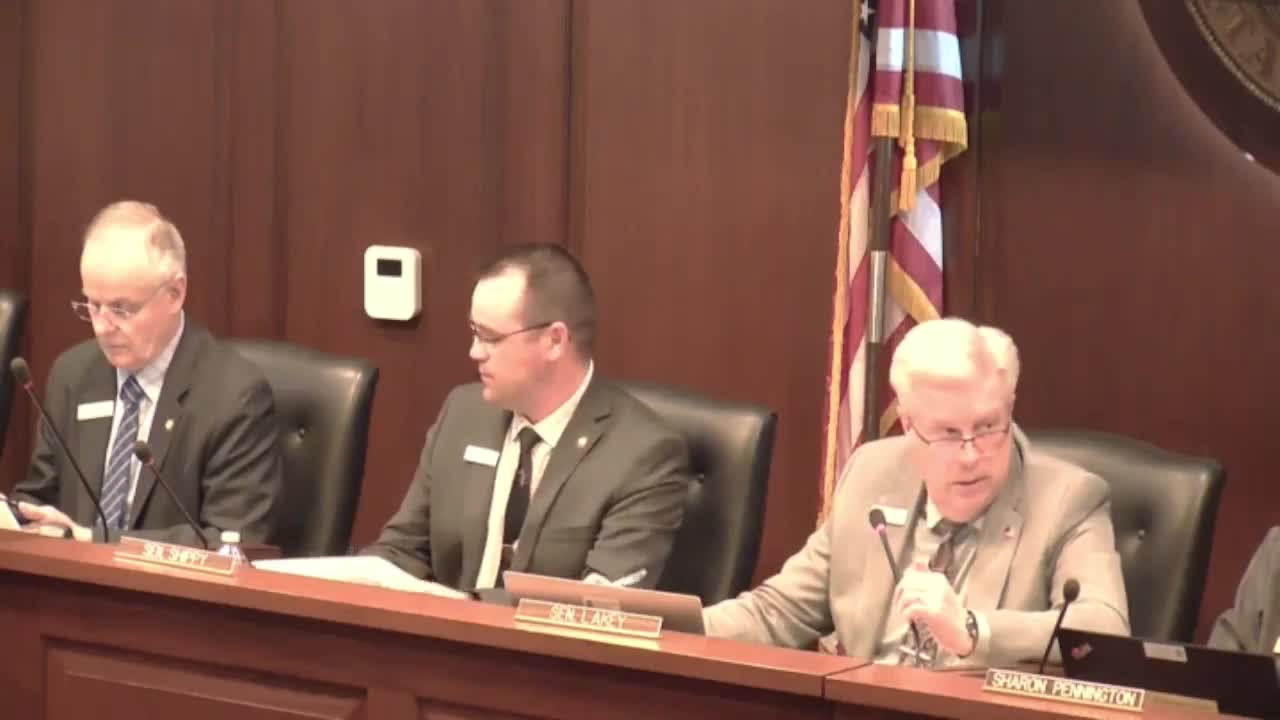
House Bill 47, introduced to the committee by Senator Brandon Shippey and sponsored in the House by Representative Julianne Young and Representative Barbara Ehart, would allow adoptees adopted prior to July 1, 2022, to request their original birth records once they turn 18. The bill preserves a process for birth parents to register contact preferences and request temporary redaction of identifying information.
Representative Julianne Young, the primary sponsor, told the committee the bill is “not about imposing any course of action on any adoptee or any birth parents.” Young described a process already in use for adoptees adopted after July 1, 2022, and said this measure would make that procedure retroactive for earlier adoptions.
Representative Barbara Ehart, who spoke alongside Shippey, said the bill would provide adoptees access to medical and family history while protecting birth parents’ contact preferences. Ehart said the legislation would redact the birth parent’s name in some circumstances and allow an intermediary agency to contact the parent to ask whether they consent to contact. If the birth parent objects, Ehart said they may request the agency redact identifying information for five years; after that period the adoptee can reinitiate the request.
Committee members pressed sponsors on the operational details. Senator Wintrow asked whether a birth parent who wants permanent anonymity would have to maintain contact information with the vital records registry to preserve redaction; Representative Young answered that a birth parent who wishes to keep their information private should register with the department’s adoption registry and keep contact details current. Representative Gunn noted that parents who use anonymous relinquishment options such as hospital baby‑drop programs may already have no record available.
After discussion, Senator Lehi moved to send HB 47 to the floor with a due‑pass recommendation; Senator Ricks seconded. The motion carried on a voice vote; Senator Wintrow asked to be recorded as voting nay. The committee record shows the motion passed with that single recorded negative vote.
The bill’s supporters told the committee they aim to balance adoptees’ access to medical and identity information with birth parents’ privacy and voluntary contact preferences. Committee members asked for follow‑up conversations; Senator Wintrow said she might change her floor vote after additional questions.
Votes at the committee included the motion to advance HB 47; procedural details in the bill text specify a 30‑day notice to any registered birth parent when an adoptee requests records, and a five‑year redaction option if the parent chooses not to be contacted.
No formal amendments to the bill were adopted at the committee hearing.