Get Full Government Meeting Transcripts, Videos, & Alerts Forever!
Get email alerts on the Isu Budget Fy2026 topic
No spam. Unsubscribe anytime.
ISU seeks modest FY2026 increases, highlights student success investments and DEI center realignment
Summary
Idaho State University told lawmakers it is requesting operational capacity enhancements and enrollment workload adjustments for FY2026 while detailing internal changes aimed at improving student completion, shifting two DEI-related FTEs into student involvement and equal opportunity, and expanding health science pathways.
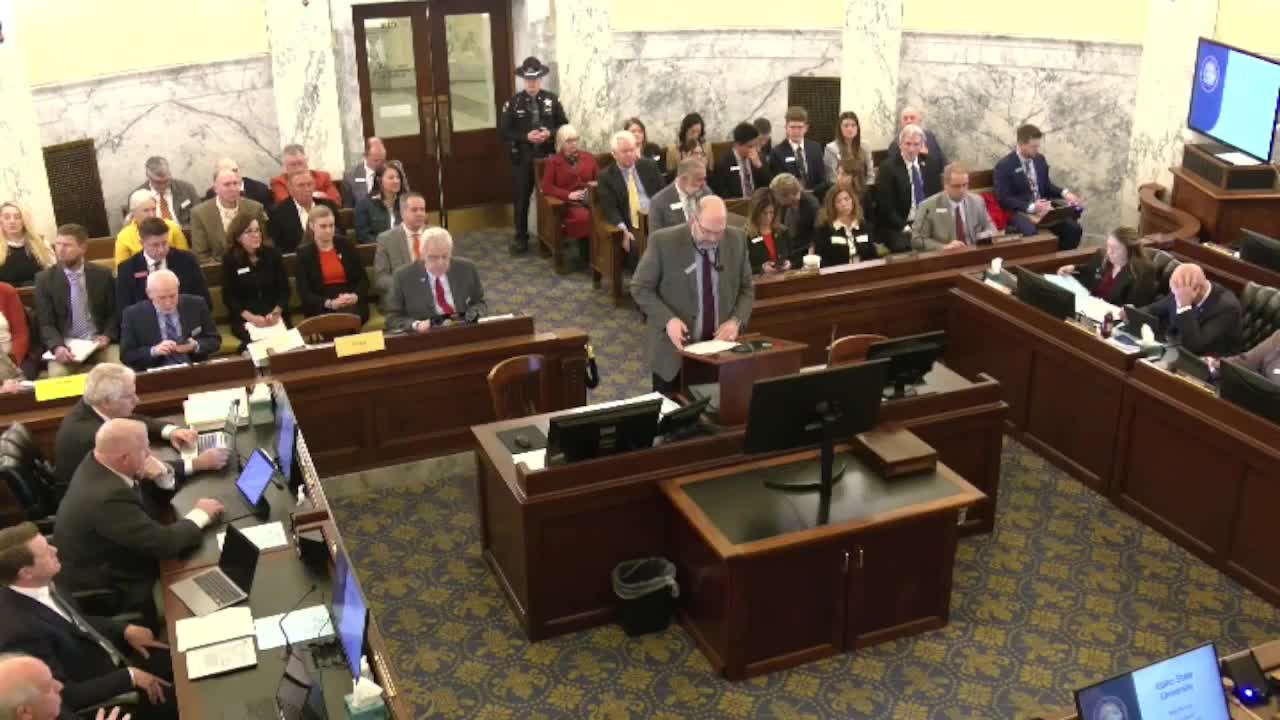
Idaho State University presented its FY2026 budget request and program priorities to the Joint Finance-Appropriations Committee on Jan. 29, emphasizing investments intended to support student retention and health-sciences workforce development.
Kevin Campbell, a budget and policy analyst with the Legislative Services Office, told the committee that ISU has an enrollment of more than 12,000 students, about 1,244 full-time equivalent employees, and a base budget of roughly $171.1 million. Campbell’s slides showed that 74.8% of ISU’s expenditures go to personnel, 21.2% to operating costs and 3.9% to capital outlay. He also flagged a technical error in tuition-and-fees beginning-balance numbers on a slide and said the university had not overdrawn its treasury account.
President Rob Wagner, marking his one-year anniversary at ISU, said the university is requesting $907,300 in operational capacity enhancement, $233,700 in endowment fund adjustments and $988,100 in the enrollment workload adjustment for FY2026. He attributed a recent upward trend in actual expenditures to strategic investments intended to support growing enrollment.
Student success and program realignment: Wagner described a refocus on academic and student completion outcomes. As part of that work, ISU closed a diversity resource center and a gender resource center (effective Nov. 15) after campus discussions, and moved the two corresponding FTEs: one into student involvement to support student-led clubs and activities, and one into the office that handles equal opportunity and Title IX, reporting to the president’s office. Wagner said the university subsequently created the Bengal Success Center to provide academic support across campuses and student types.
Workforce and health-sciences expansion: Wagner highlighted health-sciences growth, including a new doctor of nurse anesthetist program that drew more than 200 applicants for an initial cohort of 25 seats. He emphasized partnerships with community colleges and with the Idaho College of Osteopathic Medicine (ICOM) to create clearer, seamless pathways from bachelor’s programs into professional programs and residency placements, with the goal of retaining clinicians in Idaho.
Fiscal context and federal funding concerns: Campbell walked the committee through a five-year history of appropriations and expenditures and listed prior adjustments: FY2021 reductions tied to a 2% general-fund cut and a 5% supplemental rescission; FY2023 CEC (capacity enhancement) awards and net reductions; and other adjustments from consolidation of administrative functions. Wagner said ISU staff had done quick calculations the prior day about the potential impact of federal funding directives and that about $25 million of federal activity tied to research and student support could have been at risk before a court injunction paused the directives. He said ISU and other institutions were still working to understand the final effect.
Why it matters: The request is modest relative to the institution’s base budget, but the university emphasized strategic uses: personnel support, student retention efforts, and pathways to address physician and allied-health shortages in Idaho.
What’s next: ISU will continue to work with the Legislature on technical corrections to budget displays and on the FY2026 funding request. The university and committee staff will follow up on federal funding guidance as the legal and administrative situation develops.