Get Full Government Meeting Transcripts, Videos, & Alerts Forever!
Get email alerts on the Disability Benefits Financial Assistance topic
No spam. Unsubscribe anytime.
Senate committee backs bill to let Idaho join multistate ABLE account consortium
Summary
The Senate Health and Welfare Committee voted to send House Bill 26 to the floor with a due-pass recommendation after testimony that joining a multistate ABLE consortium would lower fees for Idahoans with disabilities and allow state-directed outreach; bill includes an unpaid advisory council and a Medicaid
State Treasurer Julie Ellsworth told the Senate Health and Welfare Committee on the floor of a hearing that House Bill 26 would allow Idaho to offer ABLE savings accounts to residents by joining a multistate consortium rather than building a stand-alone program.
Ellsworth said Idaho law recognized ABLE accounts in 2017 but the state did not create its own program at that time because of start-up costs. “By joining a consortium ... it will take it down to 19 to 33% basis points,” Ellsworth said, describing that as a reduction from higher fees people currently pay when they use plans in other states.
The nut graf: supporters told the committee that an Idaho-based ABLE program run through a vetted consortium would reduce account fees, allow the state to conduct outreach and financial-literacy work, and give Idahoans with disabilities a way to save for disability-related expenses without risking loss of means-tested benefits.
AARP Idaho advocacy director Lisa Anderson said the accounts enable people with disabilities “to save and manage their money without worrying about losing the critical benefits they need.” Rochelle Tierney of the Idaho Council on Developmental Disabilities testified the state program would “help keep fees down for account holders” and provide “greater oversight and protection for Idaho account holders.”
Several account holders also described practical difficulties with out-of-state plans. Tara Rowe, who said she holds an ABLE account opened through Tennessee’s program, described having to request a mailed check from that state rather than receiving a transfer into her local account. “Having an ABLE account is critical to my living independently,” Rowe said, adding that using the account can avoid placing funds in a person’s regular bank account that would put them over Medicaid’s asset cap.
Senators and other witnesses discussed program details the bill would enable: the State Treasurer would be authorized to join a multistate ABLE consortium after completing legal and procurement reviews; the state would be able to contract terms that permit Idaho-focused outreach; and the statute would continue existing statutory language that advisory council members “shall serve without honorarium, compensation, or expense reimbursement” as Ellsworth emphasized.
Committee members asked about two topics raised by witnesses. Ellsworth confirmed the bill includes a reimbursement provision commonly described as a Medicaid “clawback” that directs remaining account funds to the state for Medicaid reimbursement when required; she said some other states do not include that provision. Witnesses also explained the federal Medicaid asset limit that affects many beneficiaries: several speakers cited a $2,000 personal-asset cap for means-tested programs when discussing why ABLE accounts are needed to permit savings without jeopardizing benefits.
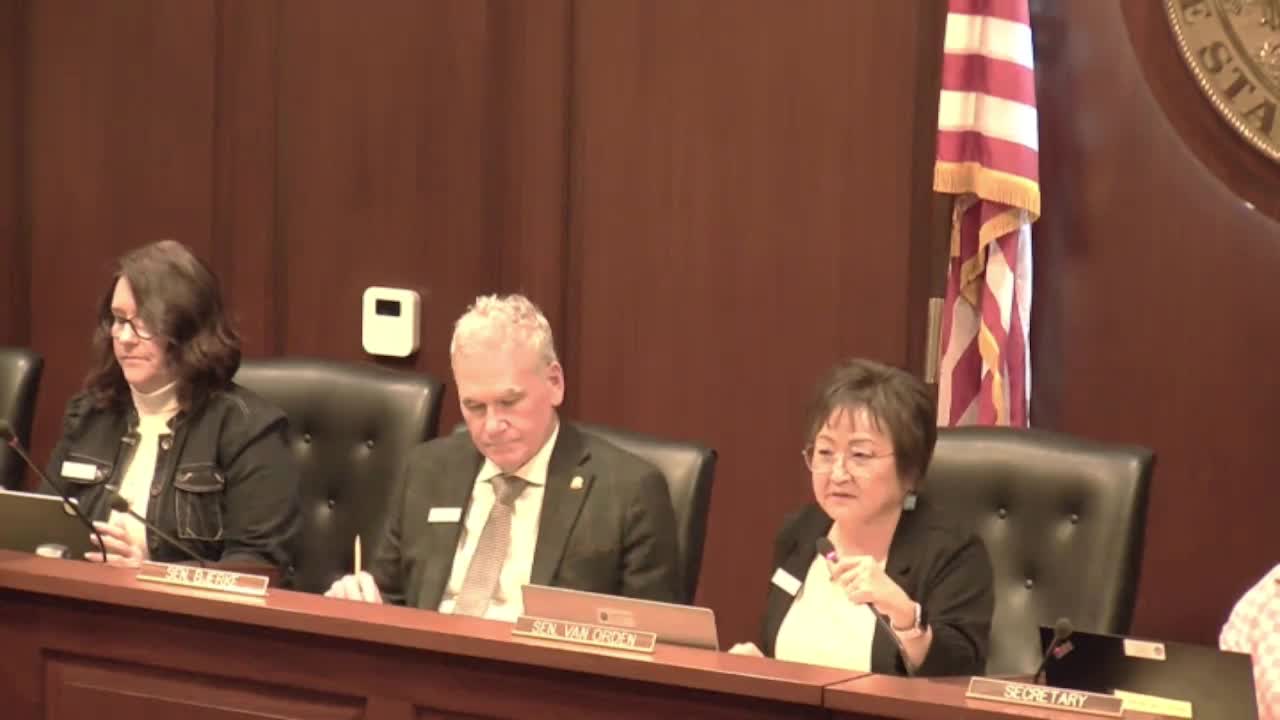
After questions and testimony, Senator Shippey moved and Senator Wintrow seconded a motion to send House Bill 26 to the Senate floor with a due-pass recommendation. The committee approved the motion by voice vote.
The bill now moves to the Senate floor for further consideration.