Get Full Government Meeting Transcripts, Videos, & Alerts Forever!
Get email alerts on the Special Education Funding topic
No spam. Unsubscribe anytime.
House committee introduces bill to create high‑needs special education reimbursement fund
Summary
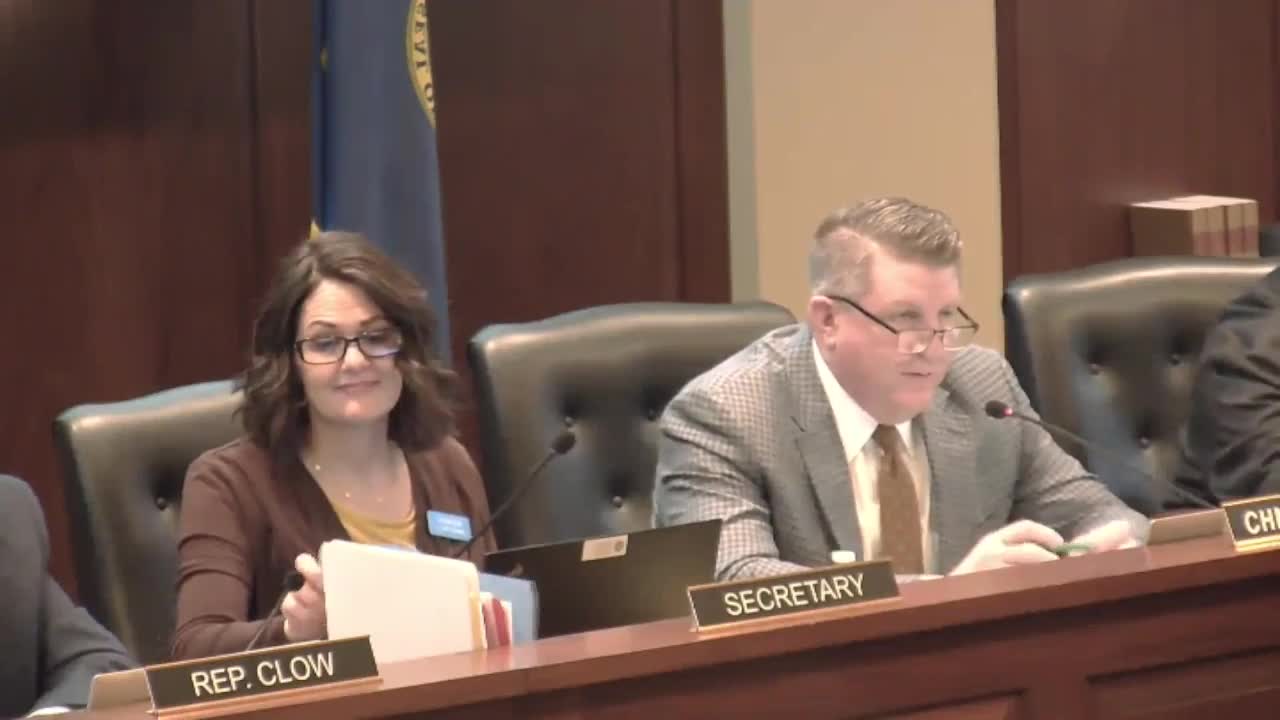
Representative Ben Furman, sponsor of RS 32437, told the House Education Committee that the bill would "help schools with their special education needs" by creating a fund to assist districts with exceptionally high costs for students who require a full‑time aide or medical care.
Representative Ben Furman, sponsor of RS 32437, told the House Education Committee that the bill would "help schools with their special education needs" by creating a fund to assist districts with exceptionally high costs for students who require a full‑time aide or medical care.
The bill, Furman said, is intended to address what he described as "over an $80,000,000 gap" in special‑education funding statewide. Under the proposal the fund would begin reimbursing districts for costs that exceed the first $15,000 for an individual student; after $65,000 in expenses the state and the district would split costs, and each district would be capped at roughly $150,000 in reimbursements.
Why it matters: Committee members and education officials said some individual cases—students who are nonverbal, immobile, or who require full‑time medical supports such as tracheotomy care or g‑tube feeding—can generate annual costs that run into the tens of thousands or into six figures. China Hirasaki, director of special education for the Idaho Department of Education, told the committee some complex cases can "run upwards into the hundred thousand dollar arena." The department and the sponsor described the RS as a targeted, initial step rather than a comprehensive funding overhaul.
Committee discussion focused on scope, the $3,000,000 budget line in the RS and coordination with other payers. W. Cutchfield, identified in the hearing as the state superintendent, said the $3 million figure is an estimate based on currently known statewide data for students who require full‑time attendant services and that it was chosen "as a place to start." Hirasaki noted that many expenses are Medicaid‑reimbursable but that Medicaid typically requires a local match (the department said the match ‘‘hovers typically right now about 30%’’), and some services—an American Sign Language interpreter, for example—are not reimbursable through Medicaid.
Several lawmakers urged that any full hearing examine whether districts are accessing all available Medicaid reimbursements before relying on the new fund. Representative Sauter moved to introduce RS 32437; the committee approved the introduction and the RS will move to a full hearing. The transcript records Representative Harris as a recorded ‘‘nay’’ on the voice vote; no other roll call totals were provided in the hearing record.
The sponsor stood for questions and the bill was introduced for a later full hearing where lawmakers indicated they plan to probe funding methodology, Medicaid coordination, and the administration of any reimbursement claims.