Get Full Government Meeting Transcripts, Videos, & Alerts Forever!
Get email alerts on the Dual Credit And Advanced Opportunities topic
No spam. Unsubscribe anytime.
Committee sends House Bill 175 to the floor to expand dual‑credit access for homeschool students and allow multiple test attempts
Summary
The Idaho House Committee on Education voted Feb. 13 to forward House Bill 175 to the House floor with a due‑pass recommendation. The bill would let some students — including homeschooled students who cannot secure dual‑credit access through their district — use community colleges to receive Advanced Opportunities credits, allow multiple college entrance exam attempts and make technical code alignments.
The Idaho House Committee on Education voted to send House Bill 175 to the floor with a due‑pass recommendation on Feb. 13. The bill would allow certain students, including homeschooled learners who are unable to secure dual‑credit arrangements through their local district, to access Advanced Opportunities directly through community colleges. It also clarifies program language and would allow students to sit for college entrance exams more than once.
Representative John (Jared) Horman (for the record: Representative Horman introduced the bill) told the committee HB175 “looks to just give them another option which is allow them to work through their community college for dual credits.” He said the change preserves local control of how districts administer Advanced Opportunities while adding a direct pathway when district cooperation is unavailable.
Horman described other fixes in the draft: aligning the phrase “tuition and fees” to “educational costs” to match Opportunity Scholarship language, changing public‑school failure language to match private‑school language so districts may define failure, and adding a requirement (already standard in private schools) that students consult a counselor after earning 15 credits through Advanced Opportunities.
Committee members questioned funding and program details. Representative Wisniewski asked how additional fees would be paid; Horman replied students would use the existing Advanced Opportunities allotment (an account he described as about $4,625). Horman said the State Department of Education requested some technical changes, including asking that private‑school students receive payment for out‑of‑district community college tuition similar to public school students.
Representative Mathias said he would not support the motion as printed on technical grounds: he pointed to language on page 5, lines 12–13 that treats college entrance exams and preliminary college entrance exams as postsecondary credit‑bearing or CTE certificate exams, calling that a legal incongruity he would prefer amended. He said he would support the bill if that language were clarified.
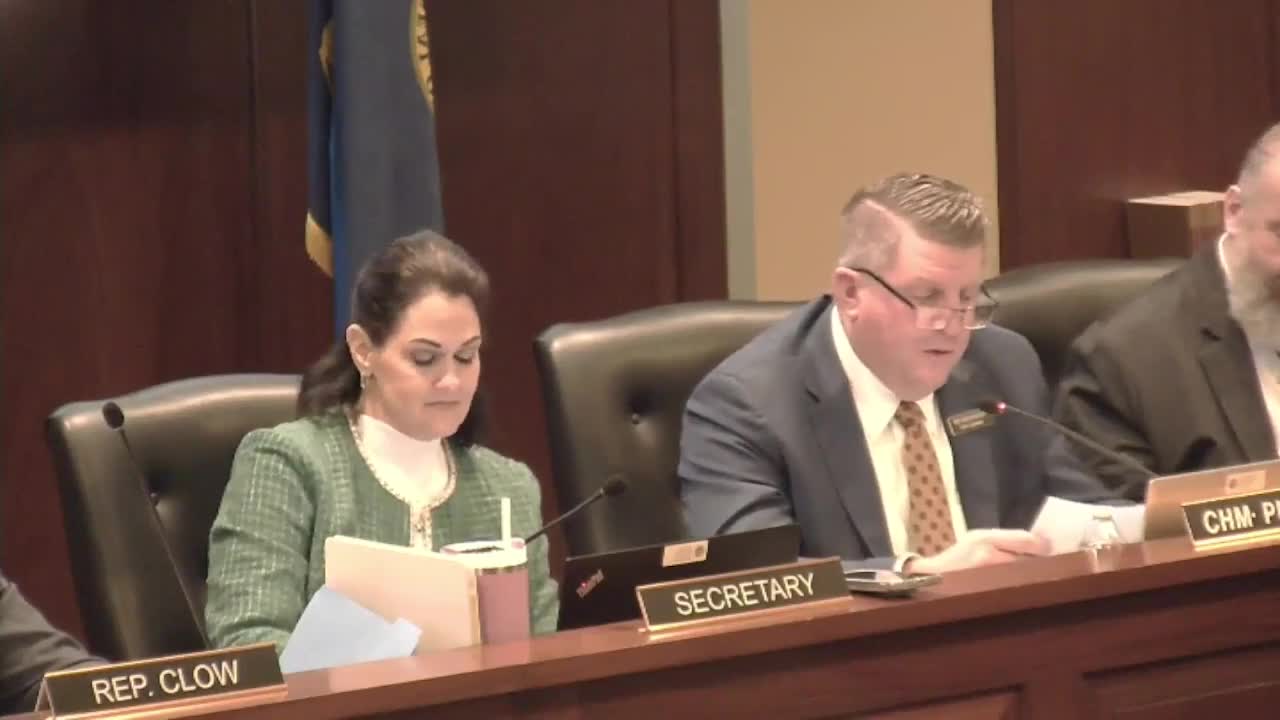
Representative Ehart moved to send HB175 to the floor with a due‑pass recommendation. The motion carried; the chair voted aye and Representative Mathias was recorded as voting nay. No public witnesses signed up to testify; Representative Church, during committee comment, expressed support for the changes, citing the value of allowing students multiple attempts on college preparatory tests.
What’s next: HB175 will appear on the House floor for further consideration; committee members indicated potential technical amendments to clarify exam language and other drafting points.
Ending
The committee framed HB175 as an expansion of options for students pursuing dual credit while preserving district authority over implementation. Funding questions were answered with references to existing Advanced Opportunities allotments and the Public Education Stabilization Fund if needed; the committee asked for technical clarifications before final passage.