Get Full Government Meeting Transcripts, Videos, & Alerts Forever!
Get email alerts on the State Budget Outlook topic
No spam. Unsubscribe anytime.
Idaho revenue forecast shows roughly $700 million structural surplus; governor proposes modest drawdown to fund 2026 budget
Summary
Keith Bybee, division manager of budget policy analysis for the Legislative Services Office, told JFAC the governor’s forecast shows a roughly $700 million structural surplus across FY2025–FY2026 and recommends leaving $338 million (FY2025) and $227 million (FY2026) in general-fund cash balances.
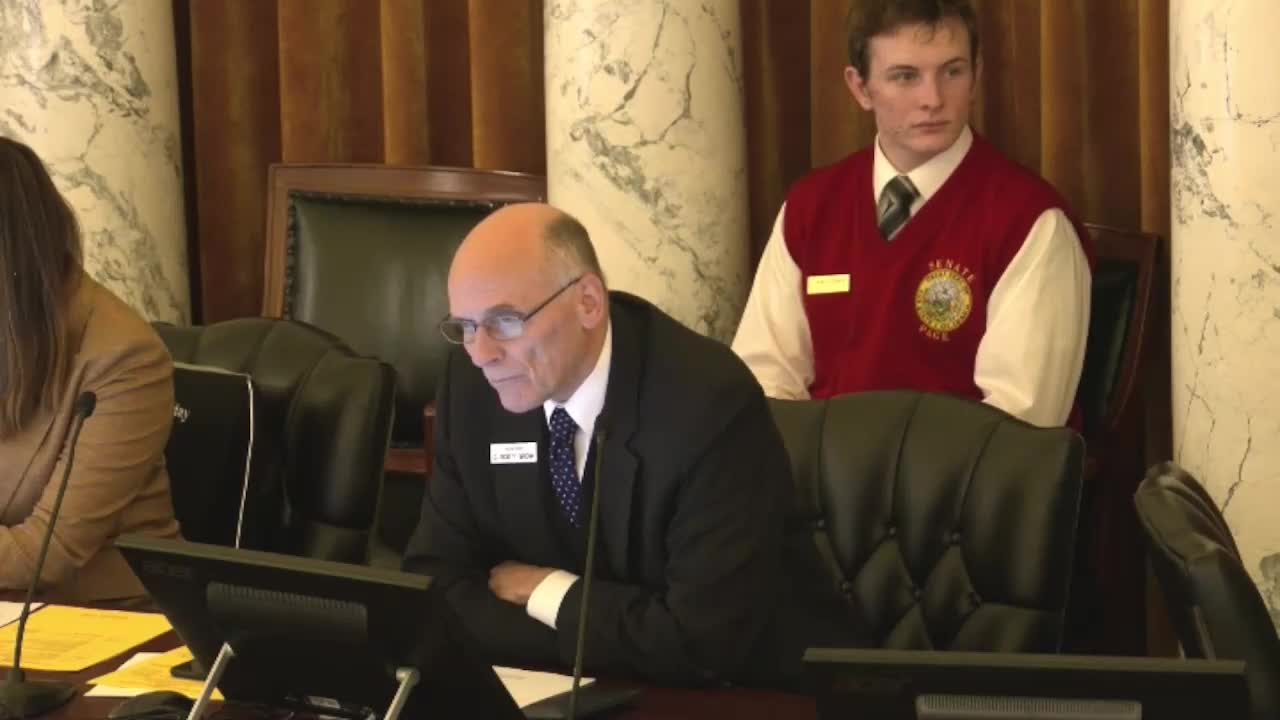
Keith Bybee, division manager of budget policy analysis for the Legislative Services Office, briefed the Joint Finance-Appropriations Committee on the state’s revenue and expenditure outlook for fiscal 2025 and 2026.
Bybee told the committee that the state’s revenue projections show a persistent delta between ongoing revenues and ongoing obligations: “you’re maintaining that delta of about $700,000,000 over the long term,” he said when describing structural balance under the governor’s forecast. He said the governor’s recommendation would leave a projected $338 million ending cash balance for FY2025 and a $227 million ending balance for FY2026.
The presentation traced why revenues rose rapidly during the COVID years and why Idaho’s new baseline remains higher than pre-2020 trends. Bybee said federal COVID relief (CARES Act and the American Rescue Plan) plus population growth and resulting increases in personal income contributed to the large revenue spike in 2020–2021. He noted that once federal stimulus effects fade, the state is not expected to revert to the 2017–2020 growth trend because population growth has produced a higher long-term revenue base.
Why it matters: the structural surplus gives lawmakers choices between tax relief, ongoing program increases, or one-time investments. Bybee said that past legislatures have left the state positioned to make policy choices this session, but that “how to balance that scale” between tax relief and funding government services will be the committee’s central challenge.
Specifics presented to the committee included the governor’s revenue forecast (about $5.9 billion in baseline receipts used in the front-end calculations), assumed transfers and adjustments, and the governor’s program-maintenance and enhancement packages. Bybee highlighted that program-maintenance adjustments in the governor’s recommendation total roughly $177.5 million (about a 3.4% increase over FY2025 original appropriations), and that the governor included approximately $242 million in enhancements.
Committee members asked clarifying questions about forecast scenarios and the conservatism of different revenue tracks. Bybee summarized the terminology used by the state’s economists: baseline is the median (50%/50%) scenario, while more conservative (“pessimistic”) forecasts reflect lower-percentile outcomes and therefore err on the side of caution when budgeting.
The presentation closed with a reminder that the governor’s numbers are recommendations. The Legislature sets final appropriations; committee members and working groups will evaluate agency presentations and reconcile the governor’s recommendations with legislative priorities.
Ending: The committee moved from the revenue overview into more detailed cash-reconciliation and program-by-program briefings scheduled for the days ahead.