Get Full Government Meeting Transcripts, Videos, & Alerts Forever!
Get email alerts on the School Technology And Discipline topic
No spam. Unsubscribe anytime.
House education committee introduces bill directing Idaho school districts to adopt cell‑phone policies
Summary
The Idaho House Committee on Education voted to introduce RS32063, a one‑paragraph proposal that would require school districts to adopt local cell‑phone policies by Aug. 1 and include any confiscation/return procedures in district codes. The sponsor emphasized local control and the measure was printed for public review.
The Idaho House Committee on Education voted to introduce RS32063 on Feb. 13, a short proposal that would require school districts to adopt a written cell‑phone policy — including procedures for confiscation and return — no later than Aug. 1.
Representative Jaren Crane, R‑Nampa, who sponsored the request statement (RS), told the committee the draft is “very short” and modeled on South Carolina’s policy. “At a minimum such policy shall prohibit the use of wireless electronic communication devices in classrooms during the periods of academic instruction,” Crane said, summarizing the central requirement.
The bill text would leave the detailed content of each district’s rule to local boards of trustees and require districts to include the policy in written student conduct manuals and to provide a process for returning confiscated devices. Crane told members he left details such as parental notification and medical or on‑call exceptions to local control: “I wanted that to be on local control,” he said.
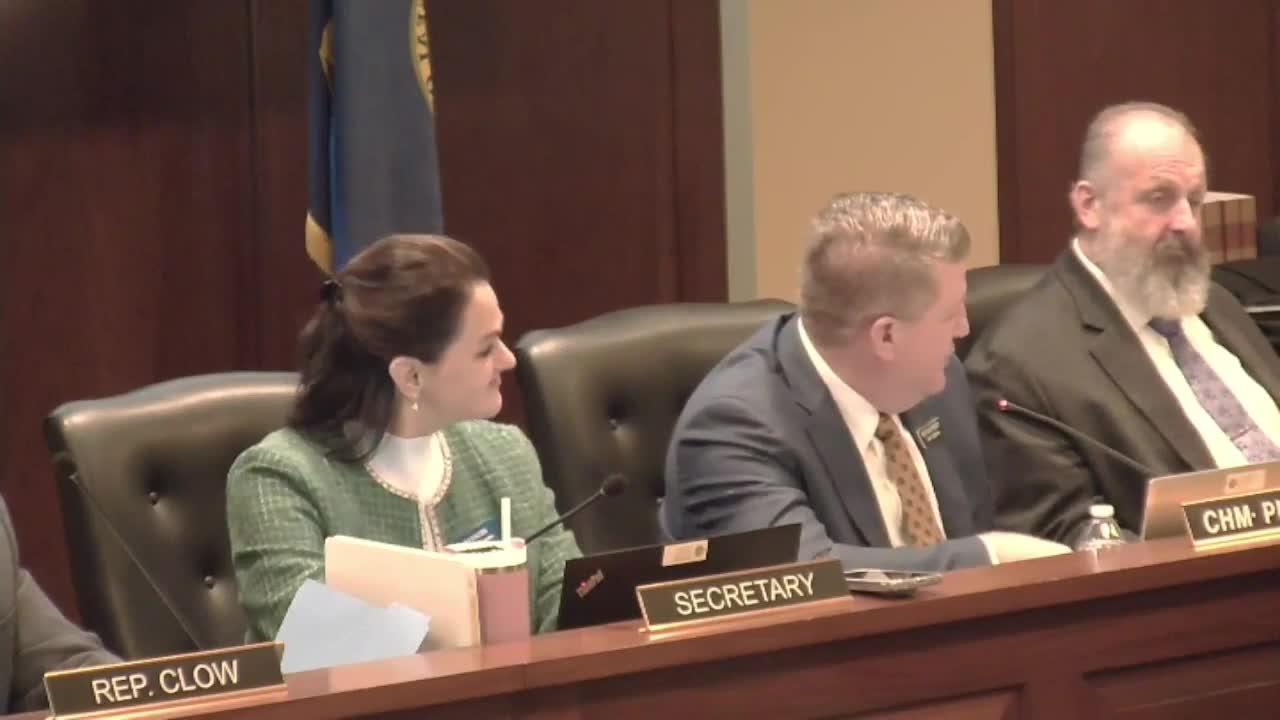
Committee members pressed on the bill’s language. Representative Nelson warned the phrase prohibiting “wireless electronic communication devices” could be read so broadly that it would ban district‑owned tablets and other instructional devices; he urged clarification before printing. Representative Green and the sponsor pointed to the bill’s definition section, which narrows the scope to devices that can be used to wirelessly communicate, but Representative Clow and others asked whether the draft explicitly exempts devices owned or issued by the district.
Representative Hawkins moved to introduce RS32063. The motion passed; members voting to be recorded as opposed included Representatives Plough, Nelson and Wisniewski. The committee chair said the RS would be printed and made available for public comment and that the committee could hear it in a public printed hearing.
What’s next: the RS will be printed for public review so citizens and school officials can provide feedback. The committee did not adopt final statutory language; the measure, as printed, assigns districts the duty to adopt a policy by Aug. 1 and sets a minimum classroom restriction.
Ending
The committee framed the draft as a local‑control approach that sets a state minimum while leaving operational choices — including exemptions for medical needs or on‑call responsibilities — to local district boards. Committee members recommended clarifying the bill’s language about district‑provided instructional devices before any final bill is drafted or advanced.