Get Full Government Meeting Transcripts, Videos, & Alerts Forever!
Get email alerts on the State Liquor Division topic
No spam. Unsubscribe anytime.
Idaho State Liquor Division requests IT, store and staffing funds as committee reviews revenue distributions
Summary
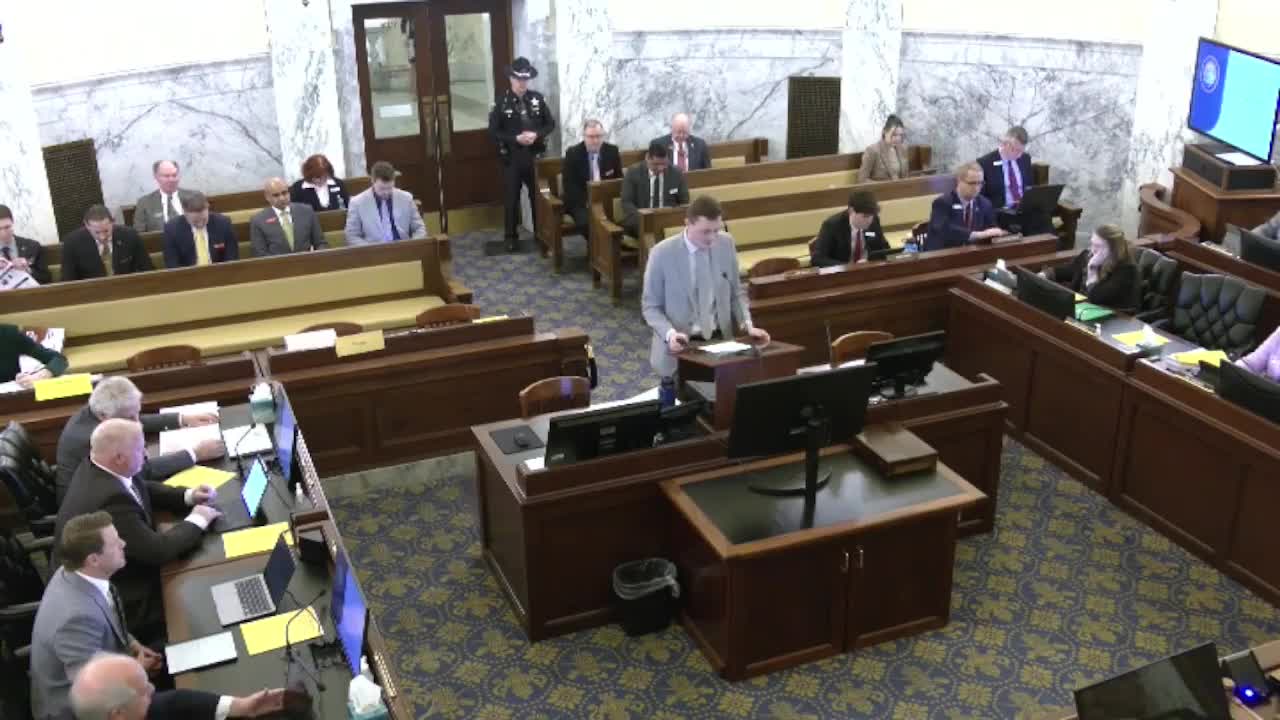
At a Joint Finance-Appropriations Committee hearing, the Idaho State Liquor Division presented its FY2026 requests including IT and security upgrades, retail store replacements, and a small hourly increase for temporary store clerks. Officials reviewed FY2024 sales, distributions to courts and local governments, and ongoing staffing challenges.
The Idaho State Liquor Division presented its FY2026 budget request to the Joint Finance-Appropriations Committee, outlining requests for IT and security upgrades, retail-store replacement items and a modest increase in hourly pay for temporary store clerks.
The Liquor Division is established in Title 23 of the Idaho Code and has a statutory duty to control the distribution and sale of beverage alcohol while optimizing net revenue for the state. Kellen McGurkin, budget and policy analyst with the Legislative Services Office, opened the presentation and the division’s director, Andrew Arulanandam, and senior staff answered committee questions.
The presentation said total sales for FY2024 were about $319.1 million, with reported net income of roughly $116.6 million. The division reported total statutory distributions in FY2024 of $118.3 million. That total includes a 2% surcharge on liquor sales that the division reports sends roughly $6.7 million to the court services fund; other statutory allocations and operating costs reduce available net balances before the legislature receives transfers to the general fund.
The agency described its personnel footprint and turnover. The Liquor Division’s statutory FTP cap was given as 257.25 positions, with most staff concentrated in retail operations (about 210 full-time positions), roughly 185 part-time store clerks and revenues from about 106 contract liquor stores that are not included in the FTP count. The division reported a filled FTP level of about 93% and said it consistently spends about 96% of its appropriated personnel costs.
Director Andrew Arulanandam and Chief Deputy/CFO Tony Grama described recent and proposed budget items. Ongoing and one-time FY2026 requests cited in the presentation include: - $131,400 in ongoing dedicated funds (including $57,400 to raise temporary retail staff from $15.00 to $15.45 per hour and $72,000 for mandatory shrink-wrap under a new freight contract). - A $200,000 one-time request for network security firewalls and managed switches to finish a network modernization project (the division previously invested in Cradlepoint routers), with the Office of Information Technology Services (OITS) recommending the setup. - A $100,000 one-time request to upgrade the agency website to meet web content accessibility standards and Americans with Disabilities Act (ADA) requirements. - $980,300 one-time for retail store replacement items (shelving, lighting, counters and similar retail improvements) and replacement motorized equipment and vehicles (approximately $95,000 of the total for warehouse motorized equipment). - $235,000 requested for IT and security replacement items recommended by OITS (server replacements, battery backups, and security systems for stores).
Arulanandam and staff said part of the Liquor Division’s available fund balance declined after direct-to-consumer pandemic sales and that capital outlay for new store leases and remodeling has driven higher one-time and ongoing appropriations. The agency explained that net income can differ from statutory distributions because of adjustments in asset and inventory accounting.
Committee members asked about specific items. Senator Cook questioned whether $100,000 was necessary to fix the website’s ADA compliance; Arulanandam replied that an outside consultant provided a list of items needing attention and that outside attorneys nationwide sometimes sue entities over web accessibility, making a one-time remediation prudent. Senator Ward Engelking and Representative Bridal pressed on turnover and the proposed temporary staff pay increase: the division said prior pay increases reduced turnover from about 140% to roughly 84% and that temporary clerks are state employees (not hired through agencies) who are not eligible for automatic CEC adjustments, so the committee must approve pay adjustments.
On rural service and contract stores, the division said contract stores are private businesses that receive product from the division and manage their own labor per contract terms. The division described site selection as a market-driven decision guided by population and revenue considerations to avoid placing stores where they would fail financially.
The Liquor Division staff said the requested IT and security investments are intended to reduce ongoing communications costs and improve store connectivity and cybersecurity. The agency told the committee that OITS reviewed the firewall and switch request and found it appropriate; the division projected savings relative to a hardwired network solution and said the equipment would shift stores from DSL/T1 connections toward cellular-based connectivity combined with managed security.
Arulanandam closed by underscoring the agency’s role as a revenue-generating, customer-facing state operation and offered to respond to follow-up questions.
The committee did not take a vote during this presentation. The presentation and questions will be part of the record for subsequent appropriation decisions.