Get Full Government Meeting Transcripts, Videos, & Alerts Forever!
Get email alerts on the Mental Health Fee Schedule topic
No spam. Unsubscribe anytime.
Senate committee advances bill moving mental‑health fee rules into statute
Summary
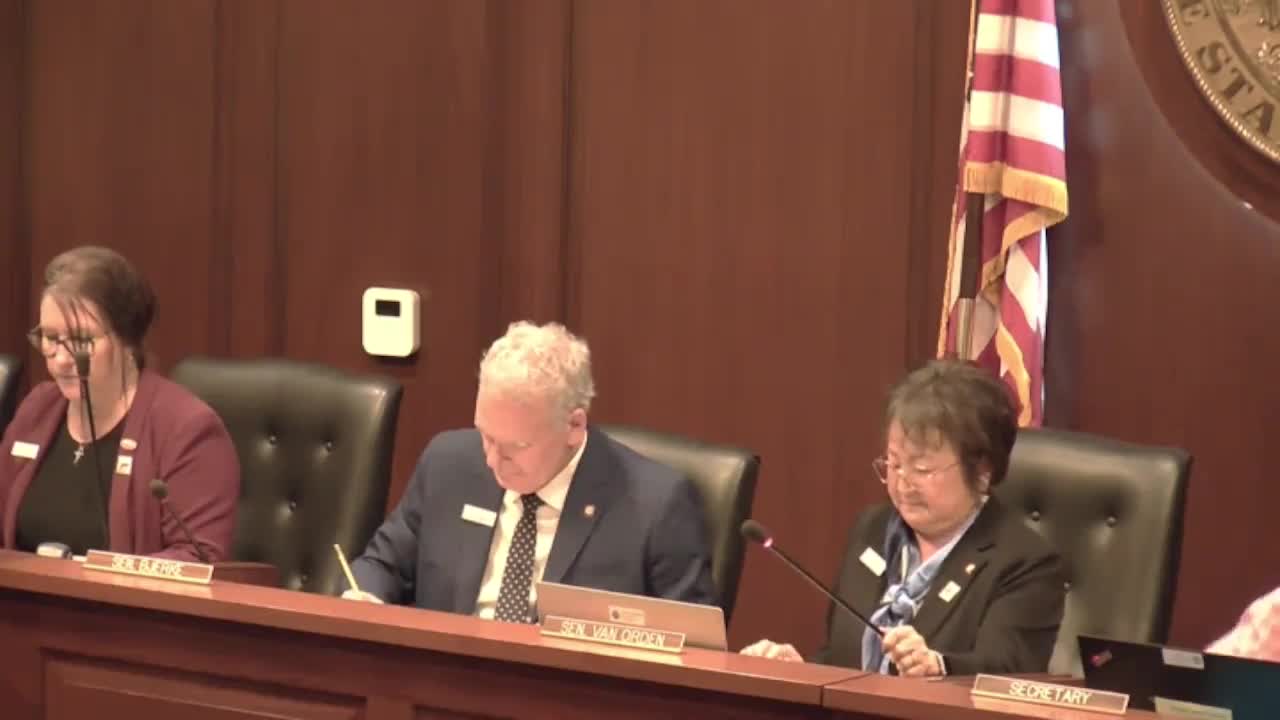
House Bill 2020, which moves a departmental fee schedule for mental‑health services from rule into statute, was advanced out of the Senate Health and Welfare Committee with a due‑pass recommendation.
House Bill 2020, which moves a departmental fee schedule for mental‑health services from rule into statute, was advanced out of the Senate Health and Welfare Committee with a due‑pass recommendation.
Jared Larson, legislative and regulatory affairs chief at the Department of Health and Welfare, told the committee the bill follows earlier agency efforts to transfer rule provisions into statute now that the state is no longer a direct service provider. "Nobody is denied services for an inability to pay," Larson said, describing the bill's preservation of that requirement while replacing an unwieldy sliding scale with a 5% cap on income used to calculate client fees.
The nut of the bill is administrative: the department said the sliding fee schedule in regulation has been effectively dormant since 2020 and is difficult for contractors to administer. Larson said some of the fee language should have been moved earlier, noting the department’s transition to a contractor under a Magellan contract that took effect on July 1. The bill maintains that no one seeking children’s or adult mental‑health services will be denied care for inability to pay.
Senator Blaylock moved to send the bill to the floor with a due‑pass recommendation; Senator Harris seconded the motion. Blaylock said her recent appointment to the state’s behavioral health council informed her support. Senator Wintrow said she had worked through detailed questions with Larson and agency staff and that she supported replacing the sliding scale with the 5% cap while keeping the nondiscrimination guarantee in place.
Committee discussion otherwise was limited; the motion carried on a voice vote. The bill was described by the presenting staff as budget neutral and intended to clarify how contractors implement client fees during the managed‑care transition.
The committee did not debate new eligibility changes or new program dollars in committee; Larson and members framed the measure as a technical statutory fix to improve contractor implementation of existing policy.
Votes at a glance: The committee moved House Bill 2020 to the Senate floor with a due‑pass recommendation. The motion was made by Senator Blaylock and seconded by Senator Harris; the committee recorded the motion as carried on a voice vote.
Why it matters: moving implementation language into statute is intended to reduce confusion for contracted providers now that the department is not directly providing those services. Committee members emphasized that preserving the requirement that services not be denied for inability to pay was central to their support.
Sources and provenance: Presenting testimony from Jared Larson (Department of Health and Welfare) and the committee’s voice vote are recorded in the committee transcript.