Get Full Government Meeting Transcripts, Videos, & Alerts Forever!
Get email alerts on the Medical Education Wwami topic
No spam. Unsubscribe anytime.
House committee backs bill to end WWAMI slots and direct State Board to designate in‑state or nearby medical programs
Summary
The House Education Committee approved a "do pass" recommendation for House Bill 176, a measure to end further reserved WWAMI slots after the 2026–27 academic year and direct the State Board of Education to designate at least two medical-education programs in Idaho or adjacent Mountain Time Zone states, with a cap of 60 state-supported seats.
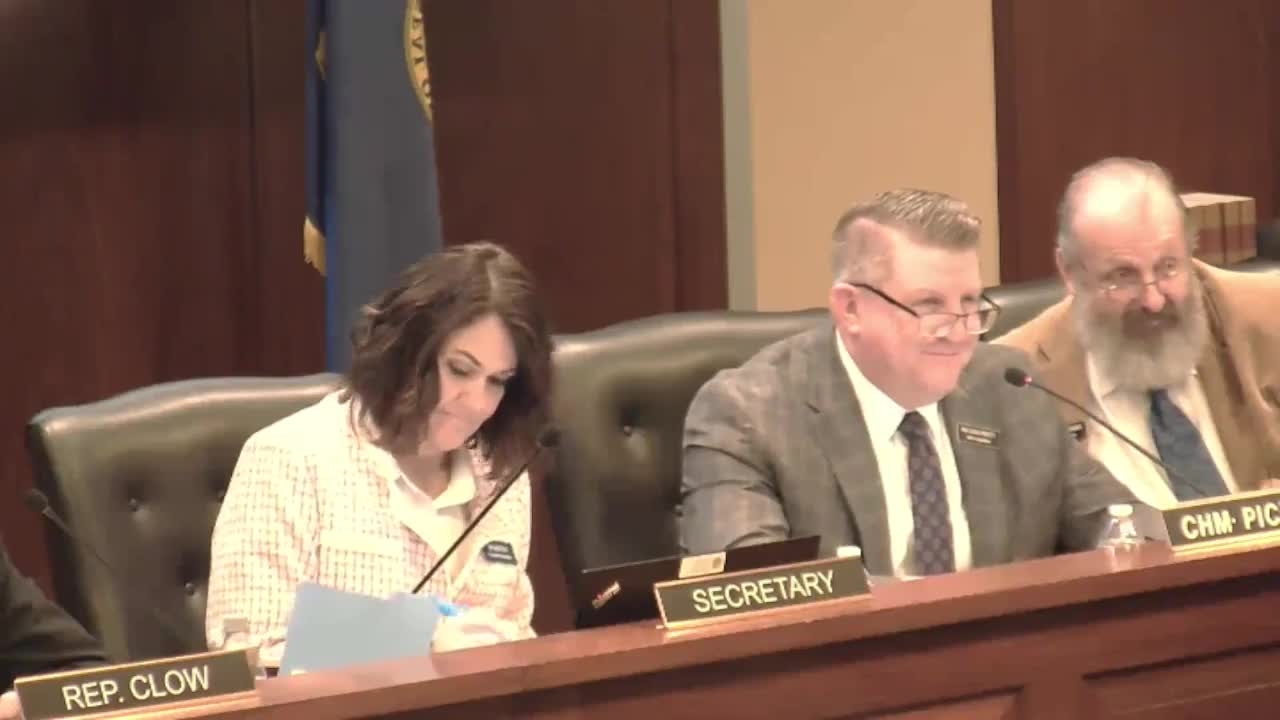
The House Education Committee voted 9–5 to send House Bill 176 to the floor with a "do pass" recommendation after extended testimony and public comment on a proposal to change how Idaho arranges medical education for state-supported students.
Sponsor Representative Dustin Manwaring described the bill as an effort to increase Idaho control over medical education slots, expand capacity and keep more state-supported medical-education dollars and training in Idaho. "I started when I introduced this legislation by talking to you about how Idaho does not have its own state run medical school," Manwaring said. "I truly believe this is a part of that conversation."
Key provisions described by the sponsor and witnesses:
- Termination of further reserved WWAMI slots after the 2026–27 academic year; current WWAMI students would continue to receive their benefits and complete their 4-year training.
- The State Board of Education would be required to designate at least two medical-education programs in Idaho or in adjacent states inside the Mountain Time Zone; the bill text sets a maximum of 60 state-supported seats for the program(s) (the sponsor said Idaho currently operates 40 seats at the University of Idaho and a longstanding 10-seat relationship with the University of Utah).
- The bill requires that a majority of clinical rotations for the Idaho program be located in Idaho by the 2029–30 academic year, a timeline the sponsor described as giving time to build the clinical network.
- If Idaho later creates a state-owned medical school, the bill contemplates assigning a substantial share (the sponsor referenced a 40% target) of state-supported seats to that school while preserving at least one outside partnership.
University and expert testimony: University of Idaho and University of Utah representatives testified in support of a transition plan. Dr. Rusty Baker of the University of Idaho said the University of Idaho has delivered the first two years of basic-science curriculum to WWAMI students for decades and cited a 98 percent pass rate on the Step 1 board exam for the program's students. Dr. Ben Chan of the University of Utah (testifying by phone) said Utah already takes 10 Idaho students annually and described Utah's clinical capacity and match rates (he stated a 97 percent match rate for University of Utah students).
Supporters at the microphone argued the measure would keep a larger share of state funding inside Idaho and increase in‑state training capacity. Representative Manwaring cited current state distribution of tuition-related funds, saying the University of Idaho receives about $4,450,000 while the University of Washington receives about $9,380,000 for the program; he said a Utah partnership would flip that distribution and keep roughly two-thirds of funds in Idaho.
Opponents—including multiple current and former WWAMI students, University of Washington officials and practicing Idaho physicians—warned the bill risks disrupting a 50-year network of clinical sites and preceptors across Idaho. University of Washington vice dean Dr. Suzanne Allen said the UW does not use Idaho funds for abortion training or care and said clinical capacity in Idaho is currently constrained; UW testified it is committed to expanding WWAMI if clinical training sites are available. Students and physicians who trained in WWAMI told the committee the program’s long-standing clinical relationships, rural training pipeline and reputation make UW-trained graduates highly competitive and more likely to return to Idaho practice.
Committee process and votes: The committee heard several hours of testimony and multiple motions. Representative Ehart moved to send HB 176 to the floor with a do-pass recommendation; Representative Garner moved as a substitute to hold the bill in committee. The substitute motion to hold failed. An amended substitute motion to hold the bill until Feb. 19 failed on a tied tally, and the committee then approved the do-pass motion by roll call, 9–5.
Why it matters: The bill would change longstanding relationships and administration of Idaho state-supported seats in a regional medical-education program that has operated across five states for more than 50 years. Supporters argue it is necessary to expand Idaho’s capacity and retain more physicians in the state; opponents say abrupt change risks losing clinical partnerships, damaging a proven rural training pipeline and reducing the number of Idaho physicians who return to practice in state.
What’s next: House Bill 176 was approved by the committee 9–5 and will be listed for floor consideration. Several committee members said they expect additional scrutiny on capacity, the State Board of Education’s graduate-medical-education planning, and the commitments from potential partners before final action on the House floor.