Get Full Government Meeting Transcripts, Videos, & Alerts Forever!
Get email alerts on the Ev Infrastructure Preemption topic
No spam. Unsubscribe anytime.
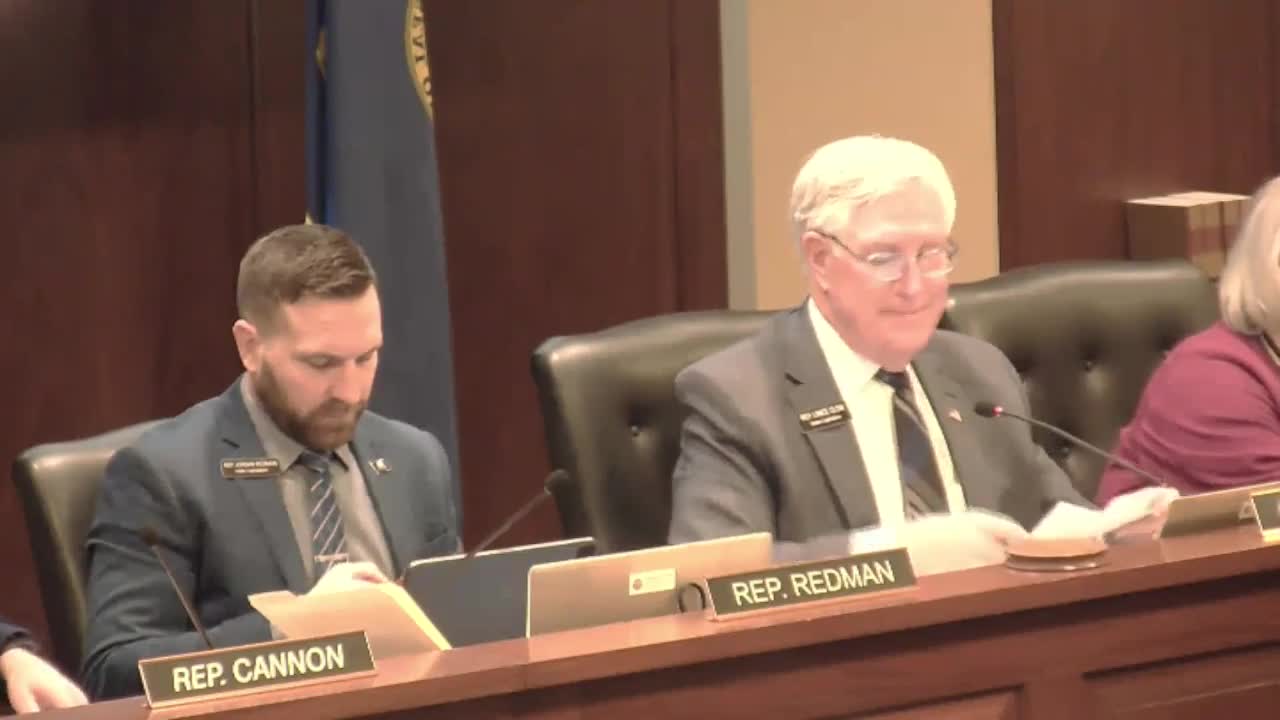
House Business Committee sends EV preemption bill to floor after hours of debate, 15-2
Summary
House Bill 86, which would preempt local governments from requiring electric-vehicle charging infrastructure or conduit in building permits, cleared the House Business Committee on Feb. 13 by a 15-2 roll-call vote after public testimony from cities, counties, conservation groups and industry stakeholders.
Representative Joe Palmer, R-Meridian, sponsored House Bill 86 and told the House Business Committee the bill simply prevents local governments from mandating electric-vehicle charging equipment or conduit as part of building permits. "This is just about forcing people to do it," Palmer said, adding that property owners and business owners retain the ability to install chargers voluntarily.
Multiple witnesses opposed the bill in committee testimony. Lisa Heck, a retired electrical and computer engineer and EV owner from Boise, said local governments should retain the ability to plan for EV infrastructure because installing conduit during construction typically costs "only a few hundred dollars" but retrofits can cost several thousand dollars. She urged the committee to vote no and preserve local planning authority.
Lance Sayers of the Association of Idaho Cities said the association and its 97 member cities oppose the legislation because it would remove local flexibility to plan infrastructure and respond to different local conditions. Tom Daley, an Ada County commissioner speaking for Ada County and the Idaho Association of Counties, said the county supports the bill, asserting that requiring EV infrastructure at a county jail project would have forced an unnecessary expense for spaces not generally accessible to the public.
Conservation groups also urged the committee to hold the bill. Jonathan Oppenheimer of the Idaho Conservation League and Ryan McGoldrick of Conservation Voters of Idaho described the bill as a "dig-once" or future-proofing policy that allows low-cost conduit installation during construction and cited state-level energy and economic benefits if more fuel spending stays in Idaho. Testimony included several quantitative claims: speakers cited an estimated $3 billion in annual out-of-state petroleum expenditures, about 8,500 EV registrations in Idaho, and growth in Ada County EV ownership cited as roughly 30% between 2023 and 2024.
Representative Harris moved to send HB 86 to the House floor with a do-pass recommendation. The committee recorded a roll-call vote; the motion passed 15 to 2. Several members spoke in favor and against the bill during debate. Supporters emphasized property-rights and local taxpayer concerns; opponents emphasized planning costs, flexibility for local officials and future infrastructure savings.
The committee's formal action sends HB 86 to the full House for further consideration.