Get Full Government Meeting Transcripts, Videos, & Alerts Forever!
Get email alerts on the Pardons And Parole topic
No spam. Unsubscribe anytime.
Idaho parole commission seeks higher commissioner pay amid turnover concerns
Summary
The Commission of Pardons and Parole requested statutory authority and funding to raise commissioner pay from $300 to $400 per hearing day, citing recruitment and retention challenges and significant unpaid preparation time, Executive Director Christine Starr said Feb. 4.
The Idaho Commission of Pardons and Parole asked the Joint Finance Preparations Committee on Feb. 4 to support legislation and appropriation to raise commissioners’ daily pay from $300 to $400. Executive Director Christine Starr said commissioners do extensive unpaid preparation and training work, and the agency reported the request is intended to reduce turnover and improve recruitment.
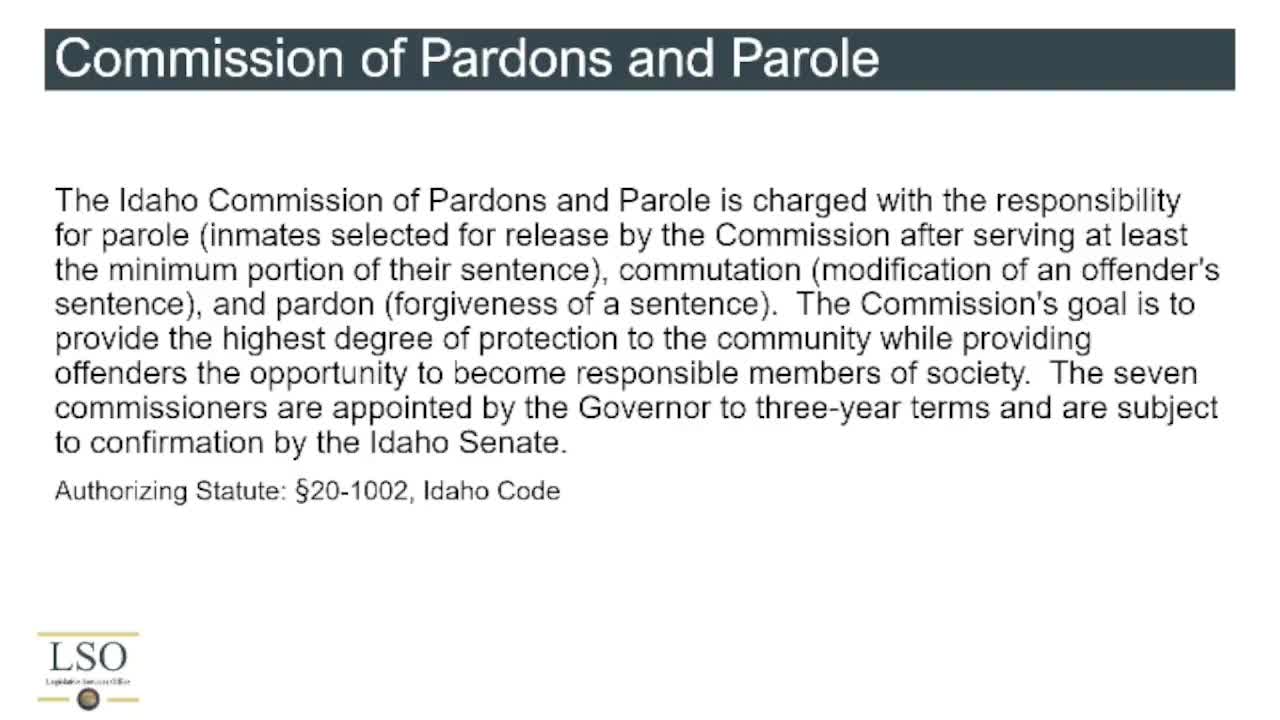
The commission has seven governor‑appointed commissioners who serve three‑year terms and are confirmed by the Idaho Senate. Executive Director Starr, who said she has served about three months, told the committee she expects to lose more than half of the current commission by December and described the positions as time‑intensive: commissioners typically conduct hearings three weeks per month year‑round and receive compensation only for hearing days, not for preparation. Starr provided analysis showing commissioners average about 26 hours of preparation per five hearing days, equal to roughly 3.25 unpaid workdays per hearing week.
The commission’s FY2026 budget request includes increasing the statutory per‑day compensation, which requires legislative change. The governor’s fiscal estimate for enacting the pay change would be about $59,300 in general fund cost; the governor recommended that amount. The commission also requested replacement laptops and related items recommended by the Office of Information Technology Services.
Starr said the commission provides thousands of decisions annually (6,670 in FY2024 versus 5,907 in 2017) and emphasized the public‑safety and victim impacts of commission decisions. She called the pay increase a near‑term step and described it as a partial fix to broader concerns about the commission’s part‑time structure and unpaid work demands.
Committee members asked about the number of scheduled hearing days (Starr said commissioners typically have hearings three weeks per month, year‑round) and whether commissioners are compensated for preparation (they are not). Starr said the agency will review broader models and decision‑making frameworks to ensure adequate training, transparency and continuity.
The committee took no immediate action; the requested pay increase would require a statute change and legislative appropriation if enacted.