Get Full Government Meeting Transcripts, Videos, & Alerts Forever!
Get email alerts on the Legislative Audits topic
No spam. Unsubscribe anytime.
Legislative auditors tell JFAC many findings are new but some long-standing problems persist
Summary
April Renfro of the Legislative Services Office briefed the Joint Finance and Appropriation Committee on the office's audit work, uncorrected findings, examples of recurring problems and delays caused by late financial statements from the state controller's office and the LUMA transition.
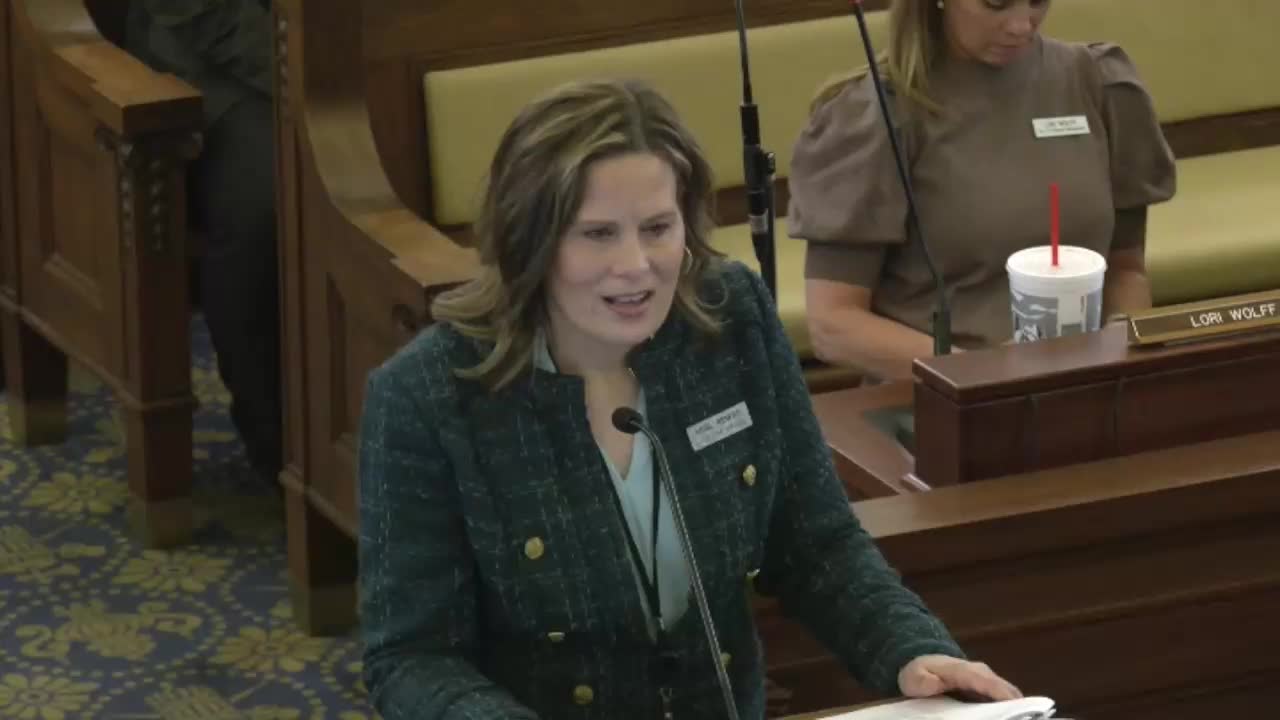
April Renfro, Legislative Auditor, Legislative Services Office, told the Joint Finance and Appropriation Committee at its Jan. 7 meeting that the office is stepping up transparency and follow-up on audit findings and that most uncorrected findings are recent, but some older items remain open.
Renfro, who said the audit division has 30 financial and IT auditor positions and one administrative assistant, described the office's scope: annual audit of the state's comprehensive financial report (ACFR), the single audit of federal award expenditures, recurring accountability (management review) reports of agencies and special agreed-upon procedures. She said the ACFR audit is typically due Dec. 31 and the single audit is due March 31.
Why it matters: audit findings feed directly into budgeting and agency oversight. Renfro said uncorrected findings are flagged in an annual report that helps legislators identify agencies with open problems when they consider appropriations.
Renfro said 70% of the uncorrected findings in the office's new report are from the current reporting period and therefore represent items for which follow-up testing has not yet been completed; the remaining 30% reflect problems the agency has been unable to correct in a reasonable time. "Seventy percent of our uncorrected findings are from the current reporting period," she said, noting that the office will continue its 90-day, first-annual and second-annual follow-ups on accountability reports.
She described common categories of findings: internal-control weaknesses, noncompliance with statutes or rules, and substantive financial errors. Renfro stressed that some findings are qualitatively significant even when they are not large dollar errors if they affect vulnerable populations or critical processes.
She gave a detailed example from the Department of Health and Welfare's 2023 accountability report involving qualified residential treatment program (QRTP) placements for youth in foster care. Of 19 QRTP placements examined, auditors found: 10 with no completed placement assessment, 5% lacking required details, 21% where the court order could not be found, 5% where placement was not made within 60 days of the start of placement, 84% where the notice of placement retained in the record did not include the placement date and recommended level of care, and 42% with missing required 30-day case consultations. Renfro said those gaps stemmed from inconsistent application of internal controls, missing documentation and retention issues and could affect whether children receive timely or appropriate levels of care.
She also cited a recurring accountability finding at the Department of Fish and Game about noncompliance with state travel policy: missing travel vouchers, incomplete vouchers and missing receipts and mileage documentation. Renfro told the committee that agencies sometimes implement partial corrective actions that later prove insufficient when tested.
The auditors flagged systemic issues as especially concerning when they are rooted in information systems that do not enforce segregation of duties or when annual benefit updates are not documented. For example, the single audit finding 2-11 noted that the low-income home energy assistance program's benefits matrix did not have documented review and approval processes; auditors did not identify actual payment errors but said the lack of documentation raised risk that errors could occur and go undetected.
Renfro also explained timing and resource constraints affecting audit delivery. She said the ACFR drafts were delayed by the state controller's office and the transition to the LUMA financial system; the auditors received statements Dec. 30, which left insufficient time to meet the typical deadlines. "We did not receive them until December 30," she told the committee. As a result, she said it is unlikely the office will meet the March 31 single audit deadline and that the office is communicating with federal cognizant agency HHS about timing.
Committee members and cochairs discussed consequences for agencies that do not correct findings. One cochair observed that persistent uncorrected findings can affect future appropriations: "If they can't correct them ... it questions how much more we're gonna give to them," the cochair said. Another cochair described withholding funding as an enforcement step the committee has used in the past after repeated noncompliance.
Renfro said auditors follow established auditing standards for opinion audits and use a separate follow-up process for accountability reports. She emphasized the range of corrective timelines: some fixes are straightforward (policy updates, training), while others require legislation or external approvals and take much longer.
The auditors will distribute the uncorrected findings report to committee members; Renfro said she had provided the cochairs an advance copy and would send it to the full committee. Committee members were urged to review open findings for agencies in their work groups when preparing budgets.
Ending: The committee took no formal action at the hearing but asked staff and auditors to continue outreach to agencies and federal grantors. Renfro remained available for questions as the committee moved on to other budget topics.