Get Full Government Meeting Transcripts, Videos, & Alerts Forever!
Get email alerts on the Student Transportation topic
No spam. Unsubscribe anytime.
Education committee holds transportation overhaul after heated testimony on safety, funding and virtual-student reimbursements
Summary
House Bill 293, which would simplify school-transportation reimbursement to a uniform 85% mileage rate, restore $7.5 million, and permit inspected 'authorized' non-school-bus vehicles, was held in committee to March 5 after extensive testimony on safety, funding winners and losers, and virtual-school reimbursements.
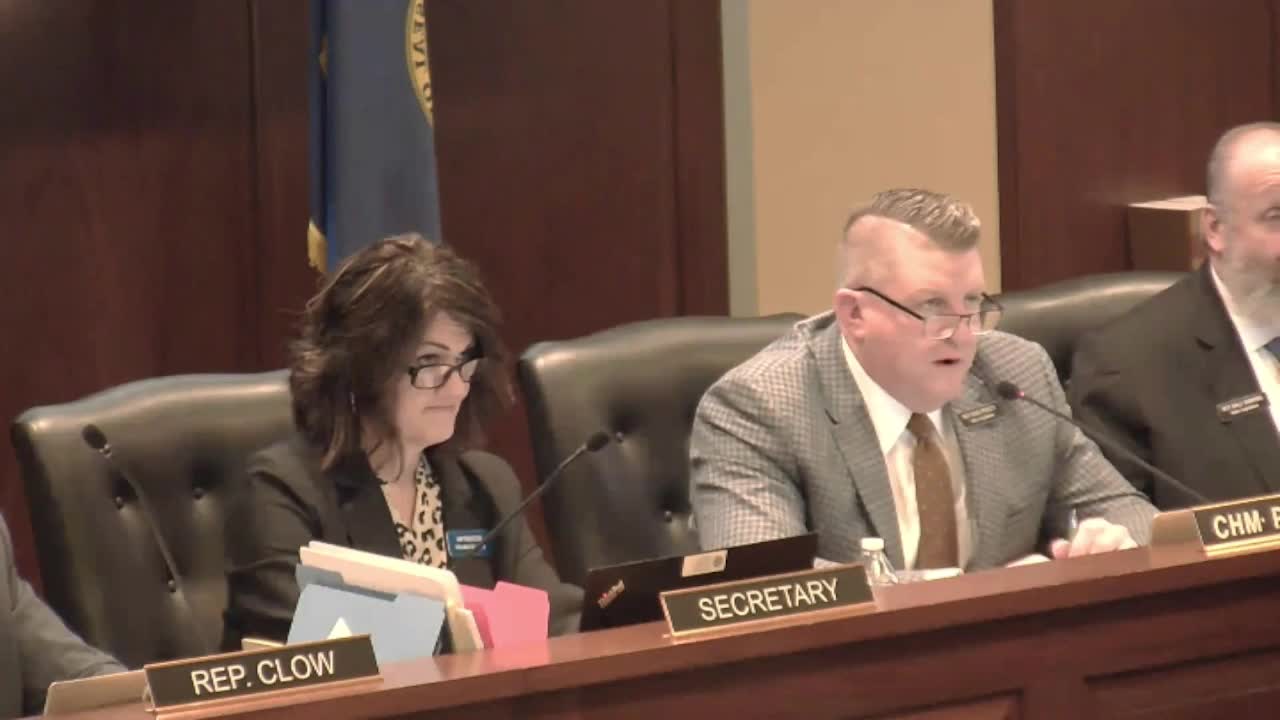
Representative Dan Garner and Representative Jack Nelson presented House Bill 293 to the House Committee on Education as a rewrite of Idaho’s school-transportation funding rules. The proposal would remove the current block-grant/enrollment-based elements and reimburse districts at 85% of mileage, restore $7.5 million to transportation funding, and add a new "authorized vehicle" category that would allow districts to use inspected, identified non–school-bus vehicles (for example, minivans or passenger cars) for some small-group or specialized trips if certain training and inspection requirements are met.
Supporters said the bill would make reimbursements more equitable and predictable and remove oddities in the current formula that resulted in some districts being reimbursed far above their actual costs and others being reimbursed far below. Representative Nelson showed committee documents that compare current block-grant funding, current reimbursement percentages and the effect of the proposed changes district by district. Proponents, including some district superintendents and charter-school representatives, said the measure would allow smaller, short trips to be run more efficiently and reduce unnecessary use of large buses.
Opponents — including long-time transportation staff and private contractors — said the bill would put students at risk by subsidizing vehicles that do not meet the yellow-school-bus construction standard and recommended against folding lower-cost van miles into the statewide cost-per-mile calculation. Lynette Dawe of Boise School District, who has worked in transportation auditing and operations, warned that adding minivan or car miles to the same reimbursement calculations would lower the statewide cost-per-mile and penalize districts that continue to use full-sized school buses. Brown Bus Company representative Brent Carpenter argued the proposed "authorized vehicle" category would substitute convenience for the federally recommended safety standard embodied in school buses.
Department of Education staff explained that the current block-grant formula can create large variation: some districts have been reimbursed above 200% of their costs under the old block-grant system while others were reimbursed as low as 37%. The bill also contains a subsection about virtual students and a historical statutory provision that already allows some non-transportation reimbursements for virtual-program connectivity; staff and committee members raised concerns about disentangling that language.
Committee members expressed concern about the distributional winners and losers shown in the fiscal worksheets, the treatment of contracted transportation providers versus district-run fleets, and possible safety and liability ramifications if districts elect to subsidize nonconforming vehicles. After extended testimony and debate, Representative Vandeiff moved to hold House Bill 293 in committee until March 5 for further work; the motion passed on a voice vote.