Get Full Government Meeting Transcripts, Videos, & Alerts Forever!
Get email alerts on the Consumer Privacy Mortgage Leads topic
No spam. Unsubscribe anytime.
Committee advances bill requiring callers using mortgage-trigger leads to disclose identity and purpose
Summary
House Bill 149 would require solicitations generated from mortgage 'trigger leads' to begin with disclosures that the caller is not the consumer's current lender and that the caller purchased a mortgage lead. The committee voted to send the bill to the House floor with a do-pass recommendation.
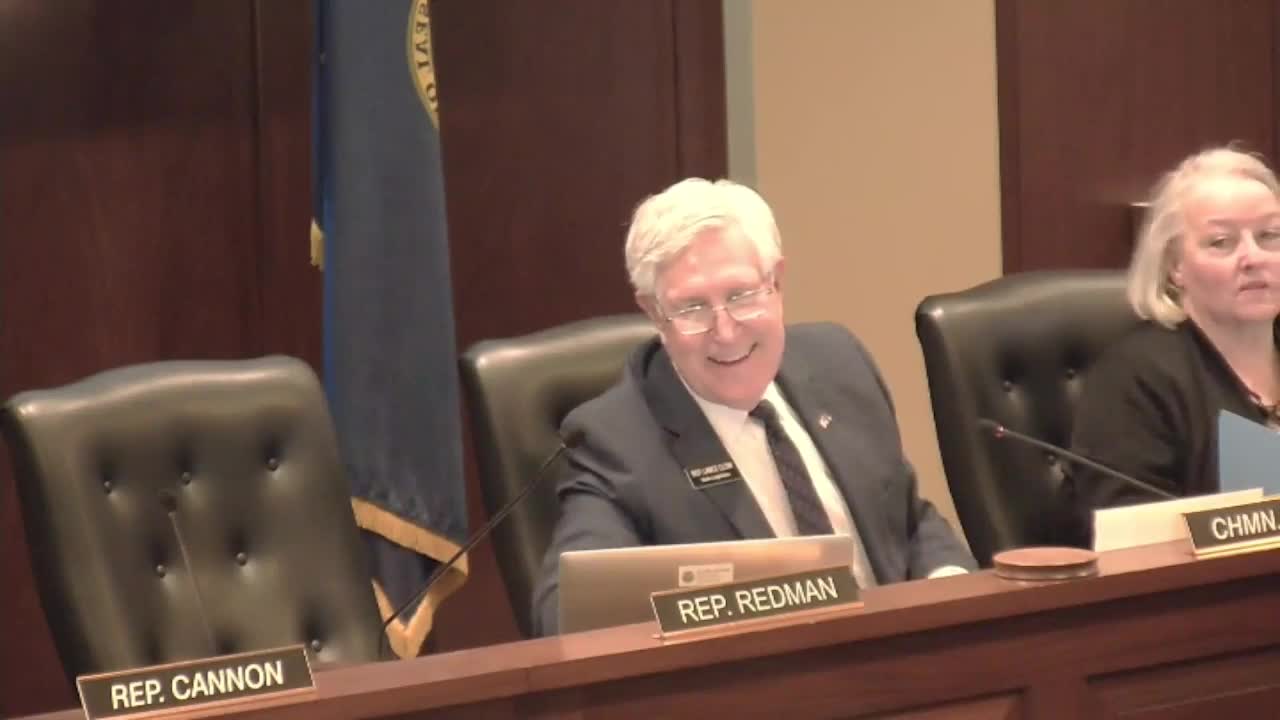
The House Business Committee voted Feb. 17 to send House Bill 149 to the full House with a do-pass recommendation. Sponsor Representative Bruce described the bill as a consumer-notification measure addressing so-called mortgage "trigger leads," which are lists generated when consumers apply for mortgages.
Representative Bruce (District 23) told the committee that consumers frequently receive multiple calls after applying for a mortgage because credit-data companies sell application data to lead buyers. He said the bill would not ban the lead market but would require callers using those leads to identify themselves and disclose that the lead was purchased. "When they make contact with the consumer they have to identify themselves that they are not with their current lender and that they did purchase mortgage lead," Bruce said.
Committee members asked procedural and enforcement questions. Representative Burch asked whether the bill would make previously public information private; Bruce replied it would not prevent purchase of leads but would require disclosure when a caller uses them. Representative Barbieri asked whether callers commonly record conversations; Bruce replied that some do and that enforcement would proceed under the state's Consumer Protection Act.
Bruce said federal law (the Fair Credit Reporting Act) and the Consumer Financial Protection Bureau have addressed aspects of trigger-lead use but that states including Connecticut, Rhode Island, Maine, Kansas, Kentucky, Wisconsin and most recently Texas had enacted laws limiting or regulating the use of mortgage-trigger leads.
Representative Cannon moved the committee recommendation to send HB 149 to the floor with a do-pass recommendation. The committee approved the motion by voice vote; the transcript records the motion "carries" and does not record an individual roll-call tally.
Committee action: HB 149 advanced to the House floor with a do-pass recommendation by voice vote. The bill as described in committee would require callers using mortgage-trigger leads to disclose their nonaffiliation with the consumer’s current lender and that the caller purchased the lead; enforcement would be through the state's Consumer Protection Act as described by the sponsor.