Senate committee backs increase in Idaho Bean Commission assessment to shore up research and marketing
Loading...
Summary
The Idaho Senate Agriculture Affairs Committee voted to send Senate Bill 10 54 to the floor with a due-pass recommendation after the Idaho Bean Commission described declining receipts, growing research needs and international seed-testing pressures.
The Idaho Senate Agriculture Affairs Committee voted to send Senate Bill 10 54 to the floor with a due-pass recommendation after the Idaho Bean Commission described falling receipts, rising costs and a need for continued research and market promotion.
The bill, presented by Andy Wolf Wybie, executive director of the Idaho Bean Commission, would raise the commission's per-hundredweight assessment from its current level to a 16¢ base split equally between growers and dealers and would authorize the commission, by majority board vote, to increase the assessment up to 24¢ per hundredweight in the future.
The commission is funded by an industry checkoff and does not receive general fund money. "We do not receive any general fund moneys," Wybie told the committee, adding the commission had not requested an increase since 1992. She said inflation and a recent production-driven drop in assessment receipts have reduced the commission's reserves and limited its ability to fund research and education.
Wybie told the committee the commission's 10-year average receipts are about $163,000 but that 2024 receipts were under $86,000. She said the commission's administrative costs run about 30–40% of its budget, research typically represents roughly 40%, and education events such as bean schools cost roughly $10,000 annually.
Growers and industry representatives who testified urged approval. Michael Goodson, vice chairman of the commission and a third-generation Parma-area farmer, said the commission provides "invaluable" research, education and marketing and described efforts to broaden market access and improve application methods for crop inputs. Monty Hamilton, dealer representative and commission chairman, said dealers "strongly support this bill" and argued the commission's rules and promotion keep seed dealers operating in Idaho. Douglas Jones, a retired Magic Valley farmer, and Richard Wynne of H.M. Claus also testified in support, noting Idaho's reputation as a premier, disease‑free seed region.
Wybie described specific program priorities the commission says would be at risk without the increase: renewed entomology research after a long gap, seed-testing improvements to speed turnaround, and work to detect and respond to an outbreak of a seed‑affecting pathogen referenced in testimony as "curtobacterium," which led some international markets to impose restrictions. She said the commission has obtained nearly $2 million in grant funding since 2011 to supplement its budget but argued those grants do not substitute for stable assessment revenue.
Committee members pressed for details on budget breakdown and on whether private fundraising could replace an assessment increase. Wybie said the commission has sought sponsorships for bean schools and used grants where possible but that the statutory structure and the commission’s scope limit the proportion of private funding it can rely on.
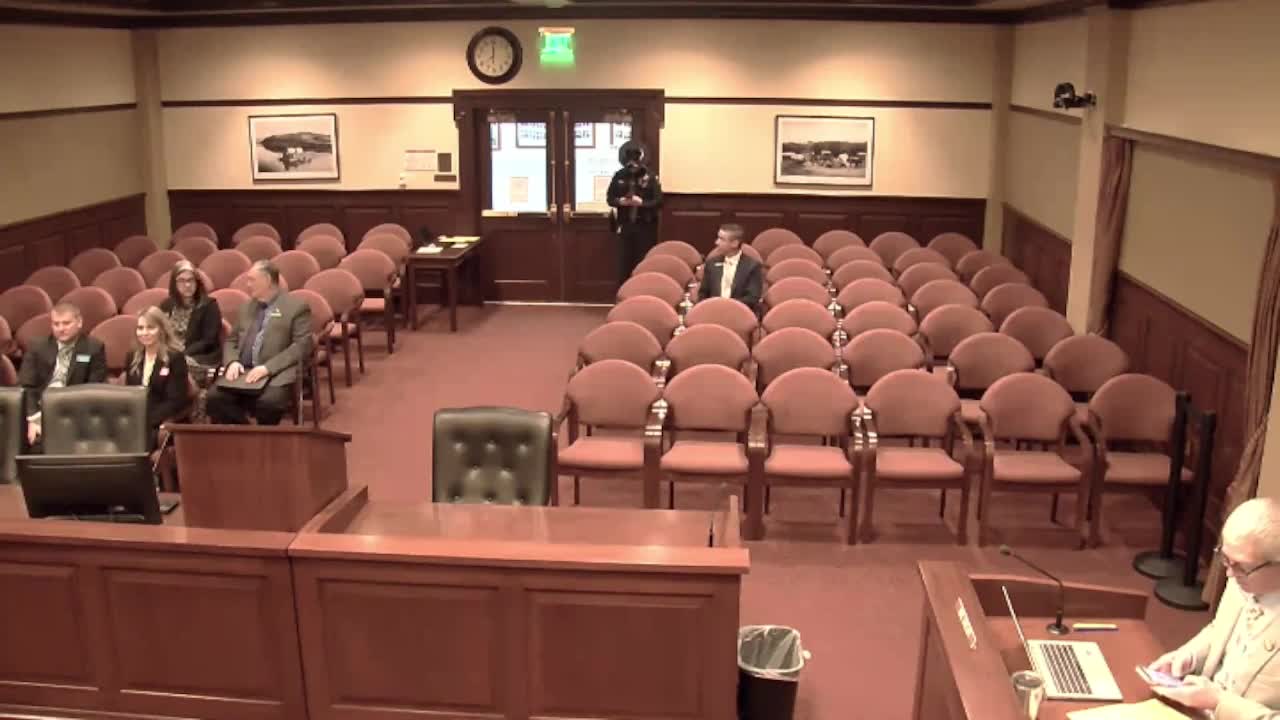
Senator Blaylock moved that Senate Bill 10 54 be sent to the floor with a due-pass recommendation; the motion was seconded by Senator Lent and carried on a committee voice vote. The committee did not record a roll-call tally in the transcript.
Votes at a glance: Senate Bill 10 54—motion to send to the floor with due-pass recommendation approved by committee voice vote; motion moved by Senator Blaylock, seconded by Senator Lent.
Wybie and testifiers emphasized the bill is intended to protect Idaho's disease‑free seed reputation and the commission's ability to fund research and markets; Wybie calculated that even the full 24¢ assessment would cost roughly $3 per acre at an average yield of about 25 sacks per acre. The commission represents growers and dealers across Idaho’s two main bean growing regions, the Treasure and Magic Valleys.
The bill's next step is consideration on the Senate floor; the committee named Senator Blaylock as the floor sponsor.