Get Full Government Meeting Transcripts, Videos, & Alerts Forever!
Get email alerts on the Education Graduation Requirements topic
No spam. Unsubscribe anytime.
Idaho panel advances bill to move graduation requirements from rule into statute; debate over Western civ, speech and process
Summary
The Idaho House Committee on Education voted 8–6 on Feb. 27 to send House Bill 298 to the full House with a "do pass" recommendation; the bill would move high-school graduation requirements from State Board rule into state law and include new and reallocated course credits.
BOISE — The Idaho House Committee on Education voted 8–6 on Feb. 27 to send House Bill 298 to the full House with a "do pass" recommendation, advancing a proposal that would move high-school graduation requirements out of State Board of Education rule and into state law while adding and changing several specific course requirements.
Representative Wendy Horman, who sponsored the bill, told the committee the measure "takes graduation requirements out of rule and moves them into code," saying that change would ensure any substantial adjustments to what students must complete to graduate require the full legislature’s approval. Horman also described several specific elements added or clarified in the draft, including a provision that would allow service as a page in the Idaho Legislature to count for a government credit and a 30-hour pathway to allow math and science teachers to teach computer science courses that can count as math or science credits.
The bill drew sharp questions and opposition from education stakeholders and some committee members who said the shift undoes a public, multi-step rules process and could create timing and implementation problems for districts and students. Leslie Baker, board chair at Moscow Charter School and a member of the Department of Education’s recent graduation-requirements subcommittee, testified against the bill, saying it "appears to remove all input into the high school graduation requirements from anyone who works directly with students" and that the subcommittee had held more than 20 meetings and a public-comment period.
Marcy Kerr, a speech-and-debate coach at Pocatello High School, testified in favor of the bill, saying the legislative process is more accessible than the State Board and that moving requirements into statute would help "keep communication safe" as a valued skill. State Superintendent Debbie Critchfield, who also serves on the State Board of Education, asked the committee to hold the bill for further work. Critchfield said the rules process included extensive outreach and public comment and warned that the bill declares an emergency effective July 1, a timetable she said could force rapid changes on school schedules and staffing without grandfathering for students.
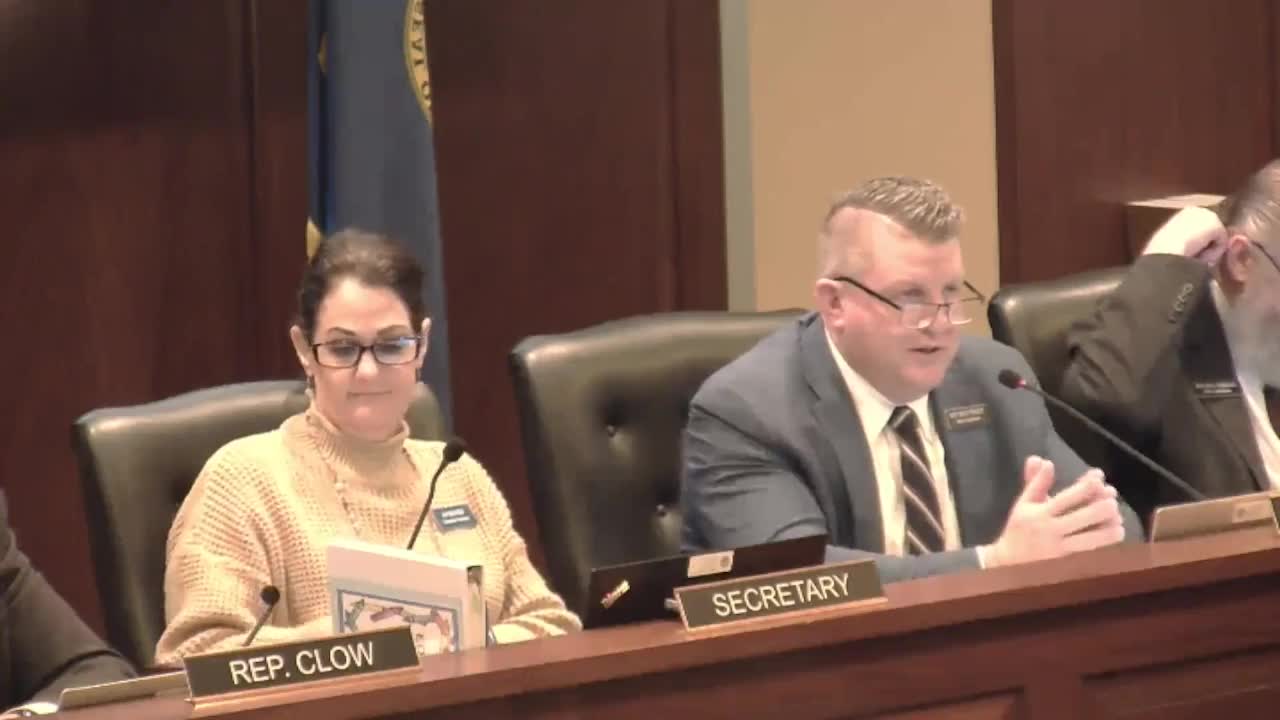
Committee members split along views about process and specific changes. Senator Ben Toews, appearing with the sponsor, argued the proposal would modernize requirements and stressed the importance of speech and debate and of giving the legislature a formal role in setting graduation outcomes. Opponents, including Representatives Clow, Mathias and Nelson, said the rules process already provides public input and that immediate statutory changes could disrupt students who have planned coursework years in advance. Representative Clow moved to hold the bill in committee; that substitute motion failed 6–8. Representative Hawkins then moved the committee recommendation to send HB 298 to the House floor with a "do pass" recommendation; that motion passed 8–6.
The bill includes multiple specific provisions that committee members and witnesses discussed: a Western civilization credit reallocated from government/social-studies distribution; a requirement that certain CPR training count as one class period (which witnesses said conflicts with typical CPR course length); a mechanism to let students count a page term toward a government graduation requirement; and provisions to enable math or science teachers to offer computer science coursework after 30 hours of training so the course can be credited as math or science depending on instructor credentials. Superintendent Critchfield said some recommended items from the rules package — including pathways and senior projects — were not included in the bill as drafted.
After the vote the committee chair confirmed the House Committee on Education will reconvene the following morning at 8:30 a.m. The bill will next appear on the House floor calendar with the committee’s recommendation to pass.