Get Full Government Meeting Transcripts, Videos, & Alerts Forever!
Get email alerts on the Insurance Regulation topic
No spam. Unsubscribe anytime.
House Business Committee introduces bill to remove $200 cap on insurer-provided risk‑mitigation devices
Summary
The Idaho House Business Committee voted to introduce RS3183, a Department of Insurance-sponsored proposal to remove a statutory $200 cap that has limited insurers from supplying risk‑mitigating devices such as heart monitors, water‑leak sensors and similar equipment.
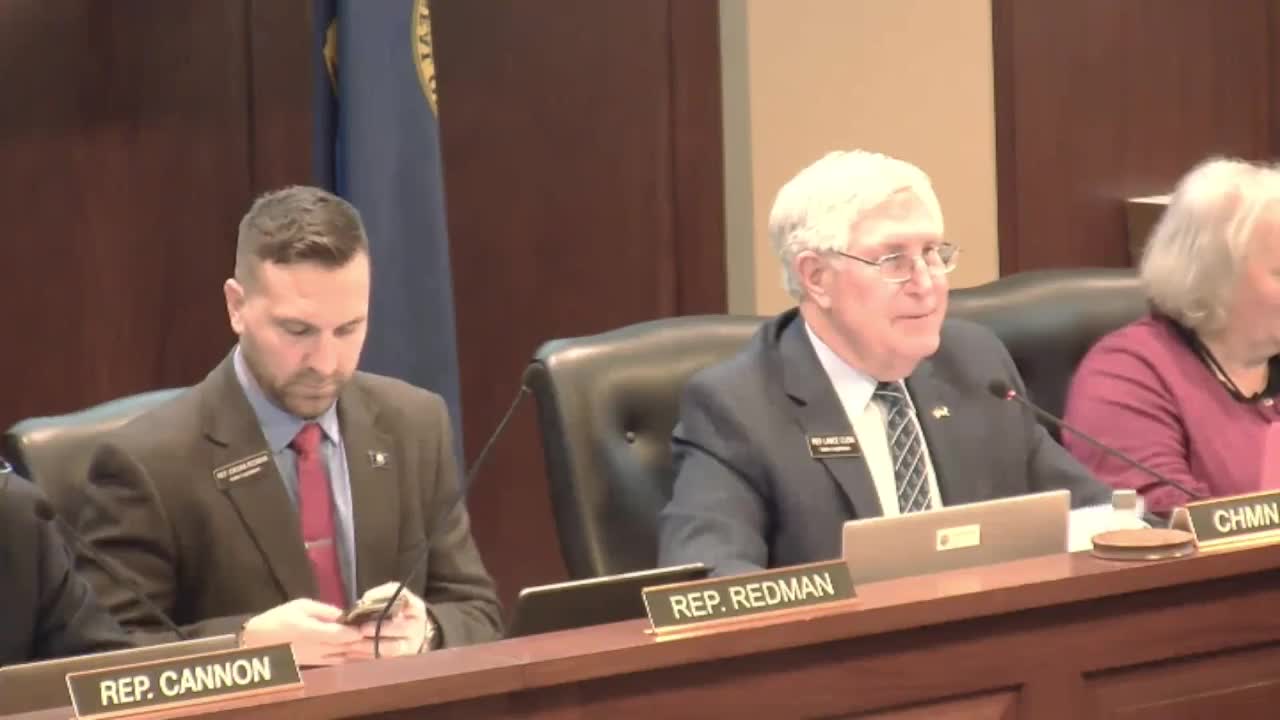
Representative Jeff Cornelis, a Republican from District 12 in Nampa, told the House Business Committee on Jan. 2025 that RS3183 comes from the Idaho Department of Insurance and would allow insurers and other entities to provide risk mitigation devices without the current $200 statutory cap. “This is a come from the Department of Insurance,” Cornelis said. “This is basically a simple change to make it allowable for entities to provide a risk mitigation device like a Fitbit or a water meter that can detect leaks.”
The bill sponsor and the department said the change is intended to remove uncertainty created by the existing numerical limit, not to create new requirements for consumers. Dean Cameron, director of the Idaho Department of Insurance, told the committee the department’s intent is to carve out risk‑mitigating devices from the statute’s unfair‑trade‑practices limit. “This is at the request of the industry,” Cameron said, noting carriers in other states provide similar devices to reduce loss and consumer costs. “We thought let’s clear it up and make sure that it’s perfectly legal.”
Representative Birch asked whether recipients request such devices and whether insurers could later use the information to raise premiums. Cornelis replied these devices are typically provided at the request of the insured; Cameron said the department does not intend for the change to permit insurers to penalize consumers based on data collected. The transcript records the department’s statement that the devices are generally “at the request of the person that needs the device” and that the proposal is meant as a narrow carve‑out.
On a motion from Representative Thompson to introduce RS3183, the committee took a voice vote and the motion carried. The committee recorded an oral “aye” and the chair stated the voice vote carried, introducing RS3183 for further consideration.
Next steps: introduction means the RS is entered into the legislative process; the transcript does not specify a referral or next hearing date.