Get Full Government Meeting Transcripts, Videos, & Alerts Forever!
Get email alerts on the Charter School Facilities Finance topic
No spam. Unsubscribe anytime.
Lawmakers told Idahoprograms cut charter-school facility costs by $113 million with no state outlay
Summary
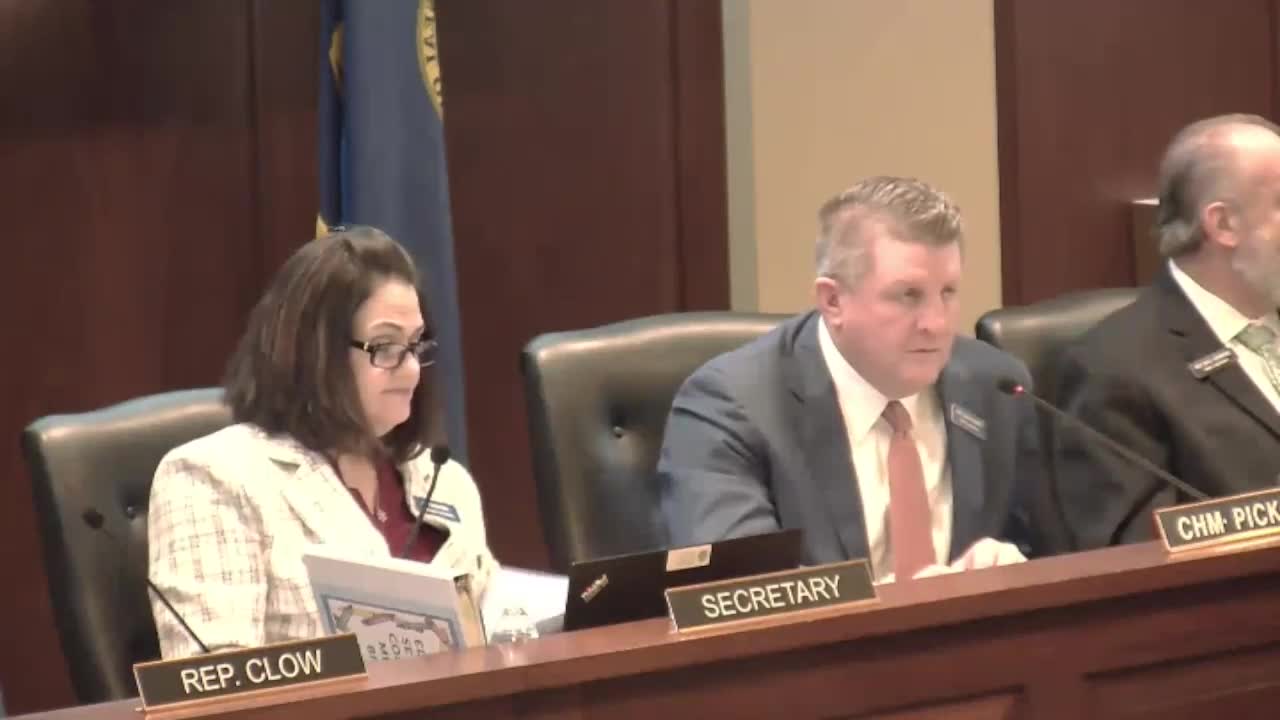
Matthew Joseph, senior policy advisor for education funding at ExcelinEd, told the Idaho House Education Committee that a portfolio of state-backed financing tools and private matching funds has produced roughly $113 million in facility-cost savings for Idaho charter schools while the state has recorded no direct outlay.
Matthew Joseph, senior policy advisor for education funding at ExcelinEd, told the Idaho House Education Committee that a combination of state-backed financing programs and private matching funds has produced large facility-cost savings for charter schools across Idaho.
"So far it's cost the state $0," Joseph said, and when the savings are summed across schools "the total savings so far ... is $113,000,000." He said that, when annualized, those savings allow each charter school in Idaho to reinvest in instruction equivalent to roughly 10 additional teachers.
The committee heard that two state policies are central to the result: a short-term revolving loan fund for early-stage charter financing and a separate credit-enhancement program commonly described in the meeting as a "moral obligation" backing that lowers borrowing costs in the long-term bond market. Joseph credited private partnersincluding the Albertson Foundation, Bloom and Building Hopewith matching funds and management that multiply the programs' effect.
"The revolving loan fund is about $2.5 million no-interest loans," Joseph said, describing how schools use short-term loans to build a track record and later refinance into lower-cost, long-term debt with the state's credit support. He also said Building Hope helps preserve original purchase pricing when schools refinance, avoiding higher costs tied to building appreciation.
Committee members pressed for more detail about eligibility and capacity. Representative Nelson asked for the criteria that have made Idahoprograms low-risk to lenders; Joseph said the programs use "rigorous but clear criteria" and noted nearly no defaults nationally on similar programs. Several members raised capacity concerns after witnesses said one program cap has been reached.
Blake Yudin, speaking on behalf of the Idaho Charter School Network, described recent changes to per-pupil facility funding and an itemized shortfall caused by the elimination of state lottery funds for school facilities. "We had to change how the formula is calculated and we did a hard number of $400 per student for charter school facility," Yudin said. He said last year's elimination of lottery facility funds reduced that support by about $100 per pupil and that restoring the $100 would carry a roughly $3 million fiscal note to the state and would affect charter schools only.
Committee members also discussed demand for charter seats. Joseph cited a study and examples including Novus Classical Academy, Sage International and Elevate Academy to illustrate how lower financing costs allowed schools either to reduce their borrowing need or refinance at lower rates. Yudin said the committee's 2024 study estimated conservative growth and that statewide demand remains significant; he clarified that a widely cited figure of about "13,000" students on wait lists was overstated in materials and that the current wait list is about 6,000 students.
No formal committee vote on funding or statutory changes occurred at the meeting. The only recorded motion was approval of prior minutes, moved by Representative Monica Church and carried without recorded opposition. Members asked staff and witnesses for follow-up information about eligibility criteria, program capacity and options to increase statutory credit capacity.
Lawmakers and witnesses framed the programs as a mix of state policy and private leverage rather than direct recurring state spending; witnesses urged lawmakers to consider expanding capacity while maintaining eligibility standards.