Get Full Government Meeting Transcripts, Videos, & Alerts Forever!
Get email alerts on the Administrative Rules Labor topic
No spam. Unsubscribe anytime.
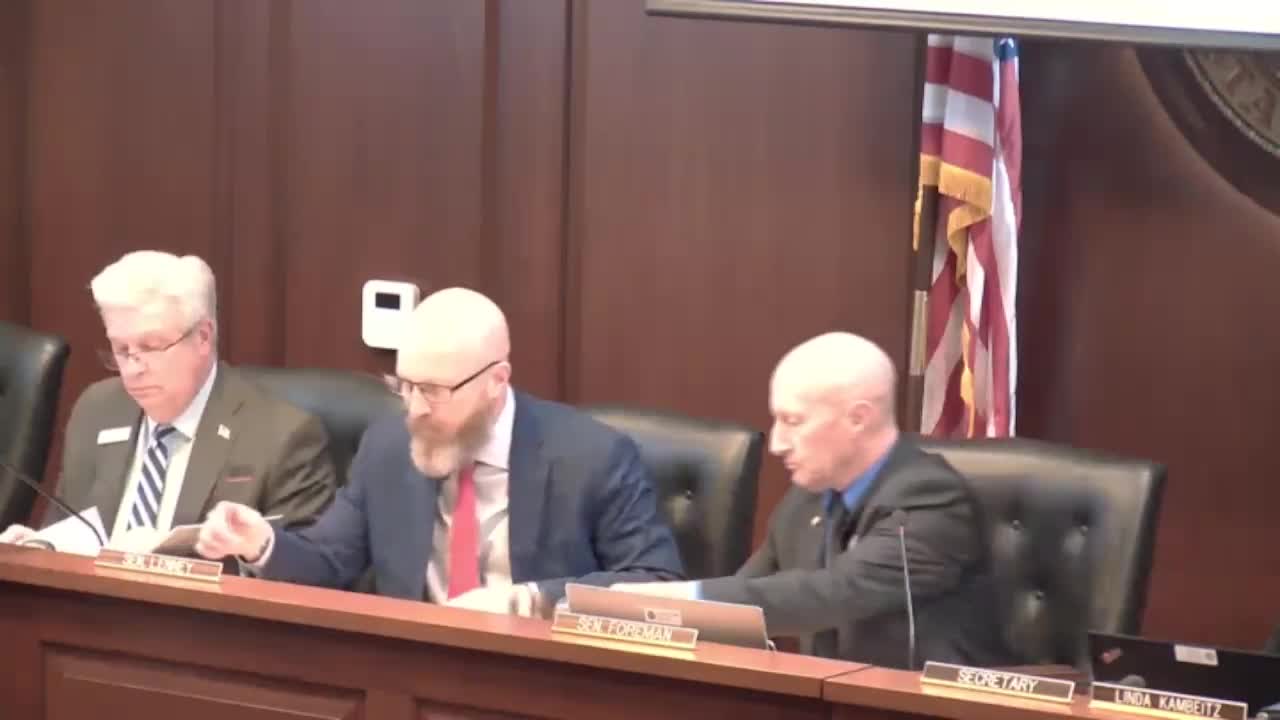
Senate Commerce Committee approves Idaho Department of Labor rule dockets; agency plans to move many provisions into statute
Summary
The Senate Commerce Committee approved three pending rule dockets from the Idaho Department of Labor that pare redundant language, eliminate outdated rules and aim to move substantive provisions into statute; the department said the changes carry no fiscal impact and would simplify public understanding.
The Senate Commerce Committee approved three pending rule dockets from the Idaho Department of Labor on procedural and unemployment-insurance matters, the committee’s vice chair announced after voice votes.
The rules, presented by Janie Revere, director of the Idaho Department of Labor, are part of a comprehensive review under the governor’s zero‑based regulation initiative and are intended to “eliminate outdated rules and rules that restate state or federal statute,” Revere said. She told the committee that if the legislation the department plans to file does not pass, “the rules will stay as they are.”
Revere said the department will bring legislation this year “that will move significant portions of the rules into statute,” and that if that legislation and the rule changes are both approved the department expects to “eliminate about 75% of our rules.” She said the rewrite had no fiscal impact to the general fund or to dedicated or federal funds and that negotiated rulemaking produced no negative feedback.
Senators asked several clarifying questions during the presentations. Senator Guthrie asked what would happen if the department’s planned legislation failed; Revere replied that the rules would remain in place but the move to statute is intended to make the law clearer for the public and lessen reliance on rule text. Senator Lakey asked about removing a sentence referencing judicial review of wage‑claim decisions; Revere responded that the sentence was unnecessary because it restated compliance with the Administrative Procedures Act.
One of the dockets (IDAPA 09.0135.2401, the unemployment insurance tax rules) was approved with an explicit committee directive preserving certain subparts: after discussion of a provision that would remove language about replacing estimated determinations with employer factual reports, Senators voted to accept the docket while rejecting the agency’s deletion of subsection 11.7(A) and (B) so that those provisions remain in the rule. Joanna Henry, the department’s Unemployment Insurance Compliance Bureau chief, explained the practical interplay: when an employer fails to file a quarterly report the department may issue an estimated determination; if the employer later submits a factual report the department replaces the estimate with the factual information and the employer may protest under existing appeal procedures. Henry said the practice is long‑standing and statutory language allows the department to use factual reports to correct determinations.
Committee action recorded: - Docket 09‑0101‑2401 (rules of administrative procedure for the Department of Labor): motion to adopt by Senator Guthrie; second by Senator Lakey; approved (voice vote). - Docket 09‑0130‑2401 (unemployment insurance benefits administration): motion to adopt by Senator Foreman; second by Senator Ruckley; approved (voice vote). - Docket 09‑0135‑2401 (unemployment insurance tax administration): motion to adopt with exception preserving subsections 11.7(A) and (B) made by Senator Lakey; second by Senator Guthrie; approved (voice vote), with those subparts retained in the rule.
The department told the committee it will file legislation to move significant provisions into statute to make benefit eligibility, employer tax obligations and appeals clearer to the public. Revere said rules that remain will be “more procedural in nature and provide guidance to the agency to implement the law.”
The committee took no action that changes program operations nor any budgetary provisions; the department stated there is no fiscal impact to state or federal funds.