Get Full Government Meeting Transcripts, Videos, & Alerts Forever!
Get email alerts on the Cloud Seeding topic
No spam. Unsubscribe anytime.
Committee backs printing of bill that would require monthly and annual cloud seeding reports
Summary
RS32229C1, presented by Senator Tammy Nichols, would require state and private cloud seeding operators to submit monthly and annual reports, with the Idaho Water Resource Board publishing annual summaries; the committee voted to send the draft to print with several senators urging stronger scientific evidence on return consideration.
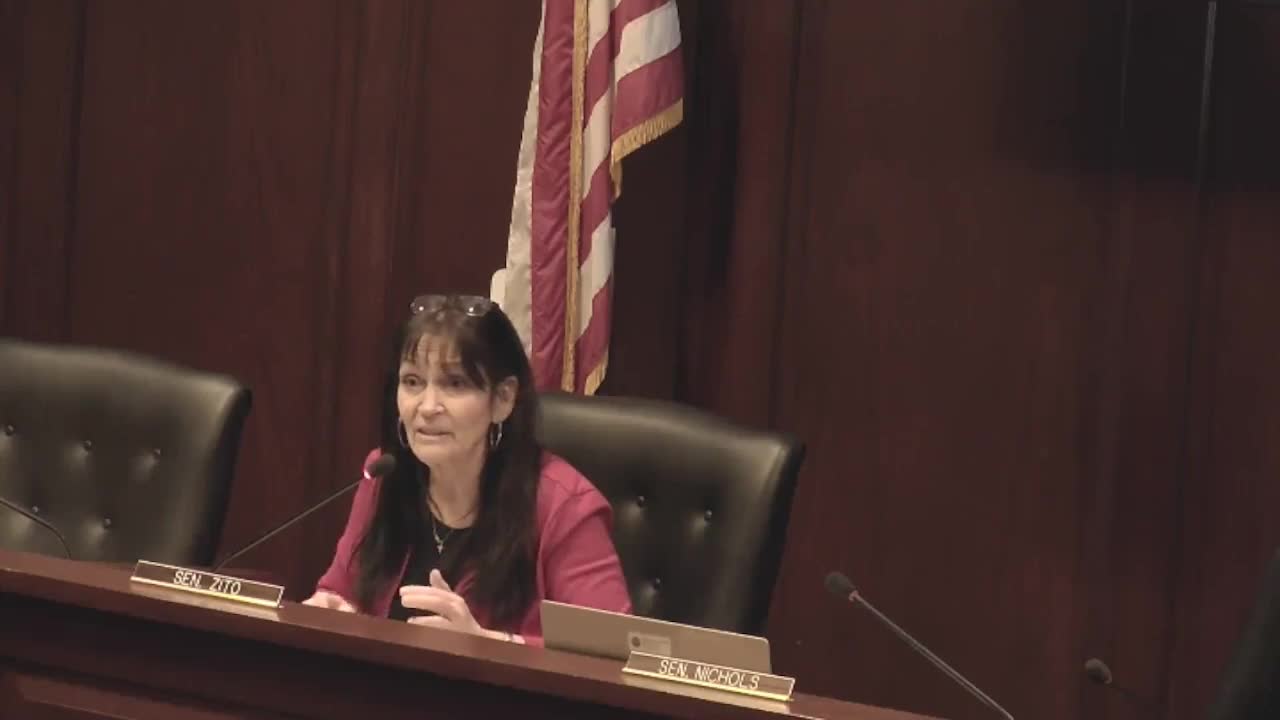
Senator Tammy Nichols introduced RS32229C1 to the Idaho Senate Agricultural Committee, a draft bill that would require both state-run and private cloud seeding operators to submit regular reports describing activities, materials used and impacts.
“Right now there are no clear rules for reporting cloud seeding activities in Idaho,” Nichols told the committee. Under the draft language described in committee, cloud seeding operators would submit monthly and annual reports containing locations of seeding, materials used and environmental effect data. The Idaho Water Resource Board would publish the annual report on its website and present findings in public meetings to increase transparency and accountability.
Senator Lent asked Nichols to list the partners she said she had worked with on the legislation; Nichols replied that the sponsor worked with the Idaho Water Resource Board because the board oversees cloud seeding. Senator Glynn said he would vote to print but voiced concern that the bill “adds a layer of government” and asked the sponsor to bring “strong evidence” when the bill returns. Senator Blaylock asked why the state was increasing reporting now; Nichols replied that other states are considering bans and that public trust and transparency regarding use of tax dollars motivated the draft.
After discussion, Senator Caul moved to send RS32229C1 to print; a second was recorded but not named in the transcript. The committee voiced approval on a voice vote and the motion carried.
Supporters framed the bill as a transparency and accountability measure; several senators signaled they would want stronger scientific and technical documentation when the draft returns for formal hearings or amendment.