Get Full Government Meeting Transcripts, Videos, & Alerts Forever!
Get email alerts on the Safe Haven Adoption topic
No spam. Unsubscribe anytime.
Senate panel advances bill to streamline safe-haven newborn placements and clarify tribal notice
Summary
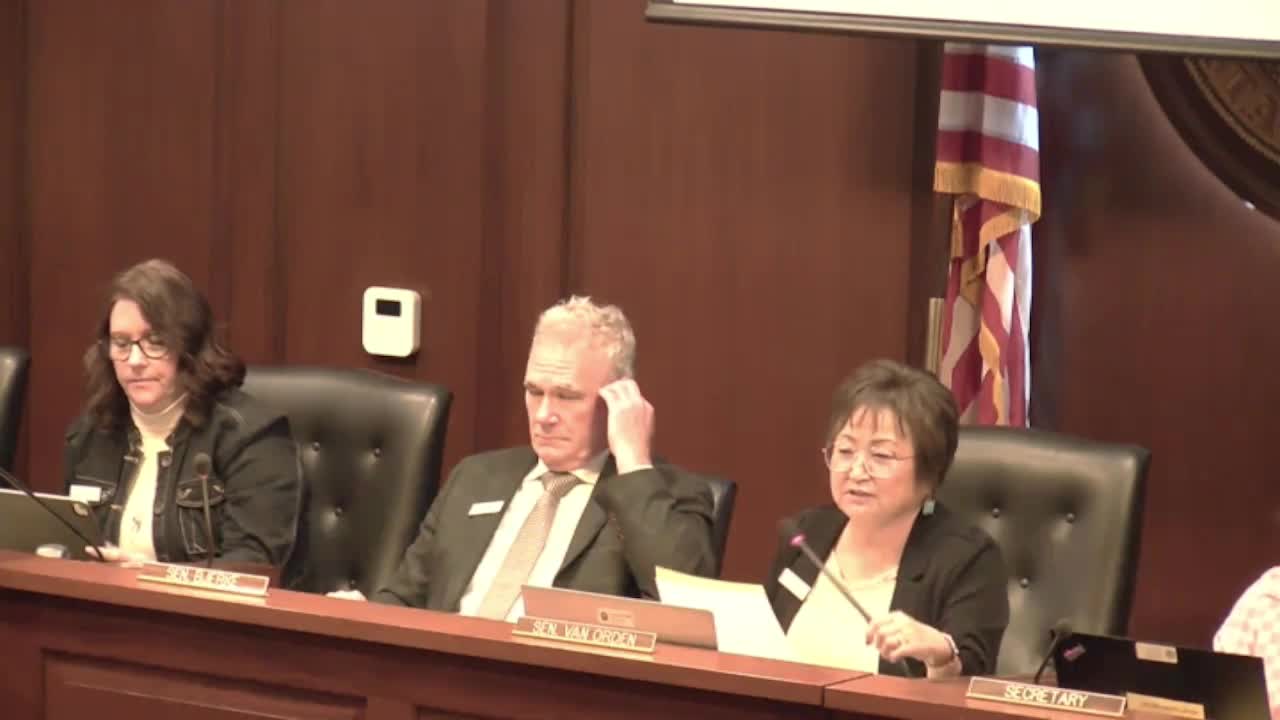
Senate Bill 1058, which would require faster placement of surrendered newborns with licensed adoption agencies and set timeframes for tribal notifications under ICWA, was advanced by the Senate Health and Welfare Committee after testimony from adoption agencies, tribal representatives and foster/adoptive parents.
Senator Tammy Nichols presented Senate Bill 1058 to the Senate Health and Welfare Committee as a set of amendments intended to speed placement of newborns surrendered under Idaho's safe-haven laws and to clarify Indian Child Welfare Act (ICWA) notification procedures.
The bill would require the Department of Health and Welfare to maintain a list of licensed adoption agencies for quicker placements and directs that custody be transferred to a selected adoption agency "within 24 hours of the child being surrendered" unless the infant needs additional medical care. If medical care is needed and no adoptive family is found within 48 hours, the bill calls for the child to remain in the hospital and for a shelter-care hearing to be scheduled.
Why it matters: Sponsors said the change aims to keep newborns out of unnecessary stays in foster care and place them with vetted adoptive families more quickly. Tribal representatives and the department worked with the sponsor to ensure language aligns with ICWA requirements; the bill requires that notices required by ICWA be issued within 10 days when there is reason to believe the child may be an Indian child.
Testimony and dissent: Licensed adoption-agency representatives told the committee their agencies can respond to rapid placement needs. Kara Walsh, a licensed social worker with New Beginning adoption agency, said the measure would "dramatically improve" outcomes by reducing transitions. Tyrell Stevenson, legislative director for the Coeur d'Alene Tribe, and Blake Hude of the Shoshone-Bannock Tribes said they supported the bill and that the language clarifies how tribal notices should be handled; Stevenson described ICWA as "a law designed to keep families together."
At least one foster parent who adopted a child surrendered under the Safe Haven Act expressed concern that the bill could place infants with adoptive parents who lack foster-care training and asked why foster parents should be bypassed. Whitney Wunderlich, who described adopting a child surrendered under the Safe Haven Act, told the committee: "I disagree with this bill because it would place vulnerable babies with potentially complex unknown medical and behavioral conditions with adoptive parents that would not likely have the same interest experience and training of Idaho foster parents." Senator Wintrow also stated she could not support the bill and expressed broader concerns about normalizing anonymous surrender: "Why would somebody abandon a child and or could somebody be coerced?" she asked.
Committee action: Senator Keiser moved to send SB 1058 to the floor with a due-pass recommendation; the motion was seconded and the committee advanced the bill. Senator Wintrow stated she would vote no on the motion; the committee otherwise voted to report the bill to the floor.
Next steps: The bill will be considered by the full Senate. Sponsor Nichols and tribal representatives said further adjustments and communication protocols may be needed as safe-haven locations and tribal concerns evolve.