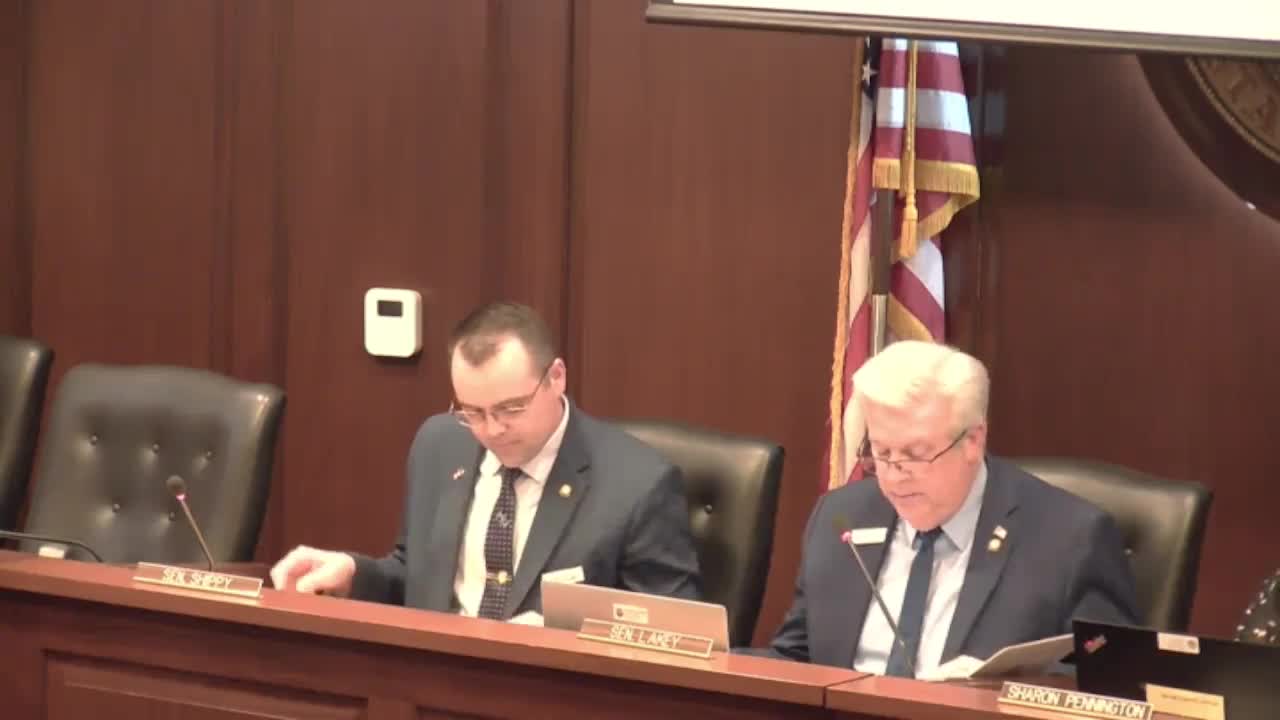
Senate panel advances bill allowing peace officers to search some parolees and probationers; debate centers on civil liberties and officer safety
Loading...
Summary
The Idaho Senate Rules Committee advanced House Bill 187 to the Senate floor after a hearing in which law-enforcement groups argued the measure promotes officer and public safety and a civil-liberties critic warned the statutory waiver coerces constitutional rights.
The Idaho Senate Rules Committee voted to send House Bill 187 to the Senate floor with a due-pass recommendation after a hearing that drew extensive testimony from law enforcement and civil liberties skeptics.
House Bill 187 would make uniform the consent-to-search terms that parolees and probationers sign as a condition of community supervision so that, where those terms exist, any peace officer — not just a probation or parole officer — could conduct a search of a person or premises covered by the waiver. Sponsor Sen. Todd Lakey (R., District 23) said the bill does not eliminate parole officers’ discretion to pursue revocation, but would let local peace officers act when they encounter parolees or probationers and suspect probation violations or criminal activity.
"Probation and parole is really the ultimate trust and trust but verify, right?" Lakey said, urging the committee to view the measure as a public-safety and officer-safety tool. Lakey and multiple law-enforcement speakers described situations where officers stopped a person on supervision, could not search without waiting for an on-call parole officer, and then discovered narcotics or weapons after obtaining a warrant or canine response.
Chief Rex Ingram, president of the Idaho Chiefs of Police Association, told the committee his officers recently stopped a parolee who initially said only a parole officer could authorize a search; after a canine search, officers found narcotics and paraphernalia. "We stopped a parolee ... they said, 'I'm sorry only my parole officer can search me,' so they called the on-call parole," Ingram said. "They found a plethora of paraphernalia, narcotics used for trafficking methamphetamine, and other harmful substances." He and other chiefs said the bill would be a force multiplier during nights and weekends when parole officers are not immediately available.
Supporters included the Idaho Sheriffs’ Association, the Fraternal Order of Police, local chiefs and prosecutors. Robbie Blassard, a deputy prosecutor with the Ada County Prosecutor’s Office, said the legislation would provide a uniform, unambiguous statement of supervision conditions and is grounded in existing court precedent allowing informed waivers by people on supervision.
Opponents in testimony, including Michael Law of Kuna, argued the statutory waiver coerces the surrender of constitutional rights in return for freedom from incarceration. "You either stay in prison or you sign this to get out. That's a false choice," Law said, warning the consent is not voluntary when conditioned on release. Law said the waiver can affect household members who host a parolee and could subject them to searches of the entire residence.
Committee members questioned safeguards and oversight. Sen. Melissa Wintrow repeatedly pressed supporters on how the bill would be implemented and how harassment or misuse would be prevented; law-enforcement witnesses pointed to recording, internal complaint processes, court review and that sustained misconduct can lead to loss of credibility and employment. Chief Ingram said there are no sustained patterns of harassment in other states that have similar laws.
Sen. Dan Foreman moved to send HB187 to the floor with a due-pass recommendation; Sen. Keiser seconded. The motion carried on a voice vote with Sen. Wintrow recorded as opposed. The bill will proceed to the Senate floor for further debate and possible amendment.