Get Full Government Meeting Transcripts, Videos, & Alerts Forever!
Get email alerts on the State Education Budget Osb topic
No spam. Unsubscribe anytime.
State Board of Education asks for new staff, IT funding and $15 million public‑private workforce grant
Summary
The Office of the State Board of Education asked the Joint Finance Committee work group on education to approve staffing and program requests in its fiscal 2026 budget, including a governor‑proposed one‑time $15 million public‑private workforce capacity grant and several ongoing enhancements tied to IT, school safety and auditing functions.
The Office of the State Board of Education asked the Joint Finance Committee work group on education to approve staffing and program requests in its fiscal 2026 budget, including a governor‑proposed one‑time $15 million public‑private workforce capacity grant and several ongoing enhancements tied to IT, school safety and auditing functions.
The office’s budget analyst, Kevin Campbell of the Legislative Services Office, told committee members the board’s authority is established in Idaho Code section 33‑101 and that recent years have seen transfers of functions such as IT, audit and school safety into the board’s office.
Campbell said the office currently has 84.25 authorized full‑time equivalent positions (with eight vacancies) and a five‑year average of 55.95 FTPs, noting the five‑year figure is “skewed a bit low” because of recent transfers into the office. He also highlighted a $30 million ongoing Empowering Parents grant enacted in FY2024.
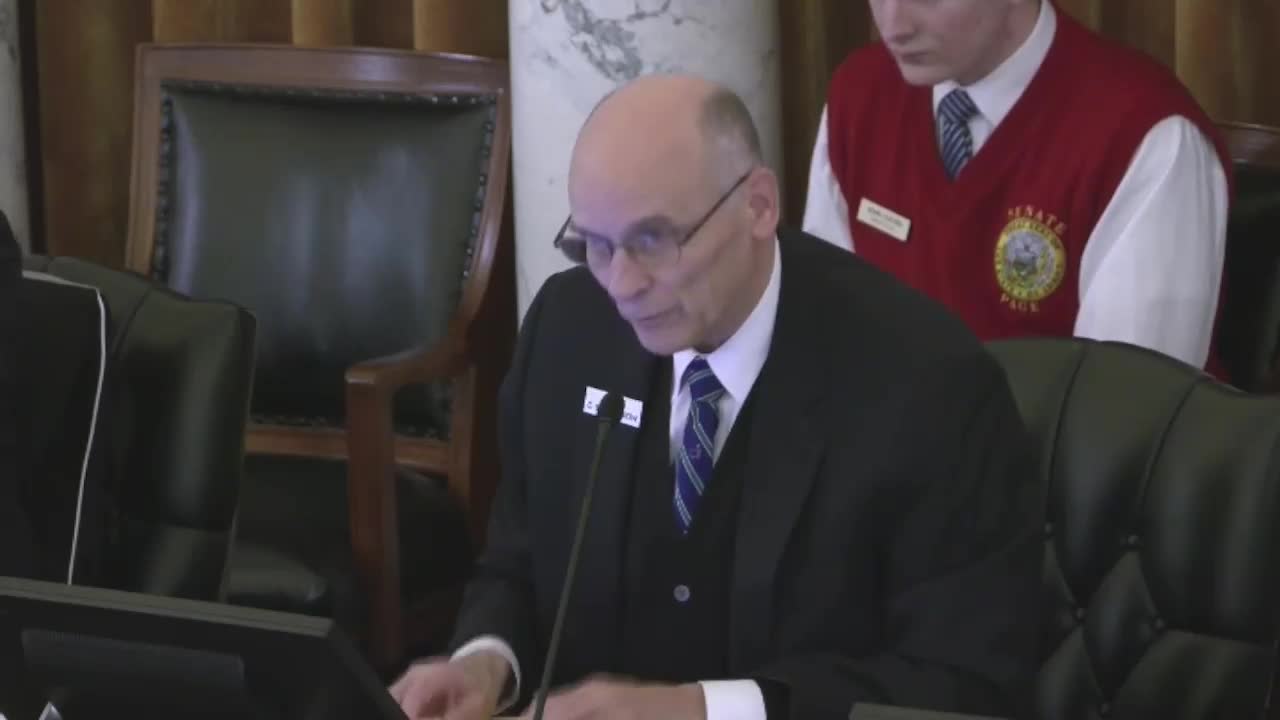
Josh Whitworth, executive director of the State Board of Education, told legislators the board’s goal in centralizing functions is to eliminate siloed activity and achieve efficiencies. “One of the primary motives of the board’s directive is to look at system inefficiencies where that might exist,” Whitworth said, describing a concept he called “systemness.” He added centralizing audit and risk management work allows the board to apply standard policies across institutions.
The governor’s $15 million workforce capacity proposal would fund infrastructure for workforce training tied to employer demand. Whitworth said the grant would require institutions to raise private matching funds and that awards would be tied to local demand lists, technical advisory committees and workforce development priorities. “These funds are really to be directed towards those highest demand needs in our communities,” he said, citing programs such as welding, fabrication and mechatronics as examples of capacity constraints.
Lawmakers asked for additional detail before deciding. Representative Petzke pressed Whitworth on why the centralized office has grown from roughly 60 FTPs to more than 80 and whether those resources would be better spent directly at institutions. Whitworth replied that many of the added positions came from net‑zero transfers (for example, audit and risk management) and that centralized IT supports about 300,000 students across K‑12 and higher education and addresses cybersecurity and rural support needs.
Members also questioned specific lines in the requested budget. Senator Cook asked whether new IT positions are replacing contractors and requested cost data for existing contractor spending; Whitworth said bringing database and infrastructure engineers in‑house is expected to be more economical than long‑term contracting and to reduce backlogs. Representative Tanner, who had praised the State Board’s change on DEI policy, asked whether the board’s new stance had been reflected in budget cuts; Whitworth and board members said most programs tied to DEI work have historically been funded through student fees, not general fund appropriations.
On Independent Study Idaho, Whitworth described the program as a flexible, self‑paced delivery option used primarily by nontraditional students and noted the program charges fees of about $160 per credit. He and Campbell said the program has relied on fee revenue that is not keeping pace with costs and that the FY2026 request includes a revision to the program’s base funding model to address that shortfall.
Committee members asked for follow‑up materials before votes: detailed IT plans and contractor expenditure comparisons, a refined eligible‑program list and outcome metrics for the governor’s workforce grant, and clarity on which FY2026 requests will require legislation. Whitworth identified the behavioral threat assessment teams request as one that requires legislation and said the workforce grant will use industry match and in‑demand career lists to determine eligibility.
The board’s president, Dr. Clark, and the board’s senior staff — including deputy director Scott Greco and chief financial officer Patrick Colson — were present for questions and available for follow‑up.
What’s next: committee members asked staff to return with more detailed IT plans, the revenue/contractor comparisons and a list of programs that would qualify for the workforce grant prior to floor action.