Get Full Government Meeting Transcripts, Videos, & Alerts Forever!
Get email alerts on the Board Governance Public Meetings topic
No spam. Unsubscribe anytime.
Board debates public‑meeting rules, roll‑call voting and future of subcommittees
Summary
Directors discussed public‑meeting requirements including recorded minutes, roll‑call votes, cloud‑document collaboration and whether to continue subcommittees under stricter public‑meeting interpretations; staff will gather legal guidance and benchmark other districts before returning to the board.
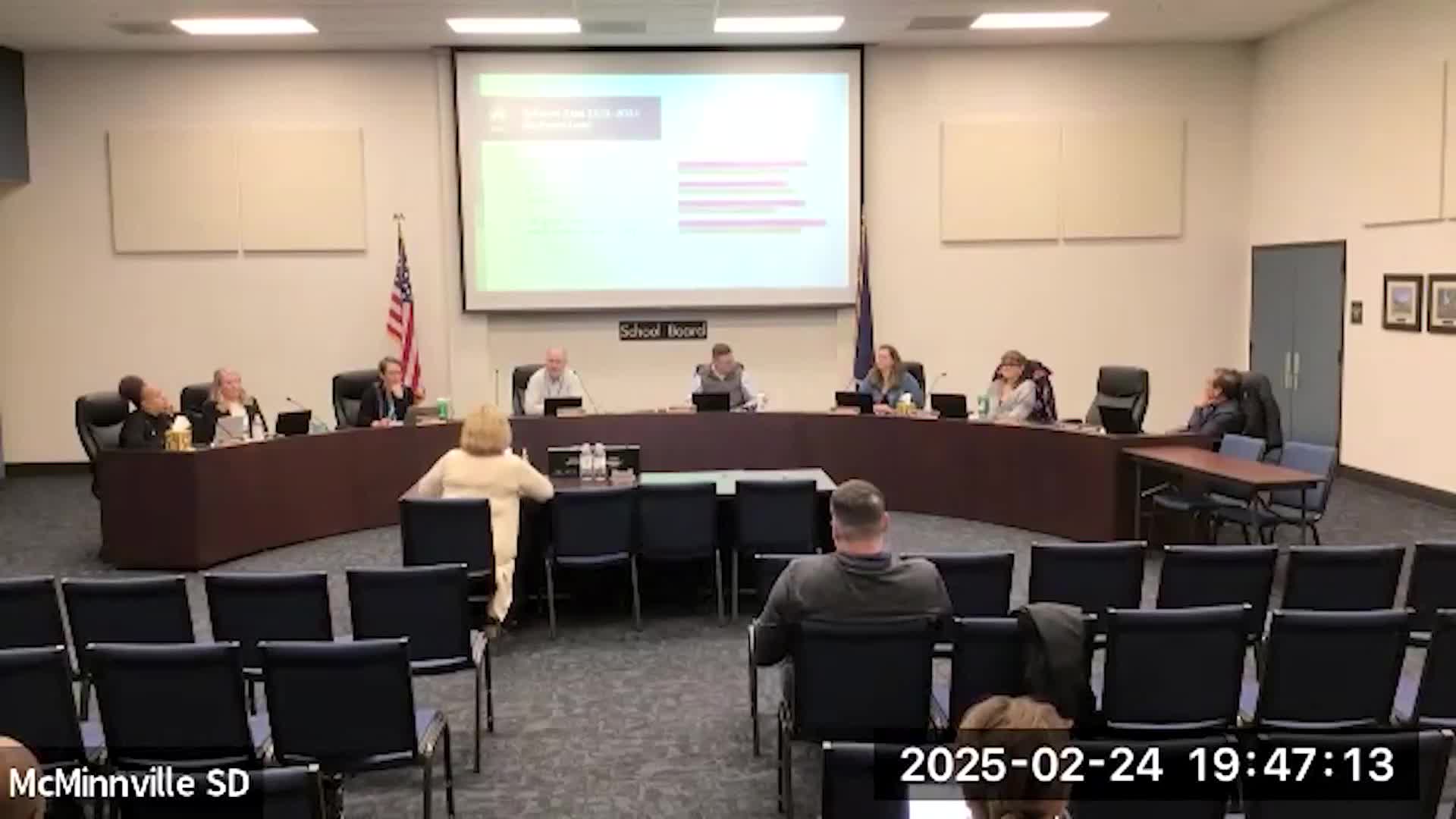
The McMinnville School District Board of Directors discussed public‑meeting laws, minute retention, roll‑call votes and the status of board subcommittees at its Feb. 24 work session, and asked staff to gather clarifying legal guidance and examples from peer districts.
Board members and staff reviewed several points raised at recent trainings and in advisory guidance, including whether minutes must list each director’s vote by name, how long recordings must be posted, whether shared cloud documents can be a public meeting if edited live, and whether subcommittee meetings must be treated as noticed public meetings with recordings and published minutes.
Why it matters: Changes in how public‑meeting rules are interpreted can affect board workflow, transparency obligations and staff time required to post recordings and maintain minutes. Directors said they wanted to balance legal compliance and public access with the logistical burden on staff and the value of smaller committee work.
Details of the discussion - Minutes and recordings: Staff told the board they keep printed board books and archive videos and audio recordings; recordings are being posted to the district website. The board discussed a recent training recommendation that roll‑call votes be recorded by name in the minutes; some directors said they now see peers recording votes individually as a new norm and asked staff to confirm legal expectations. - Recording and outages: Board staff confirmed that if the board’s primary video feed fails, the meeting should be paused until audio/video are restored or a backup (for example, recording with a phone) is available; the board discussed posting any alternate audio and completing the record within applicable retention timeframes. - Cloud documents and collaboration: Staff referenced the Oregon Government Ethics Commission advisory that live edits of shared cloud documents can constitute a public meeting if the edits or discussion occur at a specifically noticed time; directors said they will avoid undisclosed collaborative edits and will seek additional counsel on safe practices for shared Google Docs used for board business. - Subcommittees and public‑meeting compliance: Directors debated whether to continue established board subcommittees. Some members said subcommittees are valuable briefing and fact‑finding forums that helped new members learn district operations; others said the administrative burden of noticing, recording and archiving subcommittee meetings under current interpretations of public‑meeting law is large and suggested pausing or reforming subcommittees.
Next steps Board members asked staff to gather written legal guidance from the board’s counsel and to benchmark practices in other districts (for example, how Newberg or comparable districts post advisory committee recordings and handle committee notice) and to return to the full board at the next work session with recommendations. Directors also directed staff to confirm timelines for posting recordings and the district’s obligations under ORS 192.660 and related rules.