Get Full Government Meeting Transcripts, Videos, & Alerts Forever!
Get email alerts on the Coroners topic
No spam. Unsubscribe anytime.
Committee advances bill to standardize coroner duties; some family representatives say it falls short
Summary
Senate Bill 1101 would clarify coroners' roles, create training expectations and address inconsistencies identified in an audit. Coroners' association leadership supported the measure; at least one parent testified the bill does not go far enough on confidentiality and enforcement.
The Senate Judiciary and Rules Committee voted to send Senate Bill 1101 to the Senate floor with a due pass recommendation after testimony from coroner officials and public commenters.
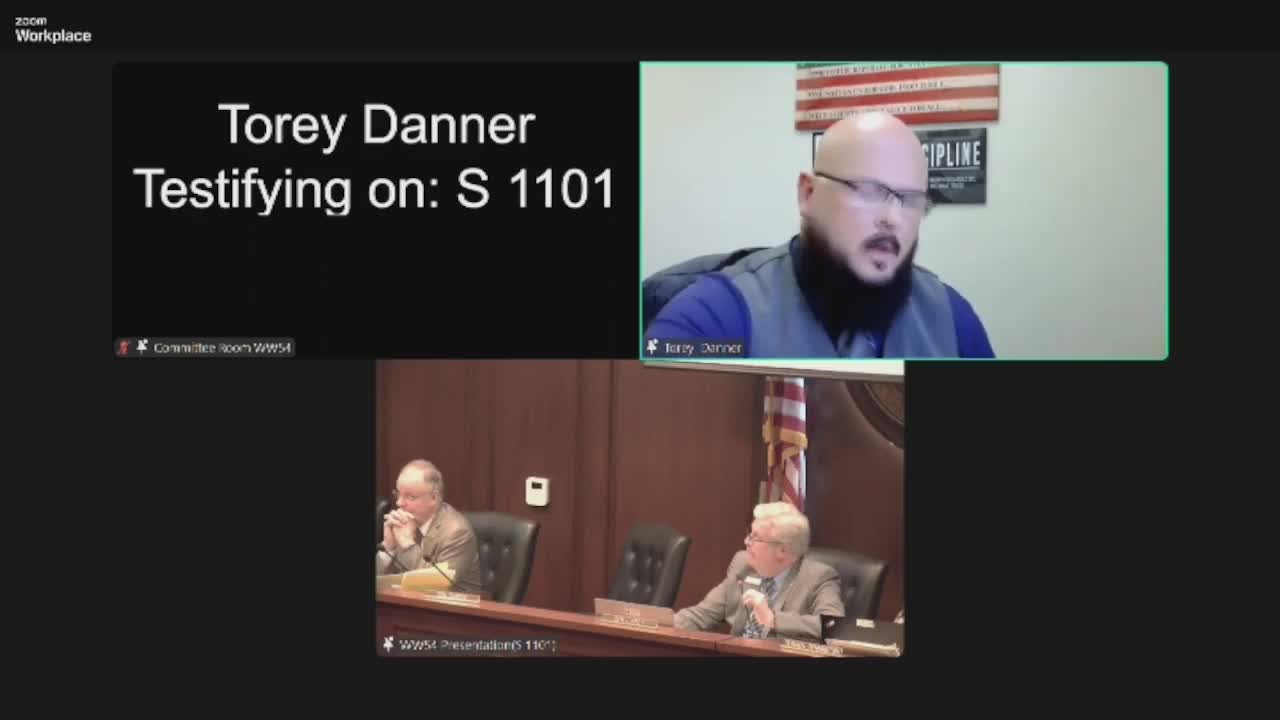
Senator Melissa Wintrow, appearing as a co-chair of JLOC, said the bill responds to an OPE report and seeks to address inconsistent death investigations across counties. Tory Danner, Bannock County coroner and president of the Idaho Coroners Association, told the committee the measure clarifies roles and responsibilities so coroners and law-enforcement partners operate from a shared standard. "Our goal is ... to get everybody operating on the same sheet of music," Danner said, adding that inconsistent approaches have led some counties to miss medical-legal death investigations that national standards call for.
Alan Hodges, a parent and registered lobbyist, testified he supported reforms but said the bill "doesn't go far enough." Hodges described a personal case in which he contended county responders treated his daughter's death as a crime scene, seized medication and took photos of the decedent. He urged stronger confidentiality protections for family images and stronger enforcement mechanisms and penalties for coroners who do not meet statutory requirements.
Senator Foreman moved, and Senator Lent seconded, that the committee send SB 1101 to the floor with a due pass recommendation. The chair called a voice vote and announced the motion carried.
Why it matters: The bill is a first-step statutory response to an audit (OPE report) that found inconsistent coroner practices across the state. Supporters said standardizing duties, clarifying when medical-legal death investigations are required and creating training expectations will improve public-safety outcomes and interagency cooperation. Some family advocates asked for stronger confidentiality and enforcement provisions in future legislation.
Next steps: SB 1101 proceeds to the Senate floor; sponsors and the coroner association said further statutory refinements are possible and that additional bills are being prepared to address confidentiality and enforcement concerns.