Get Full Government Meeting Transcripts, Videos, & Alerts Forever!
Get email alerts on the Pardons And Parole topic
No spam. Unsubscribe anytime.
Commission of Pardons and Parole asks legislature to raise commissioners’ pay as turnover looms
Summary
The Commission requested statutory authority to raise commissioner pay from $300 to $400 per hearing day, citing heavy unpaid preparation time and impending turnover; the commission’s new executive director said she will review processes and training.
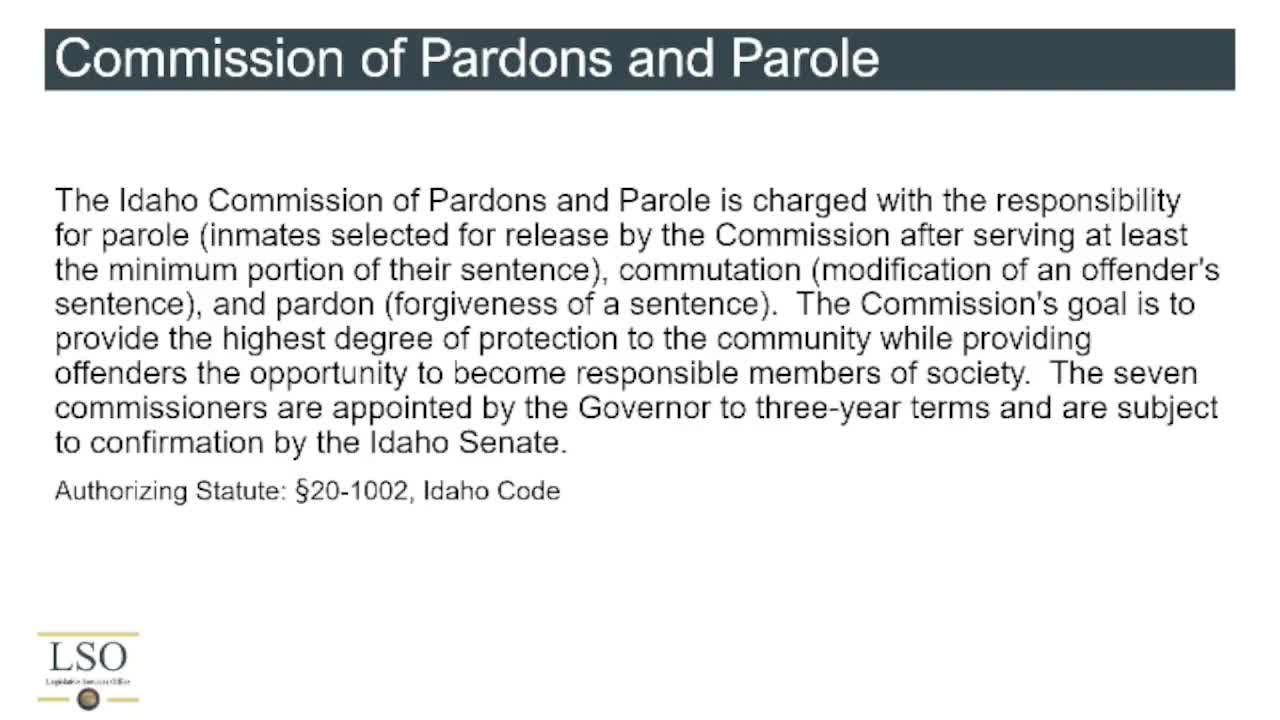
The Idaho Commission of Pardons and Parole told the Joint Finance-Appropriations Committee it needs authority and funding to raise commissioners’ per‑diem pay from $300 to $400 and to improve support for decision‑making as the commission faces significant upcoming turnover.
Why it matters: Commissioners make time‑sensitive release and parole decisions that affect victims, communities and incarcerated people. Commission staff said commissioners spend substantial unpaid time preparing for hearings and that low compensation is a barrier to recruiting and retaining experienced appointees.
Noah Peterson, a legislative budget analyst, told the committee that the commission requested an ongoing pay increase from $300 to $400 and that, if enacted by statute, the fiscal impact of that change would be about $59,300. Peterson also noted commissioners handled 5,907 decisions in 2017 and 6,670 decisions in fiscal 2024.
Executive Director Christine Starr, who has led the commission for a little over three months, said commissioners generally hold hearings three weeks of each month and are paid only for hearing days, not for preparation. Starr told the committee commissioners often prepare extensively: she described a typical five‑day hearing cadence that requires roughly 26 hours of preparation — “which comes out to about 3.25 days that they’re not compensated for,” she said.
Starr said the commission is losing more than half of its current commissioners by December and that the requested pay increase is a near‑term measure to sustain the body while she reviews larger structural and procedural changes: “I see this request to increase the commissioner’s pay as honestly more of a band aid to a much, much larger, issue,” she said, and added the commission will analyze processes, increase transparency and study alternative parole commission models.
The governor recommended the pay increase at the smaller amount allowable under current budget constraints; full statutory change would be required to enact the $300→$400 per‑day rate. Committee members noted the compensation issue intersects with public safety and the quality of decision‑making, and they encouraged the commission to return with proposals to reduce uncompensated preparation burdens and to document expected impacts on recruitment and retention.
Ending: The commission did not receive substantive new funding in the hearing; staff will provide follow‑up materials and the commission will continue a short review of its practices and staffing needs.