Get Full Government Meeting Transcripts, Videos, & Alerts Forever!
Get email alerts on the Emergency Communications topic
No spam. Unsubscribe anytime.
Sheriffs tell Senate committee aging 911 infrastructure is failing; urge funding to migrate to NextGen
Summary
Representatives of the Idaho Association of Counties and county sheriffs told the Senate Judiciary and Rules Committee that Idaho's 911 system relies on aging copper trunks and legacy switching, producing recent call-routing failures and near-misses. They urged legislative action and fee changes to fund migration to Next Generation 911 services.
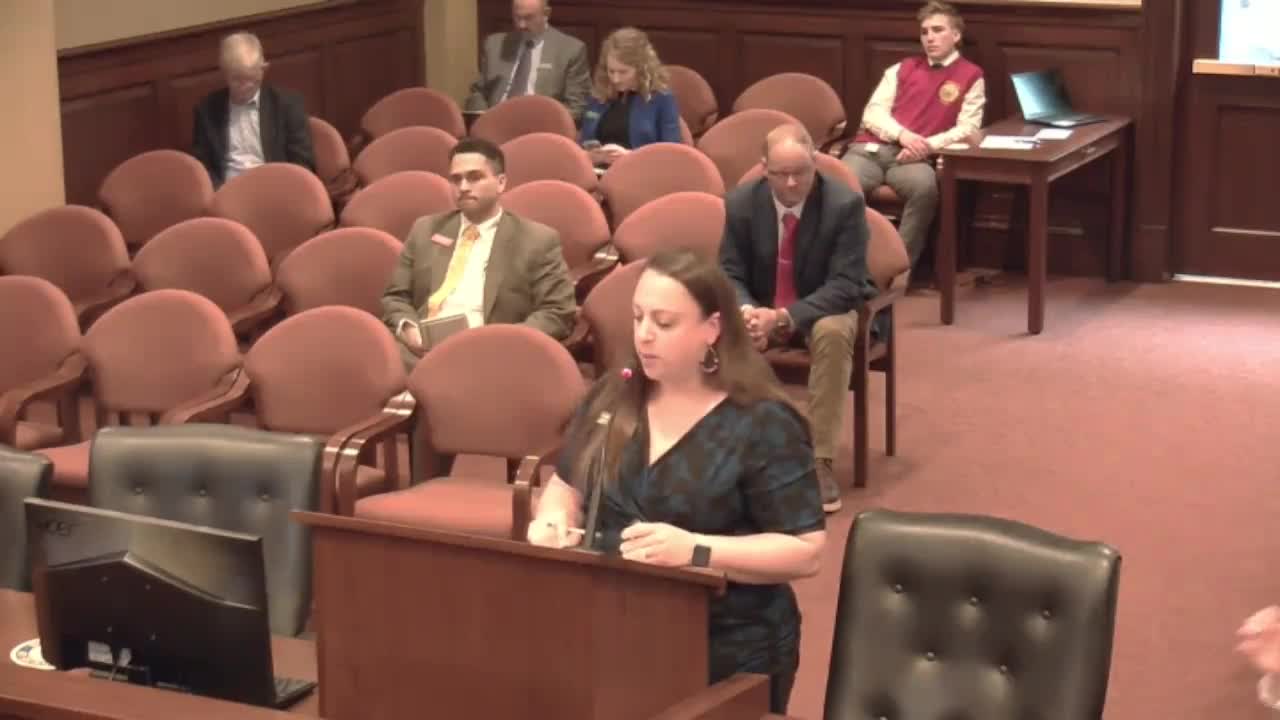
At a Senate Judiciary and Rules Committee meeting, sheriffs and a policy advisor for the Idaho Association of Counties described repeated failures in Idaho's 911 infrastructure and urged lawmakers to fund a statewide migration to Next Generation 911 (NG9-1-1).
Kelly Brasfield, policy advisor for the Idaho Association of Counties, told the committee that Idaho established a $1 911 fee in 1988 and that the state has been slow to migrate to NG9-1-1 standards established after 2011. "That $1 fee that was established in 1988 is still the fee," Brasfield said, noting that counties now rely primarily on cell-phone-derived fee collections but that some counties do not participate in the state's grant-fee program.
Sheriff Sam Holst (Bonneville County), describing the technical background, said many dispatch centers still rely on legacy "9-1-1 trunks" — copper-based connections and selective routers more than four decades old — and that the infrastructure is failing. "This is legacy dying infrastructure, analog infrastructure that has to be replaced," Holst said, adding that modern location-based routing already used by commercial apps is more accurate than much of Idaho's current 911 capability.
Sheriff Andy Creech (Payette County) presented specific incidents to illustrate the risk. He said a Valley County caller made seven 911 calls to report a baby with breathing difficulty and none of those calls delivered location information; help arrived only after a third-party service (RapidSOS) supplied location data. In another case, a planned nine-minute update to a Boise switch left 10 counties unable to place 911 calls; dispatch centers learned of callers during the outage only because RapidSOS alerted them. Creech also described a Fruitland pharmacy whose emergency call was routed to Canada, creating a dangerous delay.
Speakers stressed that NG9-1-1 requires accurate geographic information system (GIS) data and a statewide network to route calls and data. Cost estimates discussed during testimony ranged from roughly $14 million (phone systems alone, per speakers' discussion) to $22 million annually if radio infrastructure is included; nationally, one FCC-cited estimate places NG9-1-1 migration costs in the billions. The sheriffs and county association said one practical funding option would be to raise the per-line fee that supports 911 and the grant fund; proposals discussed included raising the grant fee by 40¢ (from 25¢ to 65¢) or a larger increase that could also cover radio upgrades.
Brasfield said the Idaho Public Safety Communications Commission has set goals for NG9-1-1 but that progress has been slow. She noted a pending House bill (HB 211) aimed at streamlining fee transactions and a separate staffing/compensation bill for parole commissioners, and said five legislators have requested a JLOC study to inform a next-session funding proposal.
Why it matters: Testimony shows recurring operational failures in Idaho's 911 routing and dispatching systems, including cases where location information was not provided and where automated routing directed calls to out-of-state centers. Committee members were told a coordinated, funded migration to NG9-1-1 would reduce such failures but will require new revenue and effort to standardize GIS and network connections.
Committee follow-up: Presenters asked the committee to support further study (JLOC) and to consider fee increases or other funding mechanisms to underwrite a statewide NG9-1-1 deployment.