Get Full Government Meeting Transcripts, Videos, & Alerts Forever!
Get email alerts on the Education Budget topic
No spam. Unsubscribe anytime.
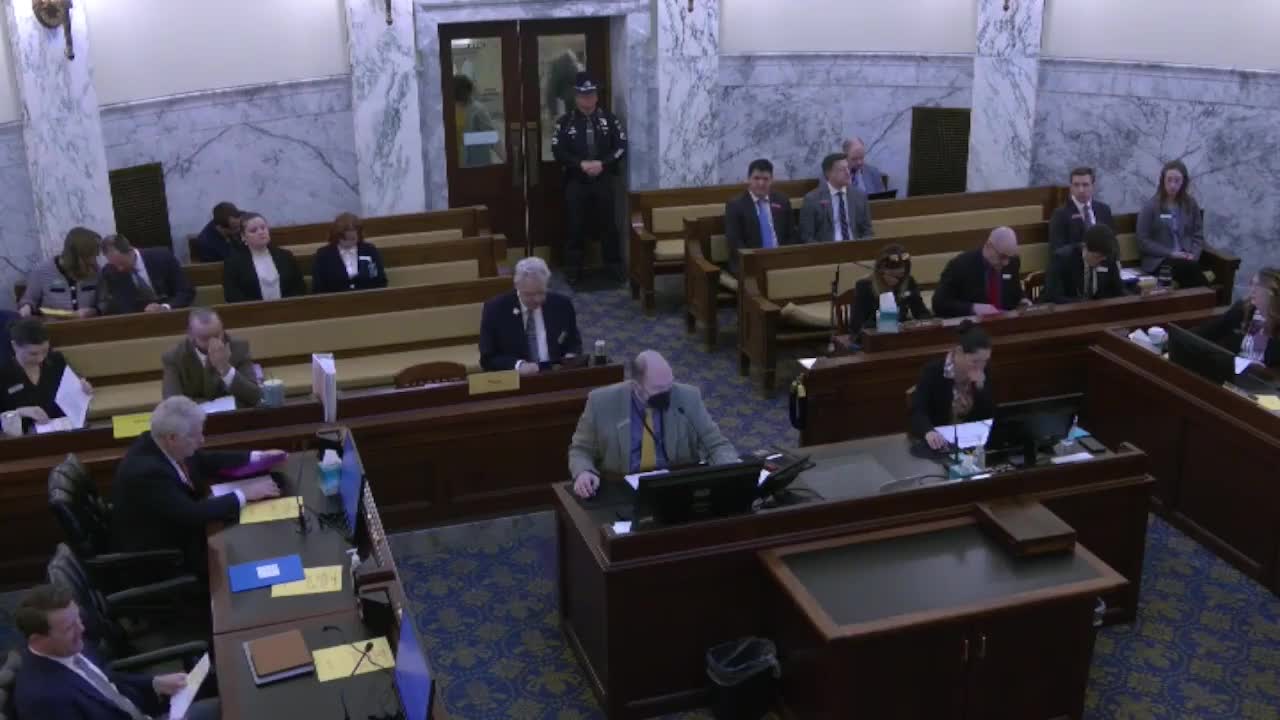
Legislative panel approves State Board of Education supplemental, trims $5 million in-demand funding
Summary
The Joint Finance-Appropriations Committee approved a $40,000 credit mobility supplemental and a FY2026 package of staff and equipment additions for the Office of the State Board of Education, while removing a previously proposed $5 million in-demand grant.
The Joint Finance-Appropriations Committee voted to advance supplemental and maintenance budget items for the Office of the State Board of Education, approving a $40,000 credit mobility grant for Jan. 2025–Jan. 2026 and a separate FY2026 package of staff and equipment increases while removing a previously proposed $5 million in-demand grant.
Kevin Campbell, budget and policy analyst with the Legislative Services Office, told the committee the $40,000 credit mobility grant "will help the state board identify options for improving the portability and mobility of credits between institutions." The committee first approved a short FY2025 supplemental for that grant by unanimous voice and roll-call votes.
The committee later approved a larger FY2026 program maintenance motion offered by Representative James Petzke that added 1 full-time position and $229,200 from the general fund plus $131,500 from dedicated funds (total $360,700). Petzke outlined specific additions in the motion: one database engineer (1.0 FTP, $144,200), $10,000 for a software support contract, $35,000 for cybersecurity testing, $12,500 from a dedicated fund for marketing the CTE/Now program, $20,000 from a dedicated fund for the credit mobility grant, $99,000 from a dedicated fund for replacement vehicles, and $40,000 for OITS hardware.
Petkze explained the FY2026 motion differs from an earlier JFAC version because it "removes entirely the $5,000,000 that was going towards in-demand grama that were at wait list capacity." Petzke called the cut "extremely unfortunate" and said it reflected what the committee could successfully pass after a floor defeat of the larger proposal.
Senator Maryanne Wintrow (former Representative Wintrow in the transcript) and other members urged concern about workforce impacts. Senator Wintrow said the cut will affect training pipelines for health care and other fields, saying the initiative "would incentivize and boost our economy quite well" and warning of downstream workforce shortages if training slots remain limited.
Supporters noted other budget actions they said would partially address capacity: committee leaders pointed to $10 million in funding aimed at wait-listed technical-school programs and larger capital investments for colleges and universities in the permanent building fund.
The FY2026 motion passed on a combined roll call of 17 ayes and 3 nays; the earlier FY2025 supplemental passed unanimously. The committee also approved related language for reappropriation and use of funds that had been adjusted from a March 11 motion; that language was approved by roll call (18 ayes, 2 nays) when required by reappropriation authority.
Action on these items carries forward with a "do pass" recommendation to the full Legislature; no further details about implementation timelines beyond the grant period (Jan. 2025–Jan. 2026 for the credit mobility grant) were specified by staff.
The committee record shows the office's requests were reduced from earlier agency submissions and that some line items were moved between agency budgets; committee members said additional review and potential future funding will depend on next session outcomes.