Get Full Government Meeting Transcripts, Videos, & Alerts Forever!
Get email alerts on the Capital Punishment Methods topic
No spam. Unsubscribe anytime.
Senate panel sends bill making firing squad Idaho’s primary execution method to floor after split vote
Summary
The Senate Judiciary and Rules Committee voted to send House Bill 37 to the Senate floor with a "do pass" recommendation after a divided hearing on whether to make the firing squad the primary method of execution in Idaho.
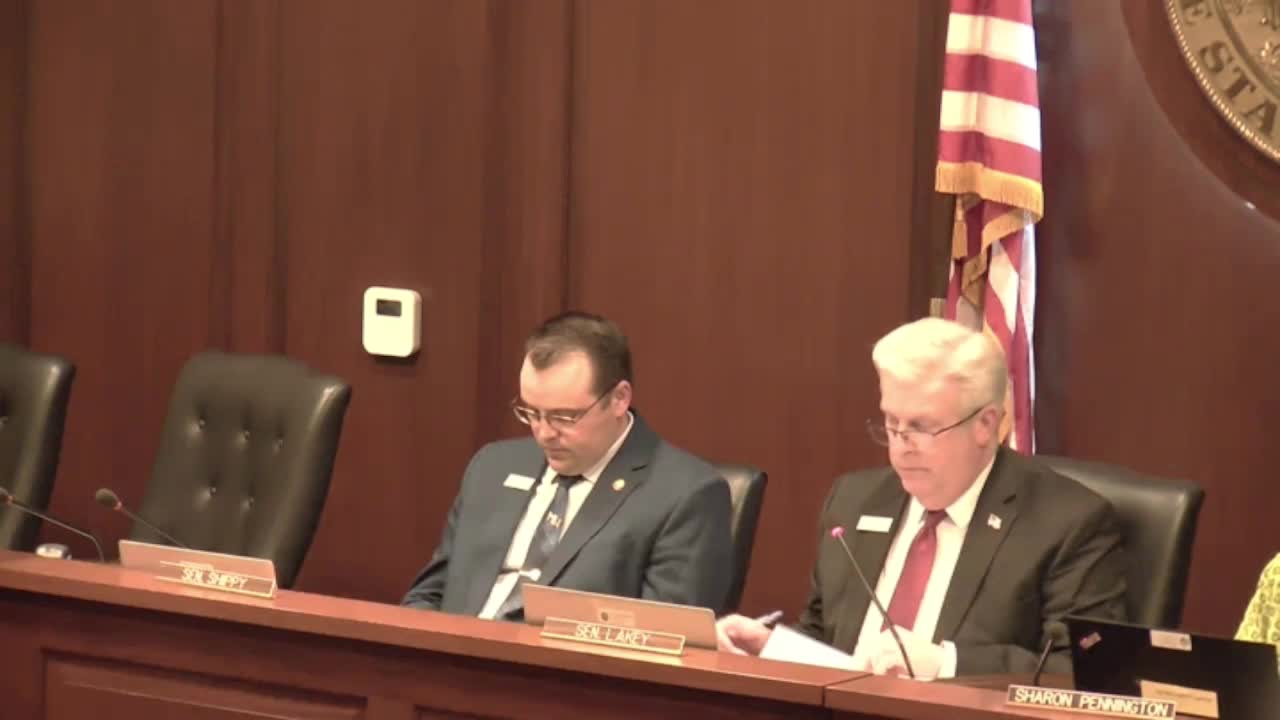
BOISE — The Senate Judiciary and Rules Committee voted to send House Bill 37 to the Senate floor with a "do pass" recommendation after a contentious hearing and public testimony on Feb. 10, 2025.
Sen. Doug Ricks, R-34, told the committee that House Bill 37 reverses the order of methods currently listed in Idaho law so that a firing squad would be the primary option and lethal injection a secondary option. "This just provides an option that we can carry out," Ricks said, describing the change as a response to recent problems finding IV access and to ensure the state can carry out lawful sentences.
The bill’s proponents and opponents framed the issue around two core concerns: the reliability and litigation risk associated with lethal injection versus the humaneness, dignity and broader impacts of making a firing squad the state’s primary method.
Why it matters: Committee members and witnesses said the change could shorten years of litigation about methods of execution and avoid logistical hurdles that have blocked executions. Opponents said the firing squad is gruesome for witnesses and may not be clearly less prone to legal challenge.
At the hearing, Lamont Anderson, deputy attorney general in the Capital Litigation Unit, told senators that modern use of the firing squad has not produced botched executions since 1976 and cited U.S. Supreme Court precedent, including Wilkerson v. Utah, and later decisions he said support the constitutionality of the method. "There has not been a botched execution by firing squad in the modern era of the death penalty," Anderson said, adding that the method would reduce discovery burdens and other litigation tied to lethal injection protocols.
Survivor testimony and witnesses: Diana David, who identified herself as Idaho chapter lead for Survivors Empowered and a survivor of gun violence, urged senators to reject the bill. "Moving [the firing squad] to the primary method will make Idaho the only state to do so," she said, and warned of lasting harm to witnesses, staff and journalists who would observe executions. Daniel Murphy, a Boise resident, testified in favor, saying the firing squad is "cheap, fast," and quoting U.S. Supreme Court commentary that described shooting as "near instant."
Committee debate: Opponents on the committee cited historic examples of botched shootings and questioned whether making the firing squad primary would actually reduce litigation. Sen. Grant Foreman (title as recorded) called the method "cruel and inhumane" and said it was "beneath the dignity of the state of Idaho." Sen. Mary Wintrow (title as recorded) said she was not comfortable voting for the bill without clearer information on protocols, equipment, witnesses’ roles and contingencies if an execution does not cause immediate death.
Supporters, including Sen. Brent Lenny (title as recorded) and Sen. Joe Shippey (title as recorded), emphasized victims and deterrence. "We should be focused on the victims," Lenny said, citing the state’s longest-serving death row inmate, Thomas Creech, and past difficulties carrying out a lethal injection. Shippey said the method could enhance deterrence and protect future victims.
Process and implementation: Ricks said the Idaho Department of Correction (IDOC) would develop the specific protocols and that the Legislature previously allocated up to $750,000 for a facility or equipment related to execution procedures. Anderson told senators the change would obviate the need to locate lethal-injection drugs or rely on medical professionals to insert IV lines, reducing certain types of discovery and litigation he said have prolonged death-penalty litigation in Idaho.
Vote and next steps: Chairing senators moved the committee to send House Bill 37 to the floor with a "do pass" recommendation. The motion carried; three senators asked to be recorded as opposed: Senator Ruckdy (name as recorded in the hearing transcript), Senator Foreman and Senator Wintrow. The bill now goes to the full Senate for debate and a final vote.
Context: The committee heard multiple witnesses and took public testimony, and the topic has a legislative history: the firing squad option was added to Idaho law in an earlier session. The debate centered on whether the change to make the firing squad the primary method would reduce litigation and logistical hurdles or create legal, ethical and witness-related harms.
What’s next: House Bill 37 will appear on the Senate floor calendar for further debate and votes. The Department of Correction would be responsible for drafting operational rules and protocols if the bill becomes law.