Get Full Government Meeting Transcripts, Videos, & Alerts Forever!
Get email alerts on the Human Services topic
No spam. Unsubscribe anytime.
Council directs half of social-service funds to boost sheltering for two fiscal years after heated debate
Summary
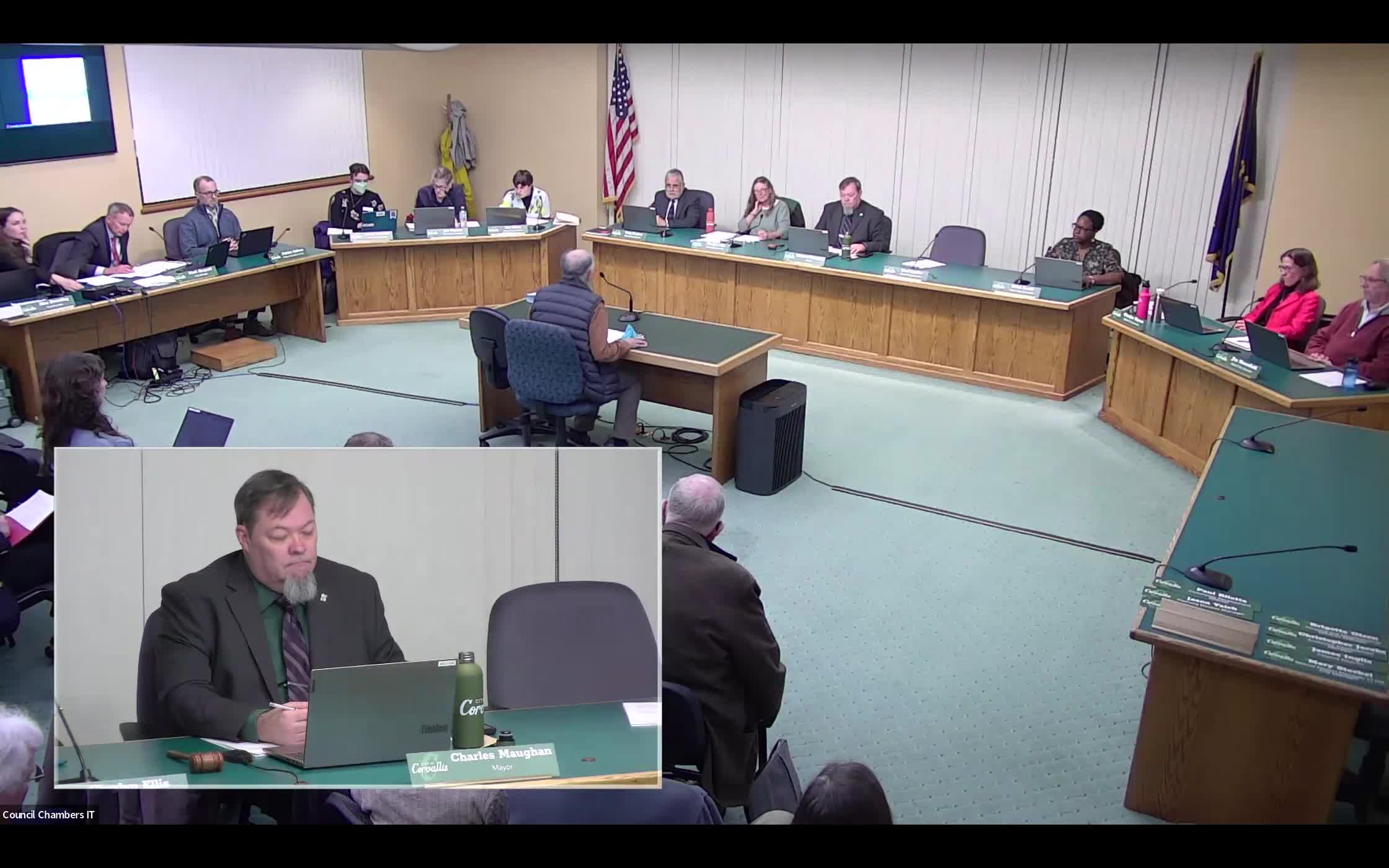
Corvallis City Council voted Feb. 3 to set aside 50% of its social-service grant funds for the next two fiscal years to support efforts that increase the number of people sheltered and decrease the number of people living unsheltered.
The Corvallis City Council voted on Feb. 3 to reallocate a larger share of its social-service grants to support efforts that increase the number of people sheltered and decrease the number of people unsheltered. The motion directs the city to set aside 50% of city social-service funds for the next biennium to advance that objective.
The decision followed a contentious public and council discussion. Councilor Tony Morfield introduced the proposal, saying the city should direct its social-service funding toward getting people shelter and out of encampments. Supporters described the move as a necessary and urgent pivot; opponents warned of unintended consequences for other programs serving people on the edge of eviction or in need of prevention services.
Scope and implementation The motion that passed applies only to the council’s social-service funds and sets the priority for one biennium (two fiscal years). Councilors debated several amendments that would have specified eligible uses (for example: creation of new shelter beds, diverse shelter options, overcoming barriers to participation in shelter services, supportive services to move shelter clients into permanent housing, and building organizational capacity). A proposed amendment to list eligible uses failed on a 2–6 roll call. Another amendment to include organizational capacity also failed.
Council discussion and process concerns Opponents said the timing was poor because United Way—then the city’s interim administrator for social-service grants—planned to issue the next application packet shortly, and smaller community providers rely on the established allocations. Several councilors asked that any reallocation be done after a fuller review and closer coordination with county partners, the HOPE advisory body, and service providers.
Proponents argued the city must act urgently: councilors said the number of people living unsheltered had not declined and that setting a higher funding priority for shelter and related services would target measurable outcomes. Several councilors said additional work sessions on funding priorities and metrics are needed, but they supported the immediate reallocation.
Vote and next steps After motions and amendments, the council recorded a tie on one procedural vote and then a 4–4 split on the final motion until the mayor cast the deciding vote in favor of the 50% allocation. Councilors directed staff to implement the priority for the next biennium and to work with providers and the county to craft eligibility criteria and an application process. Staff and councilors said more work would follow to refine eligible uses and scoring criteria and to make sure existing preventive and eviction-prevention services are not unintentionally undercut.
Ending: Council members asked staff to return with a plan that operationalizes the priority, including eligibility rules and a grant timeline, to avoid disruption to the scheduled application cycle.