Get Full Government Meeting Transcripts, Videos, & Alerts Forever!
Get email alerts on the Workforce Compensation topic
No spam. Unsubscribe anytime.
ITD seeks targeted pay increases, cites high turnover and training costs for frontline maintenance staff
Summary
ITD requested targeted CEC increases and described frontline turnover, recruitment of 53 new positions, and costs/time needed to train maintenance hires (CDL, equipment operations). Lawmakers asked how pay hikes would affect retention and budget equity.
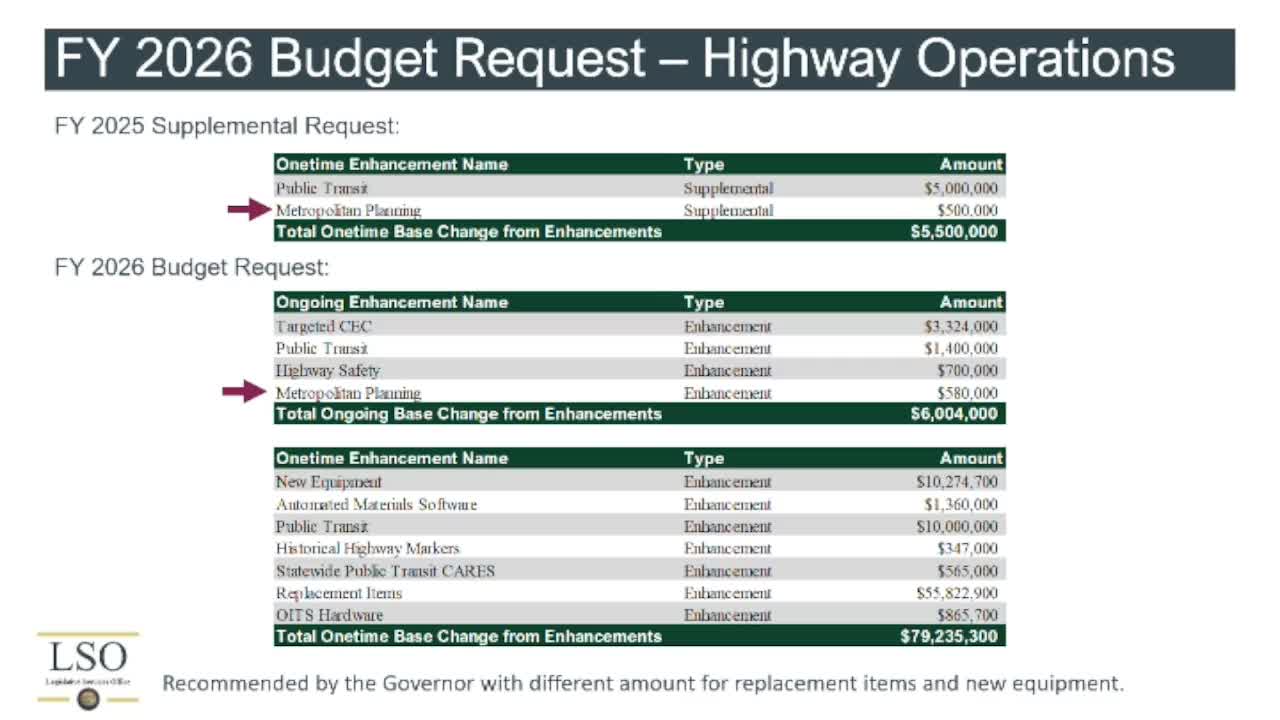
The Idaho Transportation Department requested a targeted cost‑of‑compensation (CEC) increase intended to raise pay across maintenance horizontal career paths by $2.50 per hour and identified recruitment and retention of frontline maintenance staff as a pressing operational issue.
ITD told the Joint Finance-Appropriations Committee that the targeted CEC would affect transportation maintenance staff — the department cited a proposal affecting roughly 505 positions (transportation technicians and team leaders) and said the requested $2.50 lift would move the entire step chart upward to avoid compression at the top of the pay scale.
Director Scott Stokes described persistent turnover and training burdens: ITD reports an average departure rate of about 78 maintenance employees per year out of roughly 400 such workers, and officials said many new hires do not already hold commercial driver licenses (CDLs), requiring 6–12 months of training and certification before those employees can perform some duties. Stokes said the department has reduced staff by 185 positions in the previous 10–12 years and views the current staffing additions and pay adjustments as “right‑sizing” to meet statutory performance metrics for highway maintenance.
Lawmakers questioned whether pay increases would simply follow private‑sector gains or county/city wages and whether higher entry wages would prevent trained workers from leaving after state-funded training. Several committee members noted cities and counties often pay $20–$25 per hour at entry levels for similar labor and that local government benefits (e.g., PERSI) are competitive. Representative Tanner and others asked ITD to provide a full inventory of software and ongoing licensing costs (related to IT requests) and a breakdown of what ongoing funding pays for versus one‑time items.
ITD said its previous workforce investment (53 FTPs added last year) was largely hired: the department reported about 50 of the 53 positions had been recruited. The director said the targeted CEC is designed to lift starting and intermediate rates across the many horizontal career‑path steps; ITD wants to reduce churn at the entry level so employees progress into experienced roles where retention stabilizes.
Ending: The committee asked ITD for follow‑up materials — including software inventories, compensation models and wage‑survey detail — before making final decisions on targeted CEC funding.