Get Full Government Meeting Transcripts, Videos, & Alerts Forever!
Get email alerts on the Hb91 Code Cleanup topic
No spam. Unsubscribe anytime.
Health and Welfare director asks committee to repeal 150 obsolete code sections; bill advanced
Summary
Director Alex Adams told the committee House Bill 91 removes roughly 150 obsolete or duplicative code sections across the Department of Health and Welfare; the committee voted to send HB 91 to the floor with a due-pass recommendation.
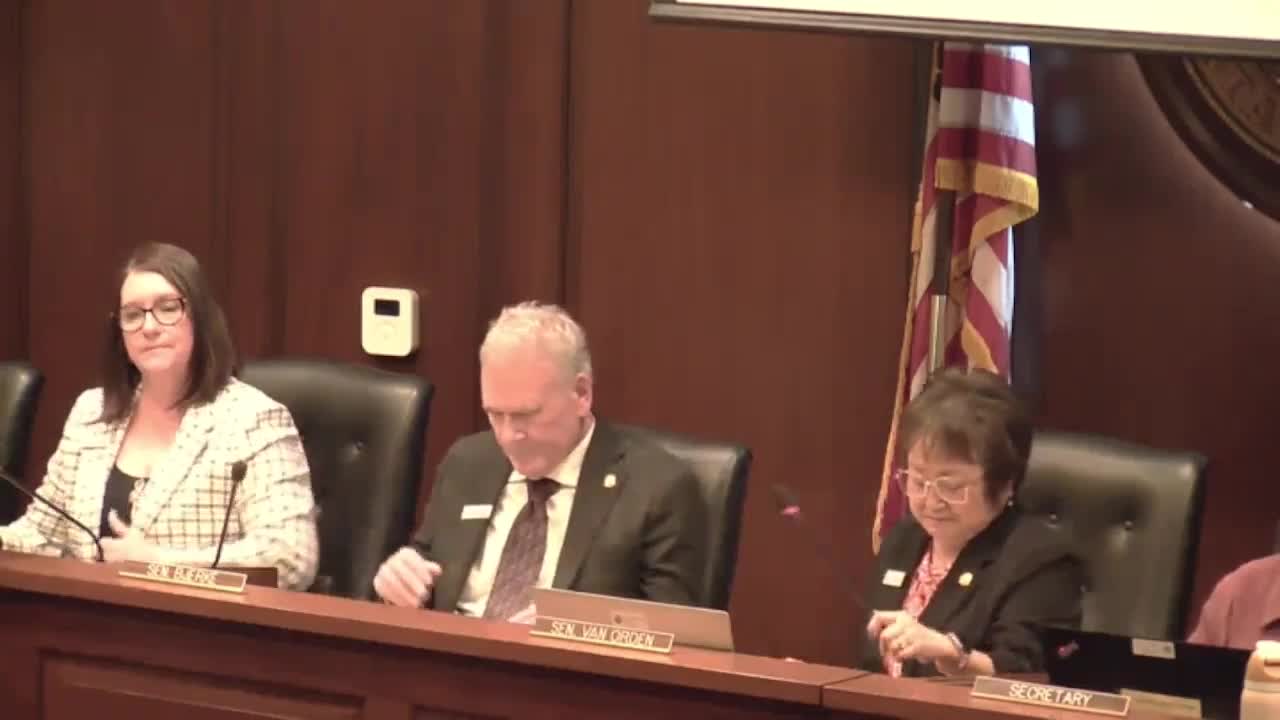
Alex Adams, director of the Idaho Department of Health and Welfare, told the Senate Health and Welfare Committee that House Bill 91 would remove roughly 150 obsolete or duplicative sections from state law that govern functions and committees the department no longer operates.
"We found 150 sections that we identified as obsolete, and that's what's represented in this bill," Adams said, describing examples that included defunct advisory committees and archaic requirements such as a provision requiring newspaper ads to shame manufacturers of adulterated oils. Adams said the deletions carry no programmatic or fiscal effect and estimated the change would have a fiscal impact of $0.
Senator Wintrow and other committee members asked for examples and sought assurance the cleanup would not inadvertently repeal currently used authorities such as assisted-living inspection protocols. Adams said the department coordinated the drafting with sponsors of recent related bills and with affected programs to avoid unintended gaps; he pointed to a companion update to residential assisted living that changed section numbers so HB 91 would not remove necessary authority.
A motion to send House Bill 91 to the floor with a due-pass recommendation was made and seconded in committee; members voted in favor by voice and the bill was reported to the Senate floor.
The sponsor and the director framed HB 91 as a housekeeping measure to ‘‘declutter’’ Idaho code, improving clarity for agencies and regulated parties while preserving currently operative authorities.