Get Full Government Meeting Transcripts, Videos, & Alerts Forever!
Get email alerts on the Conversion Devices topic
No spam. Unsubscribe anytime.
Experts urge state ban on conversion devices after federal rules weakened
Summary
Policy witnesses told Oregon legislators that devices converting semiautomatic firearms to near‑automatic fire—auto sears, forced‑reset triggers and bump stocks—have proliferated and that recent federal regulatory reversals leave states ability and need to act to prohibit these items.
Legal and policy witnesses told the joint informational hearing that conversion devices that dramatically increase a firearm—s rate of fire have proliferated online and through 3‑D printing, and that a state ban is a direct tool available to Oregon.
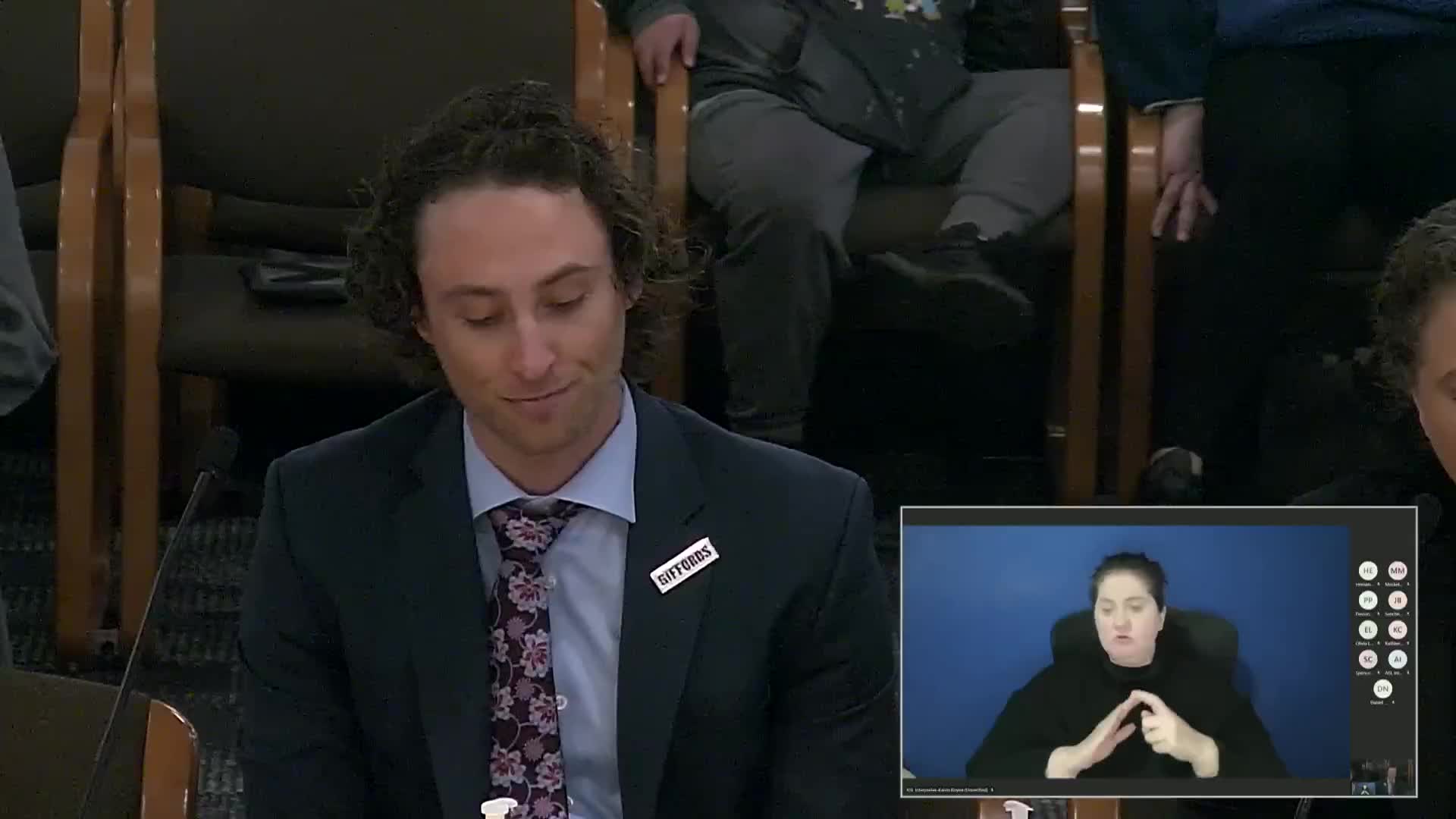
"Auto sears are small, Lehi‑sized machine gun conversion devices," said Ethan Murray, policy attorney at Giffords, describing the devices often called "Glock switches". He cited ATF data showing a large increase in recovered machine‑gun conversion devices between 2019 and 2023.
Murray walked the committees through three common device types: bump stocks (which the ATF had treated as machine guns until the Supreme Court ruling cited in the hearing), auto sears or "switches," and forced‑reset triggers (FRTs). He showed video comparisons of automatic fire and FRT‑equipped semiautomatic fire to demonstrate the practical effect on rate of fire and lethality and noted some federal regulatory efforts have been invalidated or are under legal challenge.
Why this matters: witnesses said these conversion devices make firearms far more lethal and are associated with mass shootings and higher casualties in events where they are used. Murray and others argued administrative federal rules that attempted to regulate these devices have been weakened by recent court decisions, leaving states the primary option to prohibit them directly.
Policy options discussed: witnesses recommended state bans on bump stocks, auto sears and similar conversion devices; they pointed to 23 states that already ban at least some of these items (including Washington and California). They also recommended criminal penalties for manufacture and sale, and emphasized enforcement against online sellers and 3‑D print files.
Limits and evidence: witnesses said federal classification and litigation are in flux and that state statutes should be carefully drafted to avoid constitutional infirmities the courts identified with administrative rulemaking. The hearing included sensitive video material comparing firing rates; committee chairs warned members and the public before playback.
No vote occurred; testimony was informational. Witnesses urged the Legislature to consider statutory bans to avoid reliance on administrative classifications that courts may overturn.