Get Full Government Meeting Transcripts, Videos, & Alerts Forever!
Get email alerts on the Dui Vehicular Manslaughter topic
No spam. Unsubscribe anytime.
Senate committee advances bill imposing mandatory minimums for DUI-related vehicular manslaughter
Summary
The Senate Judiciary and Rules Committee voted to send Senate Bill 1099 to the Senate floor with a "due pass" recommendation. The bill would require judges to issue a warning after a first DUI conviction and impose graduated mandatory minimum prison terms if a later DUI results in a death.
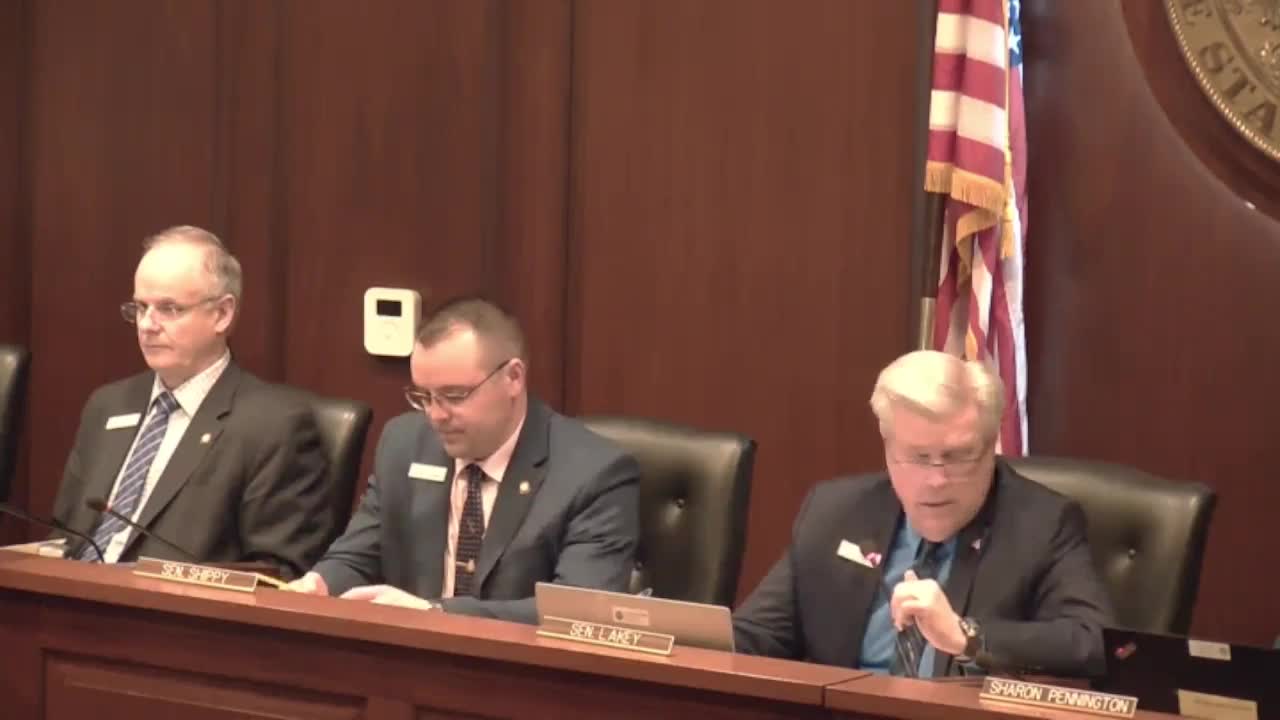
The Senate Judiciary and Rules Committee voted to send Senate Bill 1099 to the Senate floor with a due-pass recommendation after testimony and debate at a committee meeting (time and date not specified). The bill would require a judge to warn a person after a first driving-under-the-influence (DUI) conviction that a future DUI that causes a death could trigger mandatory minimum prison terms; it would then impose a five-year minimum if a later DUI combined with vehicular manslaughter follows a prior conviction and a 10-year minimum if the person has three or more prior DUI convictions and is charged with vehicular manslaughter.
Supporters told the committee they wrote the bill in consultation with prosecutors, sheriffs and law-enforcement groups and described it as a way to increase accountability for repeat impaired drivers who kill someone. "This bill is supported by the Idaho Prosecuting Attorneys Association, the FOP, the sheriff, the Idaho Sheriffs Association, and IACOPA," State Senator Craig Burnt said in committee testimony. Senator Burnt described the bill as a "sliding scale" that preserves judicial discretion for first-time DUI manslaughter cases while creating mandatory minimums for repeat offenders.
Law-enforcement witnesses stressed the scale of the problem and urged passage. Tracy Bascarachea, testifying for the Idaho Chiefs of Police Association and the Meridian Police Department, said: "In Idaho in 2023 alone, there were 1,708 crashes caused by impaired drivers. 246 people were critically injured in those crashes, and a hundred and 5 of our community members lost their lives due to impaired drivers in that year alone." Bascarachea testified the bill would provide clarity about consequences for repeat offenders and help deter future deaths.
The Idaho Prosecuting Attorneys Association also endorsed the bill. Robbie Blassard, representing the association, told the committee many victims find uncertainty in the current system traumatic and said the proposed law would provide "some guarantee of an outcome" in cases meeting the bill's conditions.
Several citizens offered personal testimony. An emailed statement read into the record recounted a family's loss after a repeat impaired driver killed relatives; Deborah Carney testified that a mandatory minimum would have helped her family plan and provide a starting point for sentencing discussions.
Opponents and several senators warned about the broader policy implications of mandatory minimums. Senator Ruckdy argued that mandatory minimums shift negotiating leverage to prosecutors and reduce judicial discretion to weigh case-specific facts. Senator Shippey and others said they worried the bill could treat a distant prior DUI the same as a recent pattern of offenses; Shippey noted the bill contains no time limit between prior DUI convictions and the triggering offense and called that a potential unfairness. Senator Burnt said the graduation from five to ten years was included to provide some leniency for remote prior offenses while still ensuring accountability when a death occurs.
After discussion, Senator Foreman moved to send the bill to the floor with a due-pass recommendation; Senator Keiser seconded. The motion carried on a voice vote. A recorded "nay" was entered by Senator Recker; the committee chair announced the bill would go to the full Senate with the committee's support.
The bill's immediate next step is consideration by the full Senate. The committee record indicates supporters and opponents expect further debate on mandatory minimums if the measure advances.