Get Full Government Meeting Transcripts, Videos, & Alerts Forever!
Get email alerts on the Land Use Cascade Crest topic
No spam. Unsubscribe anytime.
Council sets limited public hearing Feb. 3 on remand of 18-year-old Cascade Crest subdivision case
Summary
The Corvallis City Council voted to hold a limited public hearing Feb. 3 to consider engineering information the applicant submitted in response to a Land Use Board of Appeals remand of the Cascade Crest Subdivision approval. Staff recommended the council preside over the hearing because the case predates many later code changes.
The Corvallis City Council on Jan. 6 set a limited public hearing for Feb. 3 to consider new engineering materials submitted in a remand of the Cascade Crest Subdivision, a 10-lot project originally reviewed in 2006–2007.
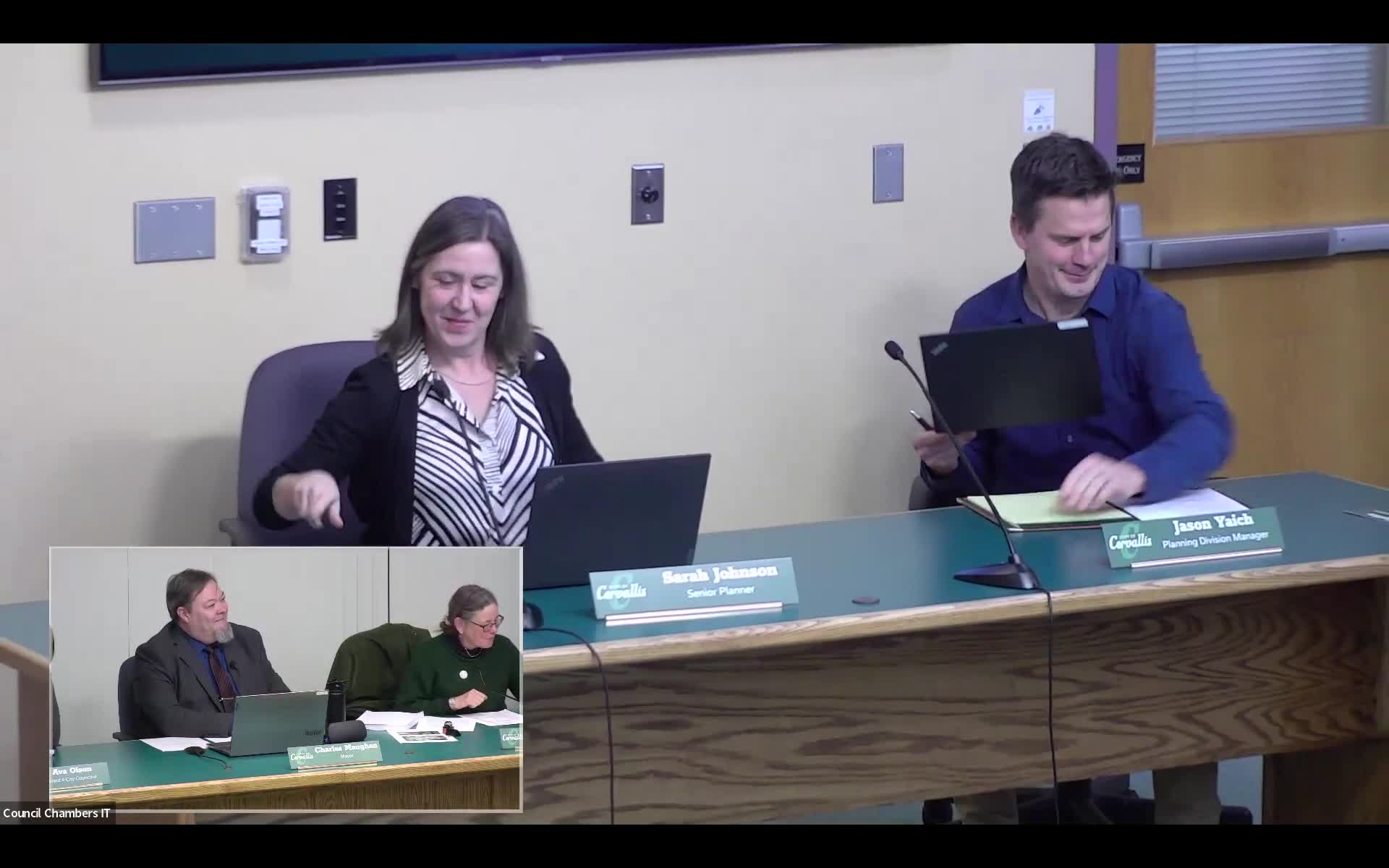
Senior planner Sarah Johnson told the council the action is procedural: because the Land Use Board of Appeals (LUBA) remanded the council’s 2007 approval with three assignments of error, the city needs to take additional, narrowly focused findings on stormwater and the decision not to require a sidewalk along Brook Lane Drive. “What we are here for today is really procedural in nature,” Johnson said, adding that the hearing will be limited to the issues specified in the remand.
Why it matters: the application has been in process for 18 years. The applicant originally appealed a Planning Commission denial to the council in 2007; the approval was later remanded by LUBA on stormwater detention, off-site stormwater impacts and the sidewalk decision. The file has seen multiple extension requests over nearly two decades. City staff said earlier legal advice had supported repeated extensions; new city legal counsel advised staff the delay was now excessive and recommended setting a date certain.
At the hearing, the council will consider new materials supplied by the applicant and allow public testimony limited to the remand topics, staff said. Johnson recommended the council itself preside over the hearing rather than send the matter back to the Planning Commission because the case originated before numerous subsequent land development code and statutory changes and because of the case’s lengthy procedural history.
Council deliberations focused on scope. Councilors and staff agreed a “limited public hearing” should address engineering and technical matters tied to the remand: whether the proposed stormwater detention facilities meet standards and whether a sidewalk is required along the property frontage. Councilor Cadena moved to set the hearing for Feb. 3 with the limitation that testimony be limited to the remand issues; a councilor seconded the motion and it passed unanimously.
The council’s motion directs staff to publish hearing materials and to identify the specific standards that will apply, including that findings will be made using the code and standards applicable to the remand. Staff said they would provide clarity in the staff report about which historical code provisions (the 1993 land development code provisions cited in the remand) and which contemporary standards or clarifications would govern the limited hearing.
Next steps: the hearing is scheduled for the council’s Feb. 3 meeting. Staff will distribute a packet before the meeting that identifies the standards the council will use and the specific scope of testimony allowed. Any subsequent decision after the limited hearing would generate a record available for further appeal to LUBA if parties remain dissatisfied.