Get Full Government Meeting Transcripts, Videos, & Alerts Forever!
Get email alerts on the School District Nepotism Exception topic
No spam. Unsubscribe anytime.
Senate committee advances temporary exception allowing spouses of trustees to hold contracts in very small Idaho school districts
Summary
The Senate Education Committee voted to send Senate Bill 1045 to the floor with a "do pass" recommendation. The bill would allow trustees' spouses in districts with 400 or fewer students to hold contracts with greater due-process protections than current law permits; sponsors included a five-year sunset to allow evaluation.
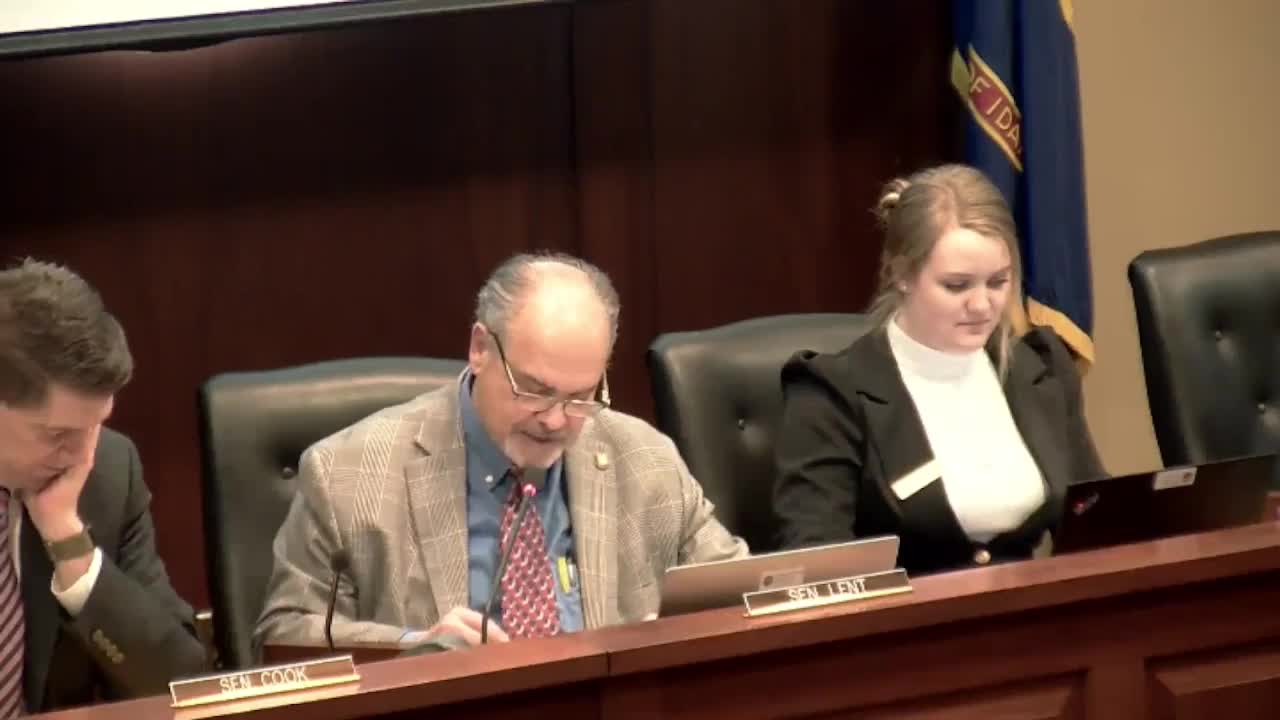
BOISE — The Senate Education Committee on Tuesday voted to send Senate Bill 1045 to the Senate floor with a "do pass" recommendation after a presentation from the Idaho School Boards Association and testimony from a rural school board trustee.
The bill would amend Idaho Code section 33-507 to allow an exception in districts with a fall enrollment of 400 students or fewer so that a school trustee's spouse who is employed as a teacher or pupil service staff member may be placed on a category 2 contract rather than the current category 1 contract the statute effectively requires in these conflict situations. The change would not apply to administrator positions, and the bill includes a sunset date of June 30, 2030.
Quinn Perry, deputy director of the Idaho School Boards Association, told the committee the proposed change narrowily targets very small districts and preserves multiple abstention requirements for the trustee. "The trustee in question could not be involved whatsoever in any part of the employment of their spouse. They have to abstain on monthly payroll, abstain from negotiated agreements or being on negotiations committees, approving specific requests from the spouse, such as a trip request or anything like that," Perry said.
Perry said the current statute requires a trustee's spouse in these circumstances to be offered a category 1 contract — one that expires at the end of each school year and carries no due-process protections — and that small districts often get no applicants during the statutorily required 60-day posting period. Perry said the change would allow the spouse to be offered a more typical contract with the due-process protections that brings greater employment stability for very small districts.
Jake Michie, a school board trustee who said he represents the Moonville School District, testified in support of the bill and described operational problems the existing rule creates in tiny districts. "For small school districts like mine, this bill is particularly beneficial. It allows districts with fewer than 400 students to employ a spouse under the certain conditions we've already talked about," Michie said. He added that the bill's temporary sunset would let the Legislature evaluate whether it worked as intended.
Senators asked how the 400-student threshold was chosen. Perry said the number came from the request submitted by Midvale School District and that the district initially proposed a lower threshold; "They landed on 400," she said. Perry said roughly 40 Idaho districts have fall enrollments of 400 students or less.
Senator Cindy Carlson said she had concerns about the potential for loyalty-driven decision-making in small communities but added she would vote for the bill because it includes a sunset: "I will vote for it, but I have concerns about it and I'm glad that there's a sunset clause in it," Carlson said.
Senator Nichols moved that the committee send Senate Bill 1045 to the floor with a "do pass" recommendation; the motion was seconded and carried on a voice vote.
The bill's sponsor, Senator Shippey, was not present and was represented in the hearing by Perry, who said the change would affect "approximately 40 districts in total" and exempt charter schools from the exception.
Supporters said the measure balances ethical safeguards — abstentions, limits on administrative roles, posting and hiring steps — against the practical challenge that some very small districts routinely receive no applicants for posted teaching or pupil-service positions. Critics warned the change could create perceived or actual conflicts in small communities and urged careful oversight during the five-year trial period.
If the bill advances on the Senate floor, lawmakers and stakeholders will have until the 2030 sunset to assess whether the exception created by SB 1045 produced unintended consequences or should be extended or narrowed.