Get Full Government Meeting Transcripts, Videos, & Alerts Forever!
Get email alerts on the Education Parent Supported Schooling topic
No spam. Unsubscribe anytime.
Senate Education Committee holds bill to codify parent‑supported public schooling model
Summary
Senate members of the Idaho Senate Education Committee on March 5 paused consideration of Senate Bill 10‑68 after extensive public testimony and questions from senators, voting to hold the bill to the call of the chair with a date certain of March 12.
Senate members of the Idaho Senate Education Committee on March 5 paused consideration of Senate Bill 10‑68 after extensive public testimony and questions from senators, voting to hold the bill to the call of the chair with a date certain of March 12.
The bill would formally authorize and clarify a parent‑supported public schooling model already operating in several Idaho districts, including Idaho Home Learning Academy (IHLA). Sponsor Senator Steven Thain, who described the measure as a way to “give flexibility to the public school system to innovate,” told the committee roughly 11,000 students statewide are already using the model and that the bill aims to protect that option from future regulation.
Supporters — primarily parents and representatives of IHLA and service providers — said the model lets families pair home instruction with district teachers and access a limited education savings account for curriculum and approved activities. Opponents urged caution about using public funds for parent‑directed curriculum and questioned oversight, testing outcomes and how money flows.
Senator Thain, the bill sponsor, summarized the bill’s intent: “What it does is it basically gives flexibility to the public school system to, innovate and provide, what I think competition could compete in this new education marketplace that we're we find ourselves in.” He said the bill would align statutory language with a model already in use and noted passage of House Bill 93 this session, which he said broadened the landscape for school choice.
Janet Cox, who identified herself as a representative of Idaho Home Learning Academy, described how funding is distributed in practice. “The district provides teacher salaries... the district keeps back funds to cover the extra special education costs,” Cox said. She told the committee the education service provider payment works out to roughly $2,500 per student after district special‑education holdbacks and that about $1,800 of that amount is available to families in an annual education savings account. Cox said families must spend that money by April 30 each year and that reimbursements do not include travel, lodging, food or general household items; she gave the example that ticket fees for a museum visit could be reimbursed but hotel, gas and food would not.
Parents and enrolled students gave largely pro‑bill testimony about academic and social benefits. Darren Forrest said, “One of the things we love about schooling at home is the choice it gives us,” and described using provider support to find a curriculum that helped his child with math. Several parents and students described accelerated learning, field trips and extracurricular opportunities they said would not have been possible otherwise. Jacob Peterson, testifying remotely, linked the model’s flexibility to accommodating different learning styles and urged support.
Opponents focused on fiscal and equity concerns. Denise Caruzzi, speaking as a citizen, urged the committee to “vote no on Senate Bill 10‑68,” saying, “I do not believe that our taxes or public school dollars should be spent on parents' private choices.” Testimony also raised equity concerns for families who cannot exercise the choice and questioned whether the model diverts funds from brick‑and‑mortar schools.
Committee members pressed for clarity on oversight, testing and finance. Senator Ward Engelking asked why the bill limits some Department of Education regulation and whether parent‑selected curriculum and home instruction reduce accountability. Senator Thain pointed to specific bill language that exempts parent‑selected curriculum from the curriculum adoption process and said the model requires state testing and weekly contacts and examples of student work. Engelking also said he was “not real impressed” with IHLA’s scores and wanted more data.
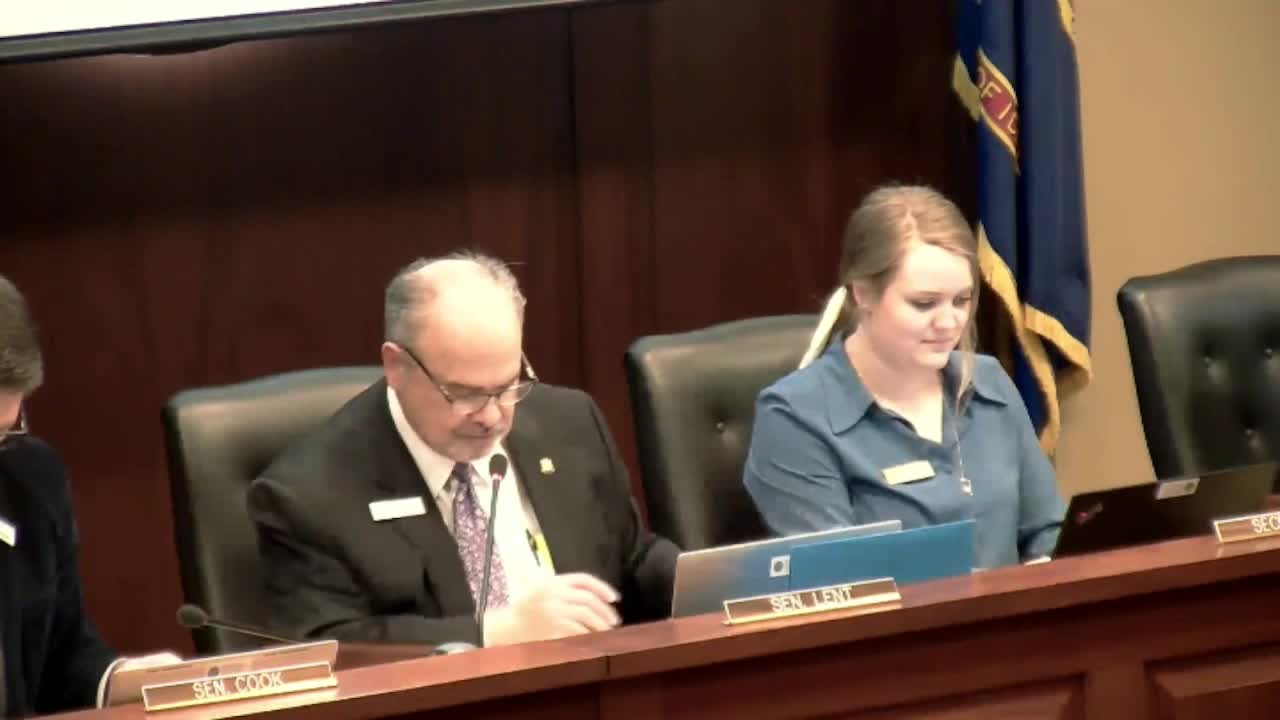
After questions and debate the committee moved procedurally. An initial motion from Senator Cook to hold the bill at the call of the chair was seconded; Senator Nichols offered and the committee adopted a substitute motion to hold Senate Bill 10‑68 to the call of the chair with a date certain of March 12. Committee chair and senators called the motion and it carried without recorded roll‑call votes.
The committee also approved procedural items earlier in the meeting — approval of minutes from Feb. 25 and Feb. 3, 2025 — and approved an RS (RS 302586 C1) to be forwarded to the Privilege Committee by unanimous consent.
The committee indicated it will reconvene the bill’s consideration on March 12; senators asked that staff provide additional financial breakdowns, program performance data (including state test results for IHLA and comparable districts) and clarifications about which entities perform student‑facing services and how the district, charter/school and third‑party service providers split funds and responsibilities.
The hearing record contains repeated descriptions of how the model operates in Oneida County: an authorizer (Oneida School District or charter status), a named school (Idaho Home Learning Academy), and education service providers that contract with the school to handle curriculum, enrollment and family funding accounts. Committee testimony emphasized that the students in this model remain public students and that funds flow from the state to the school/school district, then to service providers and family education accounts under the program’s rules.
The committee adjourned after setting the date certain for further consideration.