Get Full Government Meeting Transcripts, Videos, & Alerts Forever!
Get email alerts on the Public Health Districts topic
No spam. Unsubscribe anytime.
Senate committee sends SB 1031 to amendment order after debate on limiting health districts’ powers
Summary
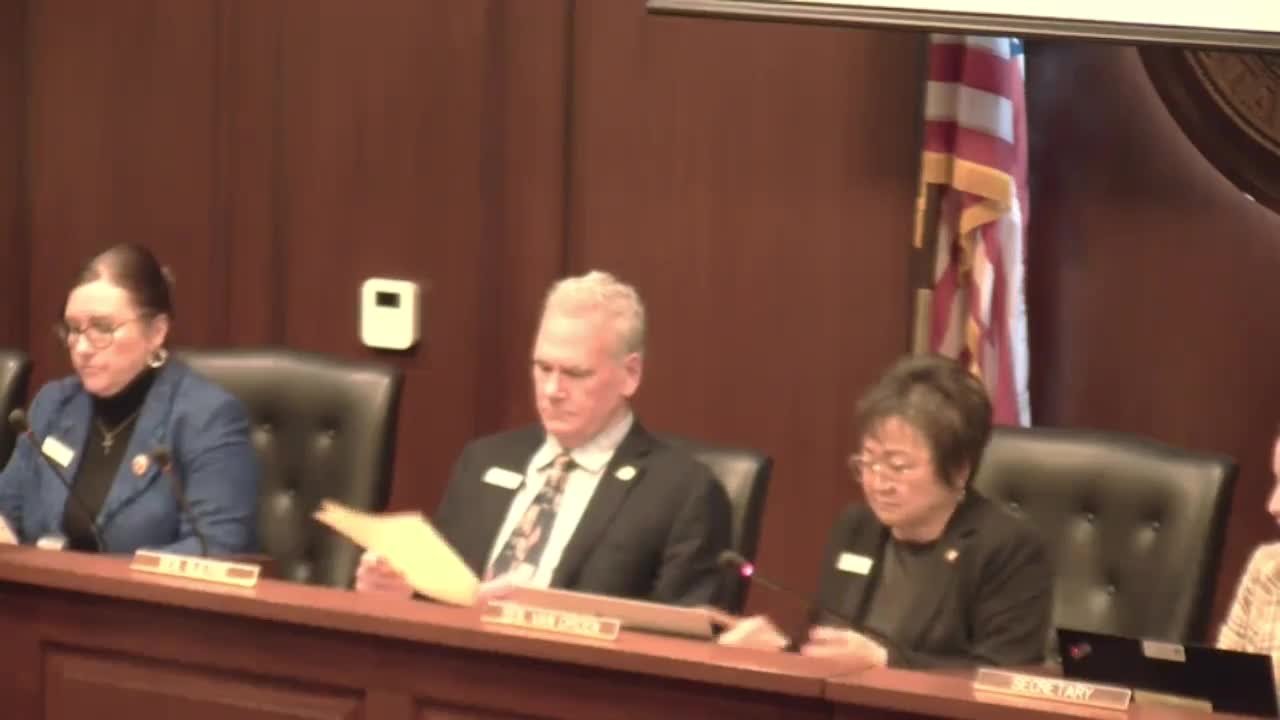
At a meeting of the Idaho Senate Health and Welfare Committee, senators debated Senate Bill 1031, which would narrow public health districts’ authority by replacing broad language that allows them to do “all things” in the name of public health with a requirement that actions be “specifically authorized by state law” and “necessary and reasonable.” After extended questioning and public testimony, the committee voted to send the bill to the 14th order for possible amendments.
At a meeting of the Idaho Senate Health and Welfare Committee, senators debated Senate Bill 1031, which would narrow public health districts’ authority by replacing broad language that allows them to do “all things” in the name of public health with a requirement that actions be “specifically authorized by state law” and “necessary and reasonable.” After extended questioning and public testimony, the committee voted to send the bill to the 14th order for possible amendments.
The bill’s sponsor, Senator Brian Lenny of Nampa (Idaho Senate District 13), said the measure is intended to “put some guardrails” around public health districts and to ensure actions are “rooted in statute, in science, and in necessity.” He told the committee that the purpose is to rein in what he described as excesses during the COVID-19 pandemic: “unchecked unlimited power has no place in any government agency or bureaucracy,” Lenny said.
Supporters argued the current statute gives districts overly broad authority. Misty Karlfeld, who identified herself as leader of Health Freedom Idaho, told the committee that Idaho’s health code “39 dash 4 1 4” grants “staggering power” and left citizens without recourse during COVID-19. “Please restrict their power and duties from all things to necessary unreasonable things required for the preservation and protection of public health,” Karlfeld said.
Several committee members pressed the sponsor on wording and potential unintended consequences. Senator Melissa Wintrow asked which state laws the bill would rely on and whether the phrase “specifically authorized by state law” could create confusion about what health districts may do. Senator Wintrow also raised concerns that the bill’s language linking preventive measures to an “immediate public health risk” could unintentionally bar routine preventive activities: “Prevention means we're looking forward, and there's not necessarily immediate risk,” she said.
Other senators echoed the need for clearer definitions. Senator Blaylock asked how terms such as “necessary and reasonable,” “immediate,” and “scientific evidence” would be interpreted in practice and suggested the bill might be made clearer by defining those terms. Senator Bierke and others said they supported the bill's goal of preventing the kinds of actions some viewed as overreach during the pandemic but preferred refining the language before final passage.
Several speakers noted a 2023 change requiring public health measures to get approval from county commissioners, which they said provided an additional check. Senator Wintrow observed that some of the events cited by the sponsor may have involved other local authorities or ordinances rather than actions taken solely by health districts.
Committee action reflected the mixed views. Senator Seiderfeld moved that the committee report the bill to the floor with a due-pass recommendation; Senator Keiser seconded. Senator Harris offered a substitute motion to send SB 1031 to the 14th order for possible amendment; Senator Bierke seconded the substitute. The substitute motion carried and the committee recorded the bill as sent to the 14th order for potential edits. The transcript does not provide a roll-call tally; the hearing record shows the substitute motion passed after an oral vote.
Senator Lenny said he is open to language changes and to the bill going to the 14th order for clarification. The committee adjourned with a scheduled meeting the following day.
Votes at a glance: - Motion: Report SB 1031 to the floor with a due-pass recommendation. Moved by Senator Seiderfeld; seconded by Senator Keiser. (Replaced by substitute motion; outcome superseded.) - Substitute motion: Send SB 1031 to the 14th order for possible amendment. Moved by Senator Harris; seconded by Senator Bierke. Outcome: substitute motion passed; exact tally not specified in the transcript.