Get Full Government Meeting Transcripts, Videos, & Alerts Forever!
Get email alerts on the Homelessness And Public Safety topic
No spam. Unsubscribe anytime.
Parks and police explain change in camp-posting approach ahead of point-in-time count; council raises accuracy and safety concerns
Summary
Parks & Recreation said it will not pause camp postings in all locations before the January point-in-time count; staff will prioritize postings by immediate safety risk and designated sleeping areas, a change some councilors and service providers questioned for its effect on count accuracy.
Parks and Recreation staff described a change in the city’s approach to posting and clearing outdoor camps in the weeks around the annual point-in-time (PIT) homeless count, telling the council the decision rests on safety priorities and resource limits rather than an attempt to influence PIT numbers.
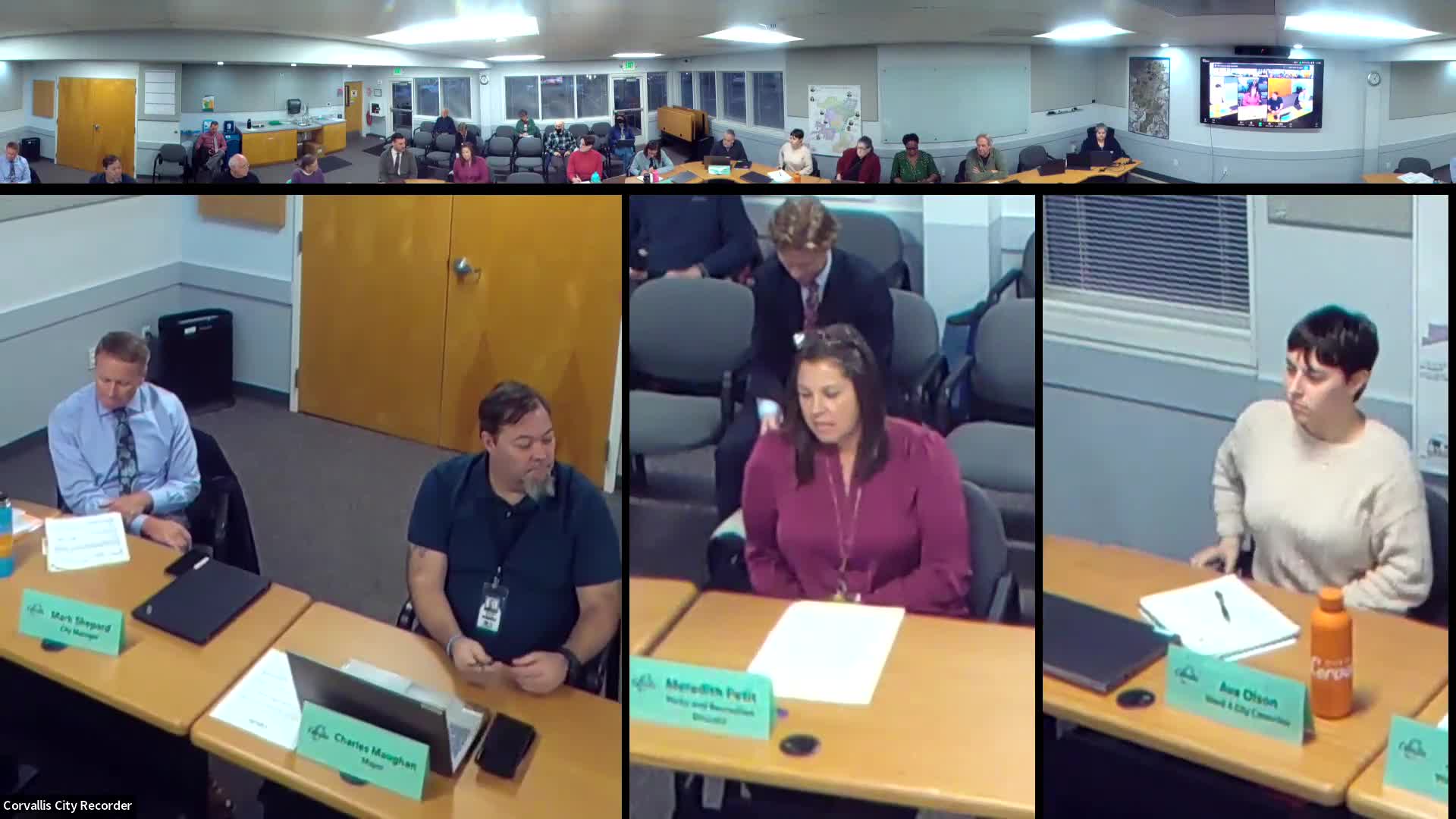
Meredith Pettit, parks and recreation director, told councilors that historically staff paused postings and cleanups for a few weeks before the PIT count. This year, staff decided not to pause in all locations because the city now has designated, time-limited sleeping areas and because the parks team prioritized safety for campers, staff and other park users. Pettit said postings now focus on high-risk locations — for example, camps adjacent to playgrounds or in riparian corridors that are vulnerable to flooding — and that postings per week typically number between four and 10, with a rough average of six to seven camps weekly.
Pettit said the camp-cleanup crew is small (two to three part-time employees, subject to turnover) and that pausing cleanup citywide for the PIT window risks accumulation in lower-priority locations. She said staff have discussed the operational change with internal partners and that providers on the city’s situation table have been briefed.
Councilors and community volunteers raised two concerns: first, whether the change would reduce the PIT count’s accuracy because unsheltered people might choose locations that staff would not post during the PIT window; second, whether a temporary pause (for example, two weeks) in designated sleeping areas could allow service providers time to communicate the temporary option and thus improve count capture. Staff said designated sleeping areas would not be posted during the PIT window if the city had asked the community to move into those areas, and staff said they would coordinate outreach through the situation table and local service providers.
Public safety and Parks staff reported reductions in calls for service and overdoses at some cleaned locations; staff said that experience informed the safety-driven approach. No change to the legal time/place/manner rules was announced; staff emphasized the operational, evidence-driven choice to focus limited cleanup resources on higher-risk sites.
Ending: Staff will continue coordination with providers and the situation table and return to council with operational updates; councilors asked for clarity about communication to providers and for a brief internal memo documenting priority locations and cadence.