Get Full Government Meeting Transcripts, Videos, & Alerts Forever!
Get email alerts on the Energy Home Rebates topic
No spam. Unsubscribe anytime.
Committee debates $24.6 million federal home-energy rebate authority; procedural dispute leaves referral plan unclear
Summary
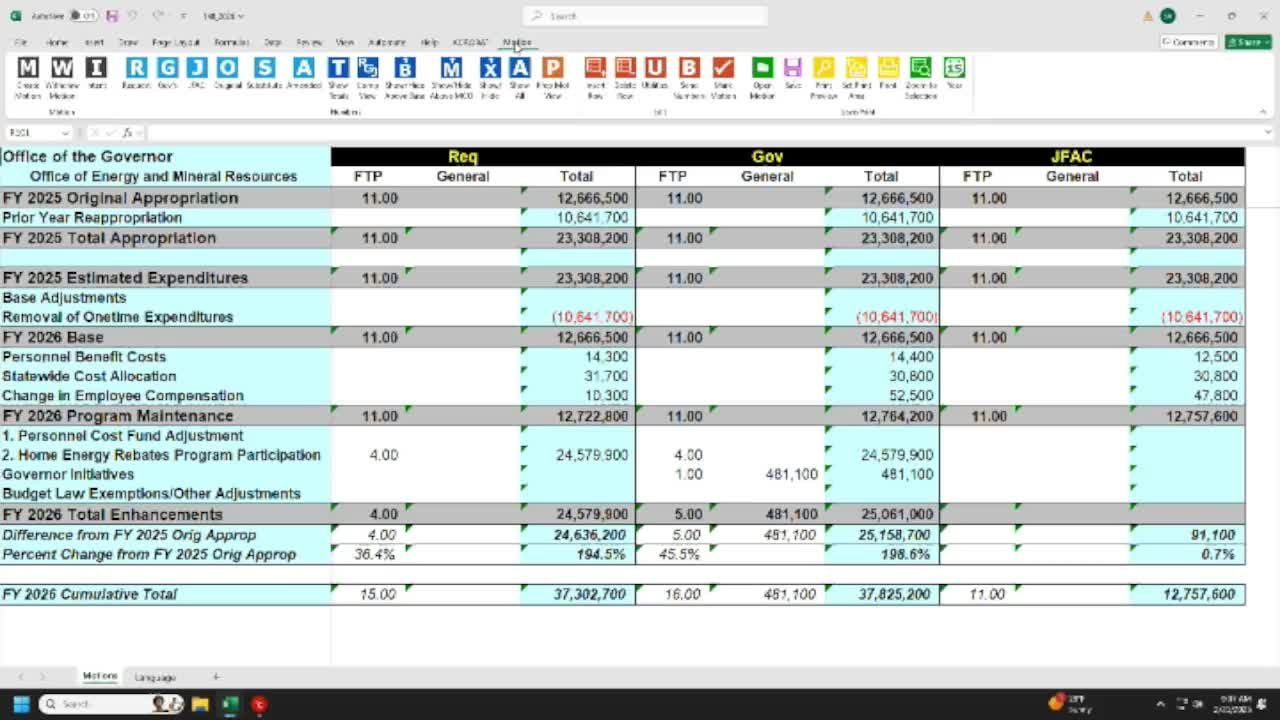
The committee debated a governor-supported package that would give Idaho authority to administer federal home-energy rebates (about $24.5 million) and add a $481,100 state speed-council position; lawmakers split over accepting federal funding and voted down a substitute motion and then split on the original motion.
The Joint Finance-Appropriations Committee considered a $24,497,900 federal appropriation to administer federal home-energy rebate programs and a separate Governor-recommended $481,100 general-fund package to establish a state “speed council.” Kellen McGurkin, budget and policy analyst, described the federal funding as formula-allocated funding created by the Inflation Reduction Act of 2022 and explained that most of the dollars would be federal grant awards passed through the state to eligible households.
“All we’re voting on here today is whether or not Idaho is going to get our share of that,” Representative McPetzke said during the debate, urging members not to decline federal funds the state already helped create through federal taxation.
Representative Tanner offered a substitute motion to remove the federal appropriation and approve only the speed-council general-fund item. Tanner argued that accepting the federal program would expose Idaho to federal policy conditions and noted concerns about how the Inflation Reduction Act’s programs have been implemented nationally.
Opponents of the substitute argued the federal dollars are allocated to states by formula and that declining to accept them would mean Idaho households would forfeit funds to other states. “We’re paying those federal taxes…all we’re voting on here today is whether or not Idaho is gonna get our share of that,” a member said.
The substitute motion (which would have removed the federal appropriation) resulted in an evenly split committee vote and failed on a tie. The committee then voted on the original motion that included the federal appropriation and the speed-council item. That vote was also split along chamber lines in committee: the Senate majority recorded a favorable vote while the House delegation did not secure a majority in committee on the final original motion.
Members engaged both policy and procedural arguments. Representative Tanner characterized the federal program as part of broader federal spending that he said had contributed to inflation; others said the program would conserve energy, create jobs through retrofits and otherwise produce local economic benefits.
The committee record shows disagreement about the procedural consequence of the divided vote. A member argued the motion passed the committee and should be forwarded to the House; other members noted the House delegation did not record a majority and therefore the committee lacked a unified affirmative majority. The chair recorded that the measure would be forwarded to the House for consideration, and members asked staff to include language in the packet clarifying federal-fund restrictions should federal funds later be rescinded.
Ending: The committee debated the home-energy rebates and speed-council package at length; the committee recorded split votes on a substitute and on the original motion, and the co-chairs directed that the package be forwarded to the House for further action while members noted a need to clarify committee-majority rules.