Get Full Government Meeting Transcripts, Videos, & Alerts Forever!
Get email alerts on the Regulatory Agency Funding topic
No spam. Unsubscribe anytime.
DOPL budget hearing spotlights audit of cash balances, high turnover and request for inspector pay increases
Summary
The Division of Occupational and Professional Licenses briefed JFAC on licensing growth, open audit findings about excess board cash balances, a staffing shortage and a request for ongoing pay increases and vehicle replacements for inspectors.
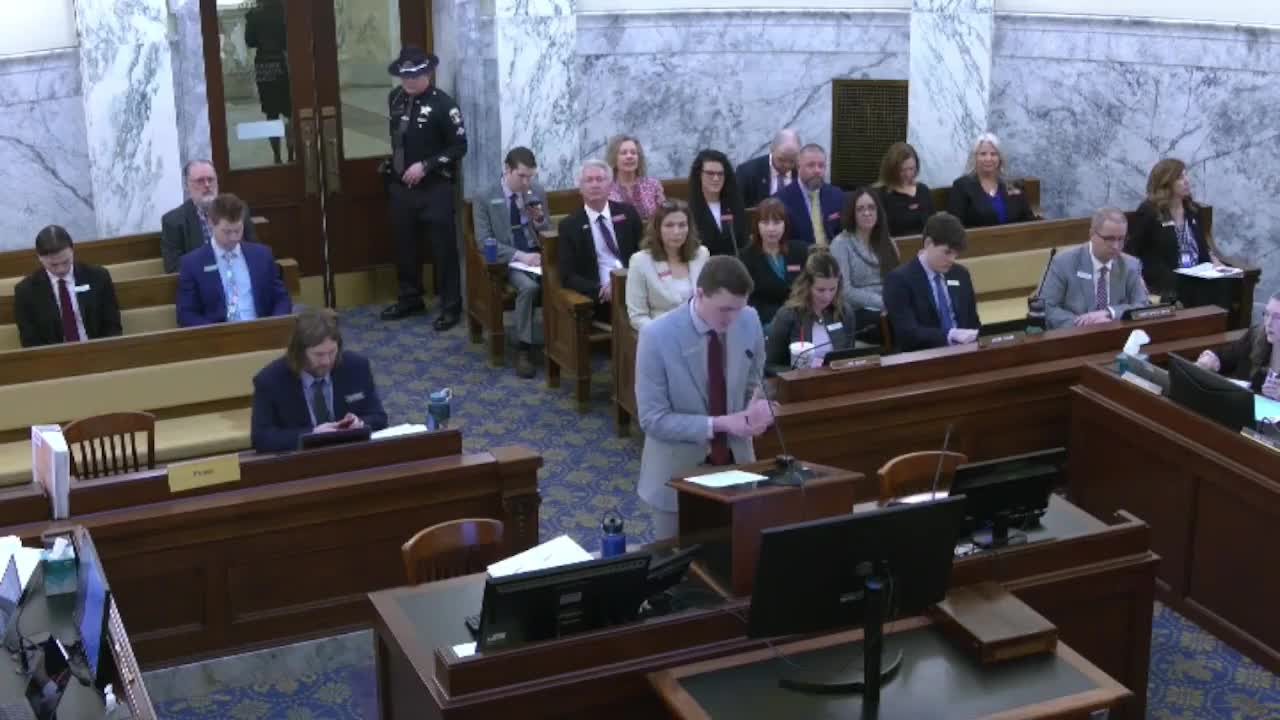
The Joint Finance‑Appropriations Committee on Feb. 6 heard a budget presentation from the Division of Occupational and Professional Licenses (DOPL) that highlighted agency consolidation, license growth, an open audit finding on excess cash balances for boards and commissions, and a request for targeted pay increases for inspector positions.
Kellen McGurkin, budget and policy analyst with Legislative Services, summarized DOPL’s history (created by House Bill 318 in 2020, consolidating roughly 11 agencies and dozens of boards), current structure and finances. He said DOPL now oversees roughly 200,000 licensees across about 45 boards and commissions and operates on dedicated and federal funds; personnel costs accounted for about 73% of FY2024 expenditures.
Audit status and cash balances April Renfro of Legislative Audit told the committee DOPL’s most‑recent open audit finding (November 2024) remains focused on cash balances for boards and commissions. She described the reasonableness range auditors use — a rolling‑five‑year measure with a suggested midrange between roughly 30% and 125% of annual expenditures — and said DOPL has been working on a multi‑year plan that includes fee reductions and fee holidays to lower excessive balances. The division has submitted follow‑up reports and the auditors will continue monitoring progress.
DOPL’s administrator, Russ Baron, said the agency is taking steps to balance individual board cash positions, noting transfers of large prior balances into DOPL when boards consolidated and expenditures tied to implementing a new licensing system. He said the division has been careful to avoid fee increases while the licensing system and relocation costs settle and that some fee‑reduction tools (fee holidays) and legislation are under consideration to allow a faster response.
Inspector pay, turnover and vehicle requests Baron and McGurkin outlined personnel pressures in the Bureau of Building, Construction and Real Estate, where the division requested $222,000 ongoing to raise inspector pay by an average of $0.95 per hour across 92 FTP, citing high turnover and pay below industry standards. Baron said turnover among inspectors has ranged widely year‑to‑year and that vacancies can remain open for months, stressing existing staff through overtime and delaying inspections that have customer and public‑safety consequences.
DOPL also requested $900,500 in one‑time dedicated funds for vehicle replacements (detailed in the LBB as a mix of Ford F‑150s, Escapes, an F‑250 and an Explorer) and $146,401 in one‑time dedicated funds for hardware recommended by the Office of Information and Technology Services. McGurkin noted the agency is entirely funded by dedicated and federal funds and that the requests reflect agency needs rather than general‑fund policy.
Why it matters: DOPL regulates professions affecting public safety and consumer protection; auditors’ open findings on board cash balances and DOPL’s staffing pressures for inspectors bear directly on how quickly licensing work and inspections can be performed and whether fees and reserves are set at appropriate levels.
What happens next: Committee members asked for more detailed analyses, and Baron agreed to provide board‑level plans and the division’s cash‑balance reports to the committee; auditors said they will continue follow‑up on the open cash‑balance finding.