Get Full Government Meeting Transcripts, Videos, & Alerts Forever!
Get email alerts on the U Of I Finances topic
No spam. Unsubscribe anytime.
University of Idaho officials tell JFAC the university’s finances are improved but affected by OPEB accounting and EWA shifts
Summary
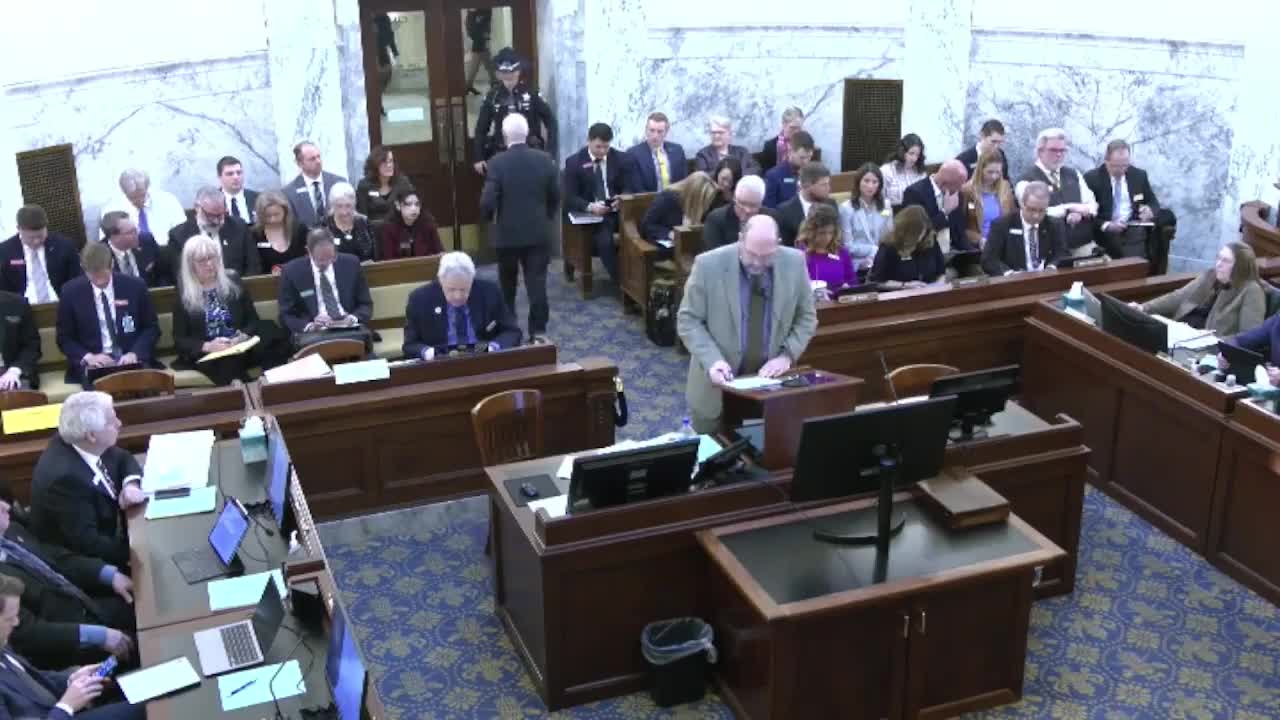
University of Idaho President C. Scott Green and Legislative Services Office analyst Kevin Campbell updated the Joint Finance‑Appropriations Committee on Jan. 27 on the university’s fiscal position, the enrollment workload adjustment (EWA) impacts and accounting treatment of retiree health liabilities that affect reported unrestricted net position.
University of Idaho President C. Scott Green and Legislative Services Office analyst Kevin Campbell updated the Joint Finance‑Appropriations Committee on Jan. 27 on the university’s fiscal position, the enrollment workload adjustment (EWA) impacts and accounting treatment of retiree health liabilities that affect reported unrestricted net position.
Why it matters: The University of Idaho is the state’s land‑grant research institution with the largest enrollment among Idaho public institutions. Its financial health affects statewide research, workforce pipelines (including medical and energy sectors), and capital and programmatic planning.
Campbell reviewed the university’s base budget, enrollment (about 12,286 students in the analyst’s remarks) and noted endowment and fund accounting distinctions used in presentations to the committee. He said the university generally spends near 90% of its appropriations and reviewed five‑year trends in appropriations, CEC adjustments, and centralization of some administrative functions.
President Green told the committee: “Our position’s greatly improved,” reflecting multi‑year reductions, a $26 million base reduction that included voluntary separations, and subsequent stabilization efforts. He said head count remains below 2019 levels despite higher enrollment.
Green and his CFO explained that a prior decision to provide retiree medical benefits created a long‑term OPEB accounting obligation that was recognized on the balance sheet and reduced unrestricted net position when the accounting change was applied. The university now reports a positive total net position when restricted and unrestricted items are combined; restricted assets include funds earmarked for OPEB liabilities. Green said cash reserves are sufficient for short‑ and long‑term obligations but acknowledged the university does not yet meet the State Board reserve metric of 5% for unrestricted reserves because of the accounting shift.
Committee members queried the scale and disposition of federal research and other grants. Green said the university administers large federal awards and, when it serves as lead, passes funds to subrecipients including other universities; he agreed to provide a list of subrecipients and noted the university’s compliance office oversees such distributions.
EWA again factored in committee questioning: Campbell noted the formula’s three‑year weighted credit hour basis and that it both increases and decreases institutional appropriations depending on credit‑hour production. Green and staff described a recent EWA reduction and said the university absorbs rolling formula effects as part of normal budget management.
The committee pressed for clarity on net‑position and financial ratios in the state board report. University finance staff explained that major capital projects in prior years (for example, an activity center) materially influenced net‑position returns; in FY2024 the university reported a lower net position return in part because it had fewer major capital projects that year.
No formal action or vote occurred. Committee members asked for follow‑up materials (detailed subrecipient lists for federal grants and further explanation of net‑position calculations).