Get Full Government Meeting Transcripts, Videos, & Alerts Forever!
Get email alerts on the Public Health Districts topic
No spam. Unsubscribe anytime.
Senate panel sends bill limiting public health districts to amendment after debate over preventive powers
Summary
The Senate Health and Welfare Committee voted to send Senate Bill 1031 to the fourteenth order for possible amendment after members debated language that would constrain local public health districts to actions “specifically authorized” by statute and to measures supported by scientific evidence.
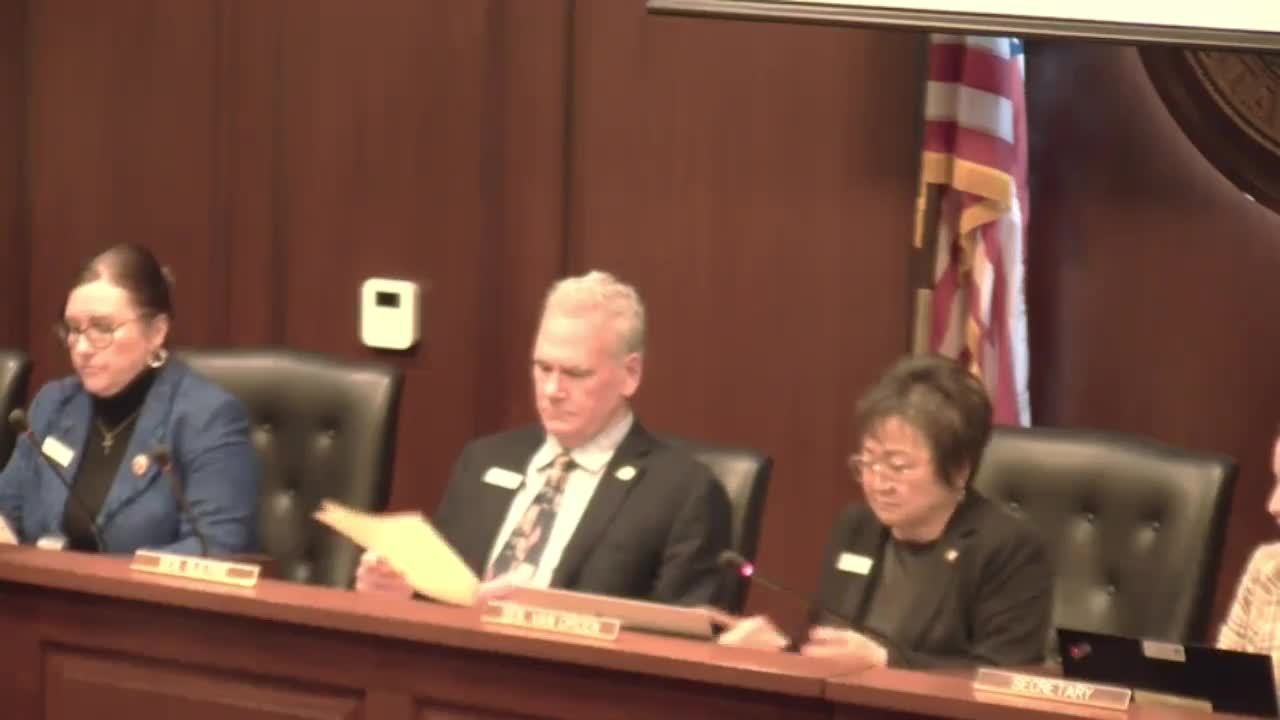
The Senate Health and Welfare Committee voted to send Senate Bill 1031 to the fourteenth order for possible amendment on a substitute motion after about an hour of discussion and one public comment on the measure.
Senator Brian Lenny, sponsor of SB 1031 and the senator for Nampa (Idaho Legislative District 13), told the committee the bill would narrow broad language in state law that currently allows health districts to take “all things” necessary for preservation and protection of public health. "They can do all things," Lenny said, adding later, "We can do concentration camps. We can do anything," as he urged statutory limits tied to necessity, reason and scientific evidence.
The bill would require that actions by local public health districts be "specifically authorized by state law" and be "necessary and reasonable," and it stipulates that preventive health measures may be used only in cases of a demonstrated, immediate public-health risk supported by scientific evidence. That language prompted multiple senators to ask whether routine preventive work — vaccinations, health education or septic-system approvals — would be unintentionally constrained.
Senator Wintrow said she supported requirements that measures be necessary, reasonable and science-based but asked for clarification about what "state law" would encompass and whether the bill would limit routine preventive measures. "Preventive means we're looking forward, and there's not necessarily immediate risk," Wintrow said, describing a potential conflict between preventive actions and the bill's "immediate public health risk" standard.
Several committee members recommended clarifying terms in the bill. Senator Blaylock and others raised questions about how the draft defines "necessary and reasonable," the term "immediate public health risk," and what qualifies as "scientific evidence." Senator Shippey suggested the word "imminent" might better capture the intended meaning than "immediate." Senator Bierke and others urged sending the bill to the fourteenth order (the committee amendment process) to refine wording to improve the bill's prospects.
An online witness, Misty Karlfeld, who identified herself as the leader of Health Freedom Idaho, supported SB 1031. Karlfeld cited Idaho Code section 39-414 as granting broad authority to health districts and said that during COVID-19, residents lacked recourse when districts exercised sweeping powers. "Please restrict their power and duties from 'all things' to necessary, reasonable things required for the preservation and protection of public health," she said.
Several senators said they were sympathetic to the bill's goal of protecting individual liberties while preserving effective public-health tools. Senator Seiderfeld moved that the committee recommend a "due pass" to the full Senate; Senator Keiser seconded that motion. Senator Harris then offered a substitute motion to send SB 1031 to the fourteenth order for possible amendment; Senator Bierke seconded the substitute. The committee approved the substitute motion by voice vote. A member asked to be recorded as opposed; no roll-call tally was given in the transcript.
Committee members discussed the 2023 change that clarified county commissioners' approval role for health orders, with some senators saying that change already provided an additional check on health-district authority. Others said experience during the COVID-19 pandemic showed districts had acted beyond what some citizens and elected officials considered appropriate, and they argued statutory limits and clearer definitions would add needed accountability.
The committee chair closed the meeting by noting another session scheduled for the next day and adjourning. Because the committee approved the substitute motion, SB 1031 will next proceed through the amendment process on the fourteenth order before any floor action.
The record shows the committee debated statutory language, definitions of key terms, and the balance between preventive public-health actions and civil liberties but did not adopt final statutory language; the substitute motion was procedural, sending the bill for possible amendment.