Get Full Government Meeting Transcripts, Videos, & Alerts Forever!
Get email alerts on the Higher Education Budget topic
No spam. Unsubscribe anytime.
Lewis‑Clark State College asks JFAC to preserve gains as enrollment and compensation lag peers
Summary
Lewis‑Clark State College presented its FY2026 budget request to the Joint Finance‑Appropriations Committee, discussed the enrollment‑weighted EWA formula, LAUNCH student aid effects, a prison education program expansion, and sought further operational capacity and salary funding to close competitiveness gaps.
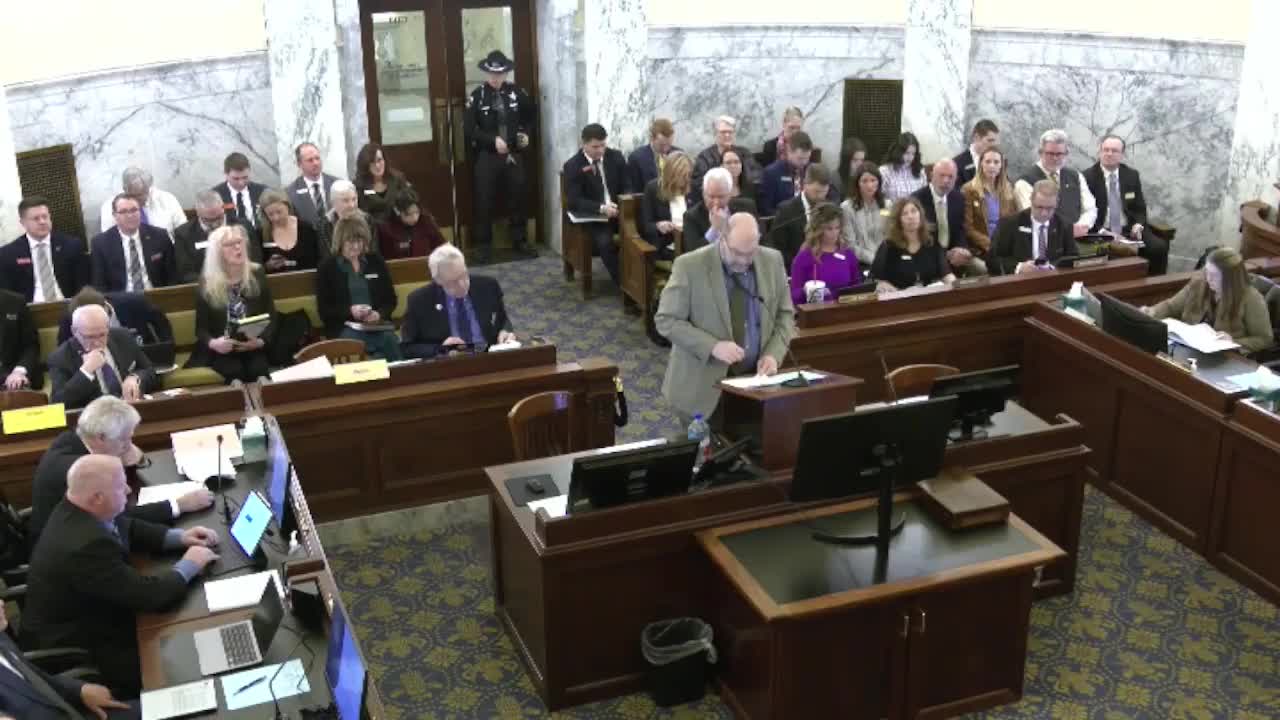
Kevin Campbell, an analyst with the Legislative Services Office, introduced Lewis‑Clark State College’s budget to the Joint Finance‑Appropriations Committee on Jan. 27 and framed the institution’s request and context for the committee.
The presentation and subsequent questioning centered on three fiscal pressures: the enrollment‑weighted Enrollment Workload Adjustment (EWA) formula, competitive employee compensation, and operational capacity needs tied to recent capital expansion and student services.
Why it matters: Lewis‑Clark (LC) serves roughly 3,881 students and positions itself as Idaho’s public small four‑year college. Small changes in enrollment, formula weightings and one‑time adjustments have an outsized effect on its ability to fund faculty, student supports and newly opened facilities.
Campbell told the committee that LC’s base FY2025 appropriation is about $41.7 million and explained how the state treats tuition and fee reappropriation and endowment distributions. He noted the Normal School Endowment and other legacy funds and cited Idaho Code regarding distributions.
President Cynthia Pemberton, who accompanied the college, described the EWA formula as “a weighted credit hour formula that was determined about 3 decades ago” and confirmed the committee’s understanding that the formula redistributes a fixed bucket based on a three‑year weighted average of credit hours. She added that LC’s average credit‑hour weighting (about 1.85) is lower than sister institutions (about 2.51), which has reduced LC’s formula outcomes over time and contributes to compensation gaps with peer institutions.
Pemberton and Vice President for Finance Julie Coray outlined priorities the college used from prior operational capacity enhancement (OCE) funding and the uses requested for FY2026: finishing occupancy costs for the Schweitzer Career Technical Engineering Building (custodial and utilities), targeted IT and cybersecurity upgrades, marketing and promotion to rebuild enrollment, and incremental progress on salary compression. Pemberton said LC requested $287,000 for CEC‑related pay adjustments and estimated $1.2 million would be needed to reach median comparables with K‑12 and peers.
Senators and representatives pressed for enrollment and outcome metrics. President Pemberton said fall 2024 enrollment rose 2.4% and spring 2025 was up about 9%; she said LC expects strategic growth to the mid‑4,000s but not to become a large university. Committee members asked about freshman retention and completion; Pemberton described new “wraparound” supports, a colocated food pantry, peer and faculty advising, and workforce partnerships as contributors to early retention improvements.
LAUNCH (state student aid) was discussed as a demonstrable success: Pemberton reported about 240 students received LAUNCH funds in the fall, with particularly strong uptake in career technical programs and apprenticeships; she cited electrical apprenticeship completion figures tied to LAUNCH support.
Pemberton also highlighted LC’s prison education program in Orofino and other sites, saying the college became the first Idaho institution to complete full transition approval from the experimental program to a regular prison education program, enabling nearly 200 incarcerated students to participate with Pell eligibility and other approvals.
On financial health, Campbell and Coray reviewed recent enhancements, endowment adjustments, and the EWA impact for FY2026 (a projected reduction for LC of $102,500 under the formula). Coray explained that prior years’ capital projects (for example the Schweitzer Center and an activity center) affected net position and year‑to‑year ratios; she described FY2024 as a “flat operational year” without the major capital revenue that had boosted prior net position figures.
The session closed with Pemberton reiterating the college’s mission as a workforce driver for North Idaho and asking the legislature to consider larger investments in salary compression to keep LC competitive and to sustain student supports.
Ending: Committee members were given follow‑up materials and told where to find LC’s metrics in the legislative budget book. No formal action or vote occurred at the session; the committee indicated it would continue budget questions in subsequent hearings.