Get Full Government Meeting Transcripts, Videos, & Alerts Forever!
Get email alerts on the State Budget topic
No spam. Unsubscribe anytime.
JFAC approves multiple supplemental and FY2026 budget changes; licensing review ordered, ombudsman funding fails in House
Summary
The Joint Finance‑Appropriations Committee (JFAC) on Feb. 14 approved a package of supplemental appropriations and FY2026 budget adjustments covering military and public‑safety communications, hazardous‑materials response, agriculture pest control, veterans services and several agency staffing enhancements, while directing a review of the state licensing and certification program and failing to approve a $50,000 ombudsman pay increase after the House did not concur.
The Joint Finance‑Appropriations Committee (JFAC) on Feb. 14 approved a package of supplemental appropriations and FY2026 budget adjustments covering military and public‑safety communications, hazardous‑materials response, agriculture pest control, veterans services and several agency staffing enhancements, while directing a review of the state licensing and certification program and failing to approve a $50,000 ombudsman pay increase after the House did not concur.
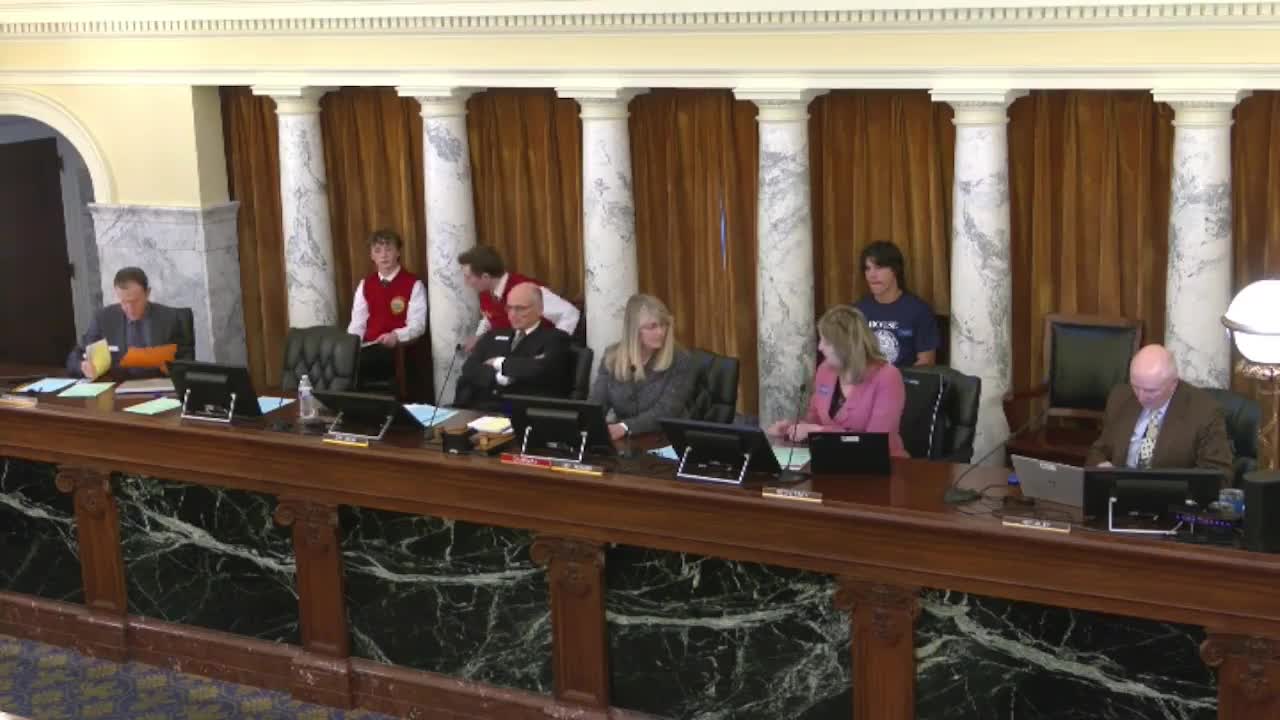
The actions, taken during JFAC’s meeting at the Idaho Statehouse, included multiple unanimous or near‑unanimous roll calls and several contested votes. Committee staff emphasized the link between policy bills and fiscal notes as the session proceeds. "These are, germane pieces of legislation that have a fiscal note," budget analyst Keith Bybee said while summarizing revenue and appropriation items on the general fund daily update.
Why this matters: JFAC’s approvals move money or authorize transfers that allow agencies to operate, complete projects and hire staff. Several items include one‑time appropriations that restore or expand operations now and enhancements that would take effect in fiscal year 2026, shaping next year’s agency budgets.
Key approvals and outcomes
Votes at a glance (motions taken during the meeting):
- Hazardous substance emergency response fund — one‑time reimbursement, $34,200: Moved by Senator Ward Engelking; seconded by Representative Petzke. Roll call recorded 20 ayes, 0 nays, 0 absent/excused. Outcome: passed; due‑pass recommendation.
- Military division: public safety communications supplemental — one‑time appropriation $540,001 (to contract for installations, build four installation bays and purchase equipment): Moved by Senator Ward Engelking; seconded by Representative Handy. Roll call recorded 20 ayes, 0 nays, 0 absent/excused. Outcome: passed; due‑pass recommendation.
- Military division: IT infrastructure upgrade for public safety communications — one‑time $759,200: Moved by Representative Petzke; seconded by Senator Ward Engelking. Roll call recorded a Senate vote of 9 aye, 1 nay; House unanimous; combined total 19 ayes, 1 nay, 0 absent/excused. Outcome: passed; due‑pass recommendation.
- Military division FY2026 enhancements (network administrator, IT alignment, replacement items, IT hardware, hazmat regional response equipment): Total net increase listed by staff as $9,117,100 (breakdown: $66,200 GF, $9,190,200 dedicated, reduction $139,300 federal). Motion moved by Representative Petzke; seconded by Senator Ward Engelking. Roll call: Senate 9 aye, 1 nay; House unanimous; total 19 ayes, 1 nay. Outcome: passed; due‑pass recommendation.
- Transfer for hazmat regional response: one‑time transfer of $8,600,000 from the continuously appropriated State Emergency Relief Fund to the miscellaneous revenue fund for hazardous materials regional response teams: Moved by Representative Petzke; seconded by Senator Ward Engelking. Roll call: Senate 9 ayes, 1 nay; House unanimous; total 19 ayes, 1 nay. Outcome: passed; due‑pass recommendation.
- Division of Veterans Services FY2026 adjustments and reappropriation authority (includes transfer to create temporary nursing staffing pool, IT, capital, replacement items; reappropriation authority for federal construction grants): Motion by Senator Woodward; seconded by Representative Handy. Roll call reported 19 ayes, 1 nay (Senate 9/1; House unanimous). Outcome: passed; due‑pass recommendation. Staff noted reappropriation authority not to exceed $111,488,600 for federal grant funds for Boise and Lewiston veterans home projects.
- Department of Agriculture: pest control deficiency (reimbursement) — one‑time transfer $1,724,300 from general fund to pest control deficiency fund (Japanese beetle, Mormon cricket, other exotic pests): Moved by Representative Handy; seconded by Senator Hart. Roll call recorded 20 ayes, 0 nays, 0 absent/excused. Outcome: passed; due‑pass recommendation.
- Department of Agriculture FY2026 enhancements (investigator pay structure, CEC adjustment for fresh fruit & vegetable inspectors, replacement vehicles/lab equipment, IT hardware): Motion moved by Senator Cook; seconded by Representative Handy. Roll call: Senate 8 aye, 1 nay, 1 absent/excused; House unanimous; combined total reported 18 ayes, 1 nay, 1 absent/excused. Outcome: passed; due‑pass recommendation.
- Department of Finance FY2026 staffing enhancements (five FTP approved by motion: financial examiners, cybersecurity, forensic accounting specialist and related IT hardware): Moved by Senator Hart; seconded by Representative Galaviz. Roll call: Senate 8 aye, 1 nay, 1 absent/excused; House unanimous; combined total 18 ayes, 1 nay, 1 absent/excused. Outcome: passed; due‑pass recommendation. The governor recommended four of six FTPs; the motion adopted a five‑FTP package as described by staff.
- Department of Insurance FY2026 enhancements (staff actuary, regulatory compliance specialist, State Fire Marshal compensation increase and replacement items): Moved by Representative Furness; seconded by Senator Cook. Roll call: Senate 8 aye, 1 nay, 1 absent/excused; House unanimous; combined total 18 ayes, 1 nay, 1 absent/excused. Outcome: passed; due‑pass recommendation.
- State Board of Education special programs (including rural educator incentive funding $1,375,000, database and workforce positions, museum support): Motion by Senator Carlson; seconded by Representative Price. Roll call: Senate 8 aye, 1 nay, 1 absent/excused; House unanimous; combined total reported 18 ayes, 1 nay, 1 absent/excused. Outcome: passed; due‑pass recommendation. Committee discussion included concerns about very small fractional FTP requests and staff committed to reviewing budget structure for those programs.
- Health education programs (medical and dental residency funding and two new FTPs totaling $954,500 GF and 2 FTE): Moved by Representative Petsky; seconded by Senator Galloway. Roll call: Senate 8 aye, 1 nay, 1 absent/excused; House 10 aye (unanimous within those present); combined total reported 18 ayes, 1 nay, 1 absent/excused. Outcome: passed; due‑pass recommendation. JFAC added intent language requiring the Idaho Graduate Medical Education Committee to report progress toward OB‑GYN fellowships.
- State Independent Living Council (fund shift to general fund to cover health benefits and CEC adjustments; net 0 budget impact of $11,600): Moved by Representative Furness; seconded by Senator Wintrow. Roll call: Senate 9 aye, 1 nay; House 9 aye, 0 nay, 1 absent/excused; total 18 ayes, 1 nay, 1 absent/excused. Outcome: passed; due‑pass recommendation.
- Licensing and certification (Department of Health & Welfare): committee approved intent language exempting Licensing & Certification from FY2025/2026 personnel transfer restrictions and required the department to work with the Division of Occupational & Professional Licenses (DOPL) on a report — including draft legislation — on transferring licensing and certification to DOPL if appropriate. The motion to accept the language passed after a roll call that recorded 16 ayes, 2 nays, 2 absent/excused (combined total reported 16/2/2). Several members, including Senator Wintrow, objected to the inclusion of the phrase that “shall draft legislation”; the objection prompted a recorded vote rather than unanimous consent. Outcome: passed; due‑pass recommendation.
- Office of Health & Human Services Ombudsman — FY2026 request for $50,000 salary increases: Moved by Senator Wintrow; seconded by Representative Handy. Roll call: Senate 8 aye, 2 nay; House 5 aye, 2 nay, 3 absent/excused; combined total 13 ayes, 4 nays, 3 absent/excused. Because a majority of the House did not vote in the affirmative, the motion failed and will be taken up at a later date.
Discussion highlights and clarifications
- Staff framing and fiscal notes: Keith Bybee, division manager for budget policy analysis, walked the committee through the general fund daily update and emphasized that the list captures germane bills that carry fiscal notes and thus possible appropriations.
- Conflict‑of‑interest declaration: Representative Petzke declared a Rule of 80 (a recusal/ethics notification) when the public safety communications supplemental was discussed, noting he serves on the board of a company that supplies some of the equipment referenced in the request; the declaration was entered into the record.
- Licensing and certification review: Staff clarified the directed review will not itself effect a transfer; it requires DHW and DOPL to collaborate on a report to JFAC by next January outlining logistics and potential draft legislation. Some members objected to the strength of the "shall draft legislation" phrase, leading to a recorded vote.
- Major dollar items and reappropriations: Staff flagged a reappropriation not to exceed $111,488,600 in federal grant funds for replacing the Boise Veterans Home and renovating the Lewiston Veterans Home. Several items are one‑time appropriations; others are enhancements that would change FY2026 maintenance budgets.
What the committee did not do
- No permanent statutory changes were enacted at the meeting; JFAC approved appropriations, transfers and directive language and will forward its recommendations to the larger legislative process as required.
Next steps
The committee concluded and scheduled continued budget work when members reconvene next week. Staff and agencies must prepare the reports and implementation details (for licensing/certification review and the vehicle fleet/utilization report for Health & Welfare) required by the intent language attached to several motions.
"Thank you for all your work," the chair concluded, noting the committee will reconvene Monday at 8 a.m.