Get Full Government Meeting Transcripts, Videos, & Alerts Forever!
Get email alerts on the Program Maintenance topic
No spam. Unsubscribe anytime.
Budget office details structure and schedule for 10 program maintenance appropriation bills
Summary
Division of Budget Policy & Analysis Manager Keith Bybee outlined the program maintenance approach: 10 functional appropriation bills, inclusion of CEC items in program maintenance, and a schedule for hearings and decisions next week.
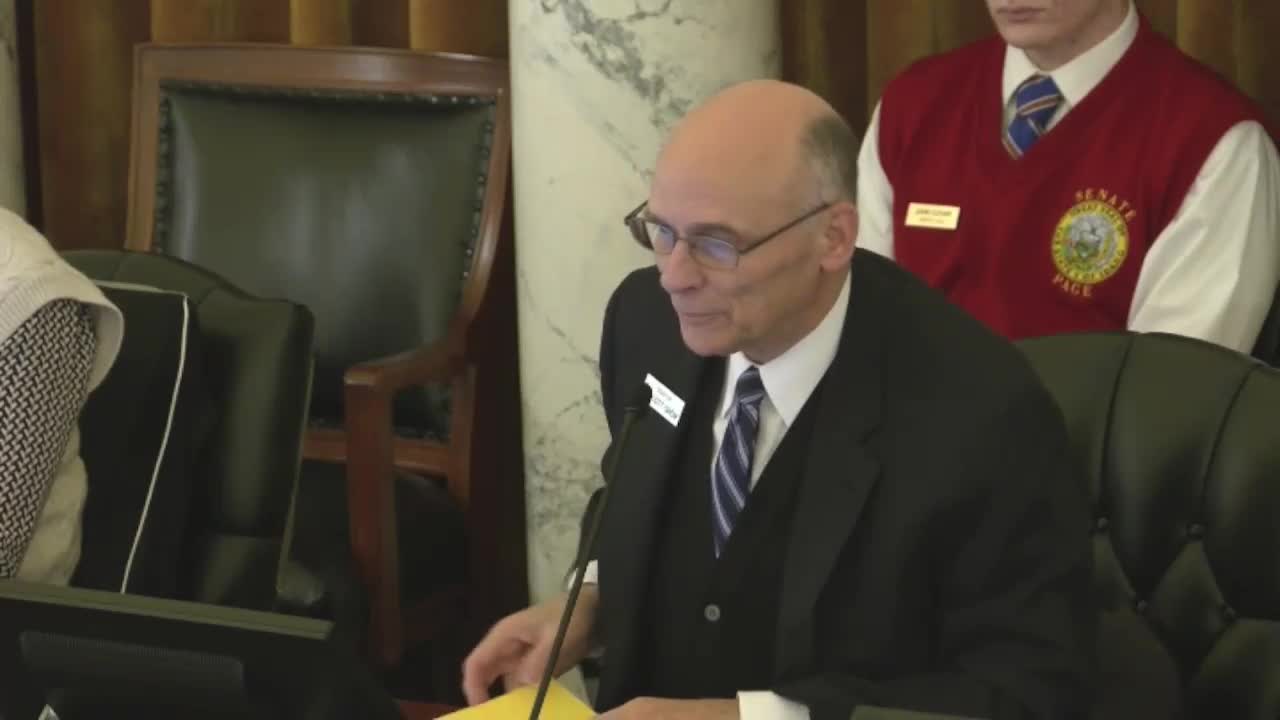
Keith Bybee, Division Manager of Budget Policy & Analysis, presented the Division of Financial Management's framework for the program maintenance appropriation bills and outlined the committee's schedule for hearings and decisions.
Structure and rationale: Bybee explained program maintenance bills are organized into 10 functional areas of state government. He said certain entities will be treated separately because of organizational or constitutional reasons: the legislative branch and statewide elected officials (Governor's Office, Controller, Secretary of State, Treasurer, Attorney General) will be kept separate; the Judicial Branch will be treated apart from executive agencies; and public school support and State Board of Education agencies will be their own categories. The remaining areas include Health and Human Services, Natural Resources, Economic Development (including Transportation, Commerce and Labor) and others.
What program maintenance includes: Bybee said program maintenance covers the building-block adjustments between the baseline and the next benchmark: personnel and benefit cost adjustments (including the CEC decisions), contract inflation (ongoing vendor contracts and leases), statewide cost allocations (reimbursements for interagency services), and similar recurring adjustments.
What goes in enhancement bills: Bybee and committee members clarified that replacement items, IT replacements, annualizations, general inflation requests, and population forecast adjustments (formerly called "nondiscretionary" items) will be considered in enhancement bills so the committee can review those growth items separately. He said the committee has intentionally separated IT replacement items from general replacement items to give JFAC visibility into cybersecurity and other IT spending.
Schedule and procedure: Bybee said JFAC will have an initial hearing on the program maintenance adjustments (by fund source and language) next Wednesday and decision-making on program maintenance is scheduled for Friday the 17th (committee references). The committee also discussed treating four program areas on Thursday so outside presenters who must leave early can hear the maintenance items affecting them. Bybee reminded members that setting a program maintenance budget does not preclude later adjustments (additions or subtractions) during the session.
Member questions and guidance: Members asked for practical guidance about reviewing the legislative budget book and agency-level detail; Bybee and co-chairs encouraged members to review agency packets and use staff for deeper work. Several members emphasized the intent to give the committee more time to examine enhancement (growth) items while streamlining the maintenance decisions.
No formal committee vote occurred on the presentation; it was an informational briefing to set schedule and scope for upcoming votes.