Get Full Government Meeting Transcripts, Videos, & Alerts Forever!
Get email alerts on the Aging Services topic
No spam. Unsubscribe anytime.
Idaho Commission on Aging asks to spend remaining ARPA funds, seeks small ongoing increase to cover inflation
Summary
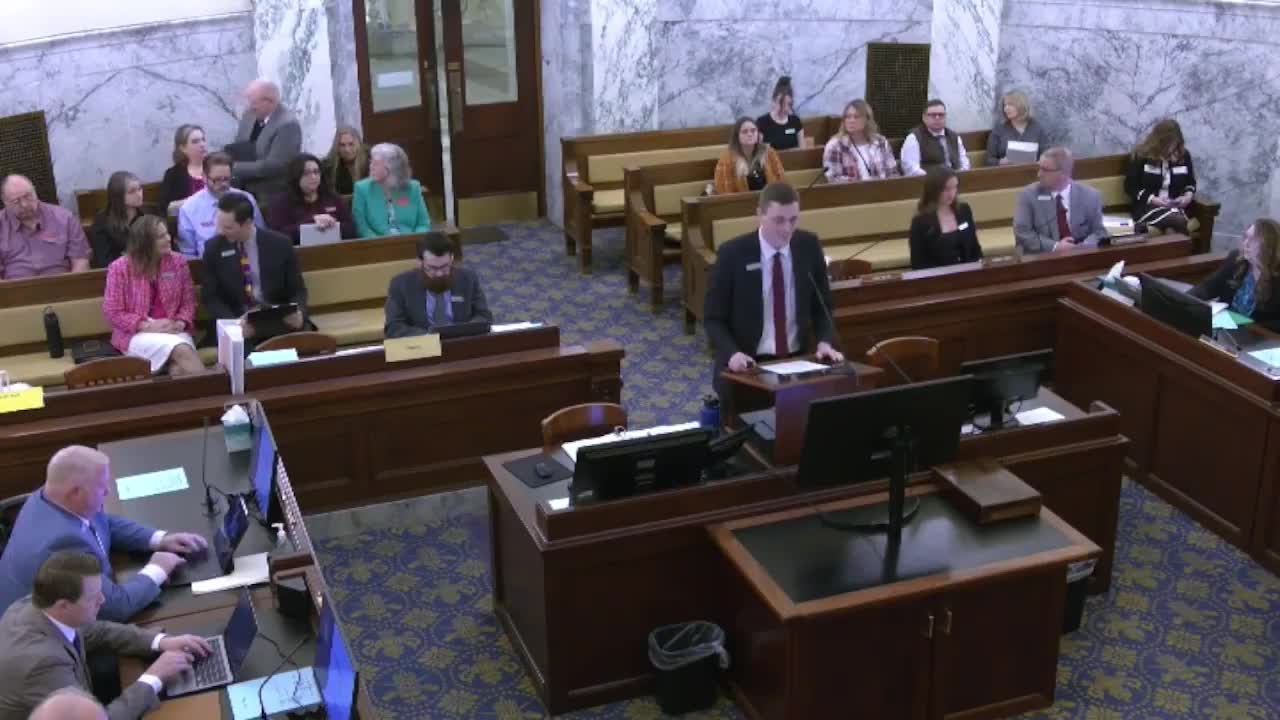
The Idaho Commission on Aging told the Joint Finance‑Appropriations Committee on Monday that it plans to spend remaining American Rescue Plan Act funds before the federal Sept. 30, 2025, deadline and is asking for a modest ongoing general‑fund increase to cover inflation in fiscal 2026.
The Idaho Commission on Aging told the Joint Finance‑Appropriations Committee on Monday that it plans to spend remaining American Rescue Plan Act (ARPA) funds before the federal Sept. 30, 2025, deadline and is asking for a modest ongoing general‑fund increase to cover inflation in fiscal 2026.
Colin McGurkin, budget and policy analyst with the Legislative Services Office, told the committee the commission requested $1,800,000 in one‑time federal ARPA funds to be used by Sept. 30, 2025. He said the agency also asked the governor and the committee for an ongoing general‑fund increase of $162,600 for FY2026, including about $155,000 to raise trust and benefit payments to local Area Agencies on Aging (AAAs) and $7,600 for operating costs at the commission.
Why it matters: The Commission on Aging distributes state and federal dollars to six local AAAs that provide meal service, transportation, caregiver assistance, adult protective services and other community‑based supports that keep older Idahoans safe and in their homes. Committee members pressed the agency on how ARPA and one‑time federal grants were used and whether programs would need general‑fund support once one‑time dollars expire.
McGurkin told the committee the commission’s FY2024 expenditures totaled about $16.7 million, with roughly 88 percent of that total classified as trustee and benefit payments to AAAs — about $10.4 million in federal funds and $4.2 million in general‑fund payments for direct services. He said authorized staffing for the commission is 15 full‑time positions with one vacancy and that a portion of the commission’s personnel appropriations have been charged to federal awards, producing year‑to‑year reversions when one‑time federal awards were not fully spent.
Judy Taylor, director of the Idaho Commission on Aging, told the committee the commission has used ARPA and other one‑time federal funds for a range of projects, including meal program modernization, expansion of caregiver supports and a pilot to place community health workers in AAAs to support high‑risk caregivers. "We have followed the guidance to the T," Taylor said, that one‑time money should be used for one‑time needs and enhancements rather than ongoing programs.
Taylor described specific allocations tied to the commission’s one‑time federal requests. In FY2024 the commission received a $5.2 million one‑time federal appropriation tied to ARPA drawdowns that supported targeted caregiver education and outreach, COVID‑related services, enhancements to adult protective services and expansion of a pilot for unpaid caregivers of people with dementia. For FY2025 the commission requested a one‑time federal appropriation of $500,000 to pay final invoices and draw down remaining ARPA funds; McGurkin said $450,000 of that would go to AAAs for final invoices on services including supportive services for older Idahoans, meals, caregiver assistance and modernization projects, while $50,000 would cover staff time for processing contracts and other administrative operating costs.
Taylor told senators and representatives that most of the work funded with ARPA was designed to be one‑time and that the agency did not expect the drawdowns to create ongoing obligations. "None of that total results in ongoing obligations or loss of expected services when ARPA grants expire," she said, adding the funding has been used for modernization projects and one‑time program enhancements.
Committee members asked for more specifics. Senator Cook asked whether money had been spent on programs for people with Alzheimer’s disease and related dementias; McGurkin said he could not provide a program‑specific amount and offered to ask the agency for details. Representative Mitchell and others pressed about a pilot to expand the public health workforce; Taylor said ARPA funds allowed the commission to place community health workers in AAAs to perform in‑home assessment and planning for caregivers, and that the community health worker positions could be sustained without the full ARPA funding by rebalancing other respite hours.
Taylor reported nutritional programming as a top priority and told the panel that money the commission received last session allowed it to raise meal reimbursement rates by 25 cents per meal and to eliminate a home‑delivered meal waitlist in the state. "As of today we have no waiting lists in Idaho," she told the committee.
Taylor said the commission had added one ongoing general‑fund position in FY2025 — a financial specialist — and that the agency requested modest ongoing funding to cover inflationary increases in trustee and benefit payments and operating costs.
No formal committee action or vote was taken at the hearing. Committee members asked the commission to provide follow‑up details by email on program‑level spending, including the specific amounts tied to Alzheimer’s or dementia services and the composition of funding for Meals on Wheels and other nutrition programs.
Looking ahead, the commission said it will continue to pursue one‑time federal drawdowns before the federal deadline and will return with requested clarifications for the committee.